
 Gaby
Gaby
That’s how the actress and singer described herself in her autobiography, a figure whose allure went beyond her screen and stage personas. Fifty-five books were written about her during her lifetime, and she continues to fascinate with a mix of contradictions: independence and submission, freedom and discipline, passion and coolness, allure and aloofness, honesty and vice, pragmatism and selflessness. Her life—at the intersection of art, politics, and sexuality—has historical significance: she fought fascism, helped shape modern cinema, and embodied changing roles for women. In all these arenas, Marlene Dietrich took center stage.
Early Loss
The world-famous photo of a little blonde girl with ribbons and a hat captures 4- or 5-year-old Maria Magdalena at a difficult moment for her family. Her parents separated, and a year later her father died of syphilis, spending his last days in a mental health clinic. Her mother remarried twice (once to a friend of her first husband). Her mother’s next husband died of wounds sustained on the Eastern Front during World War I—an event that, because of vague phrasing in Dietrich’s autobiography, Marlene sometimes described as the loss of a father figure.

Her mother, Wilhelmina Elizabeth Josefine Felzing, came from a wealthy, stern family the children feared. When she married Louis Dietrich—a police officer and former Uhlan cavalryman—it was an act of love for her. Louis, then 30, married partly for money: Wilhelmina’s parents owned a watch and jewelry shop and provided a generous dowry.
Girlhood Secrets
Sisters Liesel (Elizabeth) and Helena—Helena was the name given to younger Maria Magdalena, who shortened it to Marlene at 11—were born a year apart in Berlin’s upscale Schöneberg district: February 5, 1900, and December 27, 1901. They were inseparable as children, but later drifted apart. Marlene left Germany before World War II to work with the Allies, while Elizabeth stayed behind under the Nazis. Elizabeth and her husband owned a cinema and café that, according to reports, was used by concentration camp guards.
Marlene barely remembered her father, so any charm or free-spiritedness must have come through her genes. The actress said she inherited mostly a love of order and discipline from her parents. From a young age she devoted herself to music—learning violin, piano, and lute—and studied languages; besides German she became fluent in French and English, skills that would prove useful in her career. As a teenager she became infatuated with her French teacher, who left her with a secret love for France.
In Search of Happiness
Marlene was educated by governesses, and at 16 she enrolled in a Berlin lyceum, where she studied for only a year. A photograph from that time shows her in the school orchestra, playing the violin dressed as a pirate. At 17, because of heart problems and depression, she left the lyceum without a diploma. In November 1918, when Wilhelm II abdicated, she wrote in her diary: “Why did my youth coincide with this terrible time? It would have been easier to endure if I were at least a little happy.”
At 17 she went to Weimar for private violin lessons, but eight-hour sessions with the professor did not win her admission to the Berlin Conservatory. She took a job as an accompanist for silent films. A tendon injury in her finger ended her hopes of becoming a violinist, and Marlene turned her attention to acting.
From “Potato” to Diva
After private lessons with the director of the German Theater’s acting school, she worked as a cancan, tango, and tap dancer in a nightclub, honed her singing, and took a small theatrical role. At 22, thanks to an uncle’s connection to a director, she appeared in her first film. In the 1923 movie Such Men she played a maid; in her own words her look then was a “potato with hair,” hard to imagine the future femme fatale.
Marlene knew who and when transformed her into the Dietrich who captivated the world. She disliked recalling her work in the 1920s, calling herself “nothing” in that period. Still, her meeting with Josef von Sternberg might not have happened without the groundwork she had already laid. By the time she first worked with Sternberg—one of seven collaborations—the 28-year-old had released a record and starred in two notable films, “Café Electric” and “I Kiss Your Hand, Madame,” after which critics likened the young German to Greta Garbo.
High Relationships
She also had a husband and a daughter. Rudolf Sieber, a young administrator who impressed her during a small role on the set of The Tragedy of Love, won Marlene’s trust. Even though he had earlier shown interest in the director’s daughter and the lead actress, he married 22-year-old Dietrich in 1923. The following year their daughter, future actress Maria Riva, was born.

Marlene and Rudolf’s wedding, 1923.
The marriage lasted until Rudolf’s death from cancer in 1976. Marlene and Rudolf remained legally married for more than half a century, though five years after marrying they essentially lived separate lives. The success of The Blue Angel allowed her to move to the United States after its 1930 premiere. Sternberg, a German immigrant already establishing himself in Hollywood, secured her a Paramount contract that paid $1,750 a week.
The Revolution of Femininity
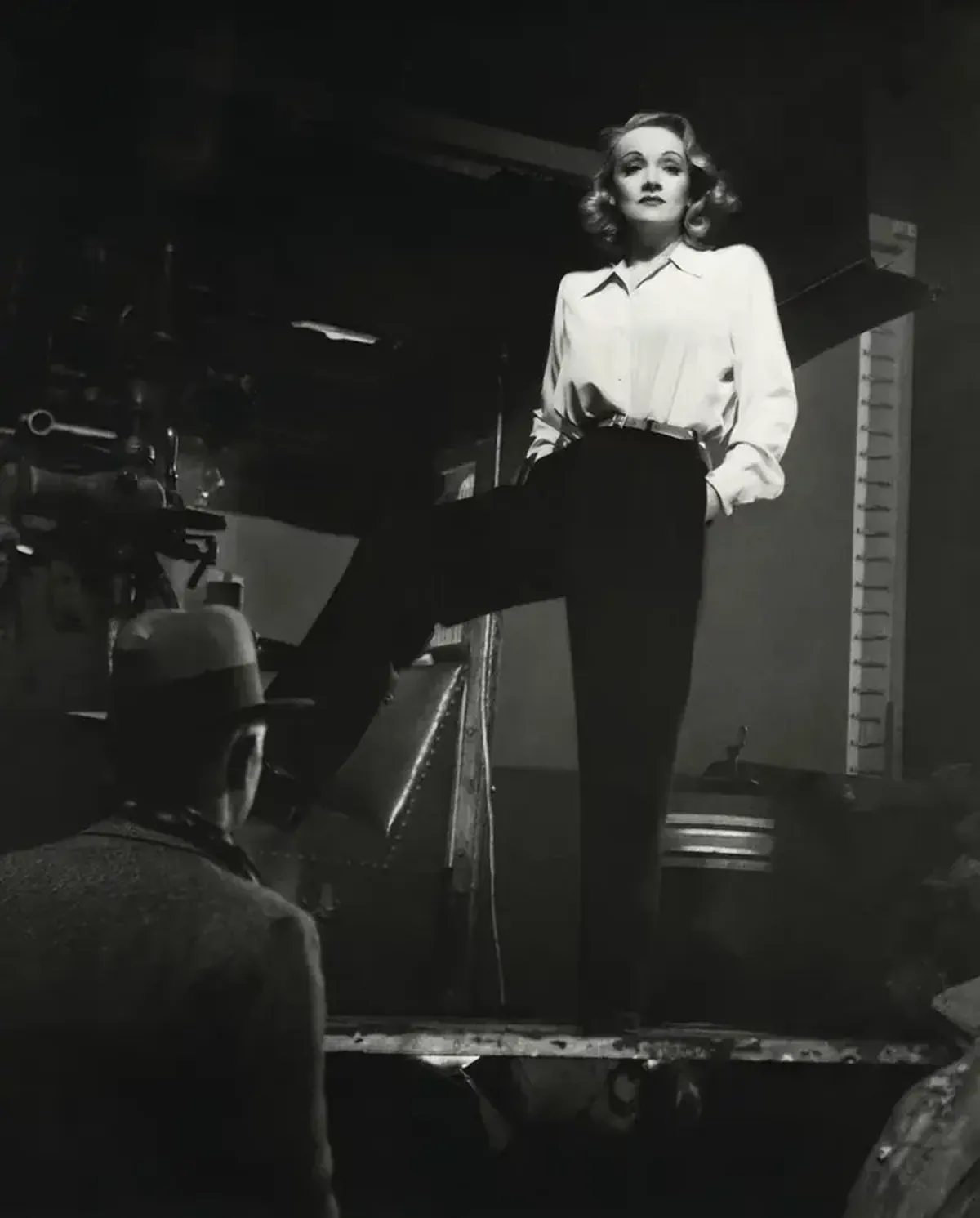
Their first American film, Morocco, earned an Oscar nomination. It also shocked society when Dietrich appeared on screen wearing a man’s suit—the first time many moviegoers had seen a woman in trousers on film. Women around the world began to copy her glamorous character, who embraced pants. Still, the “revolutionary” Dietrich kept a love for elegant skirts, feminine blouses, and beautiful dresses; she was equally magnetic in jacket and tie. She reportedly even asked to be buried in pants.
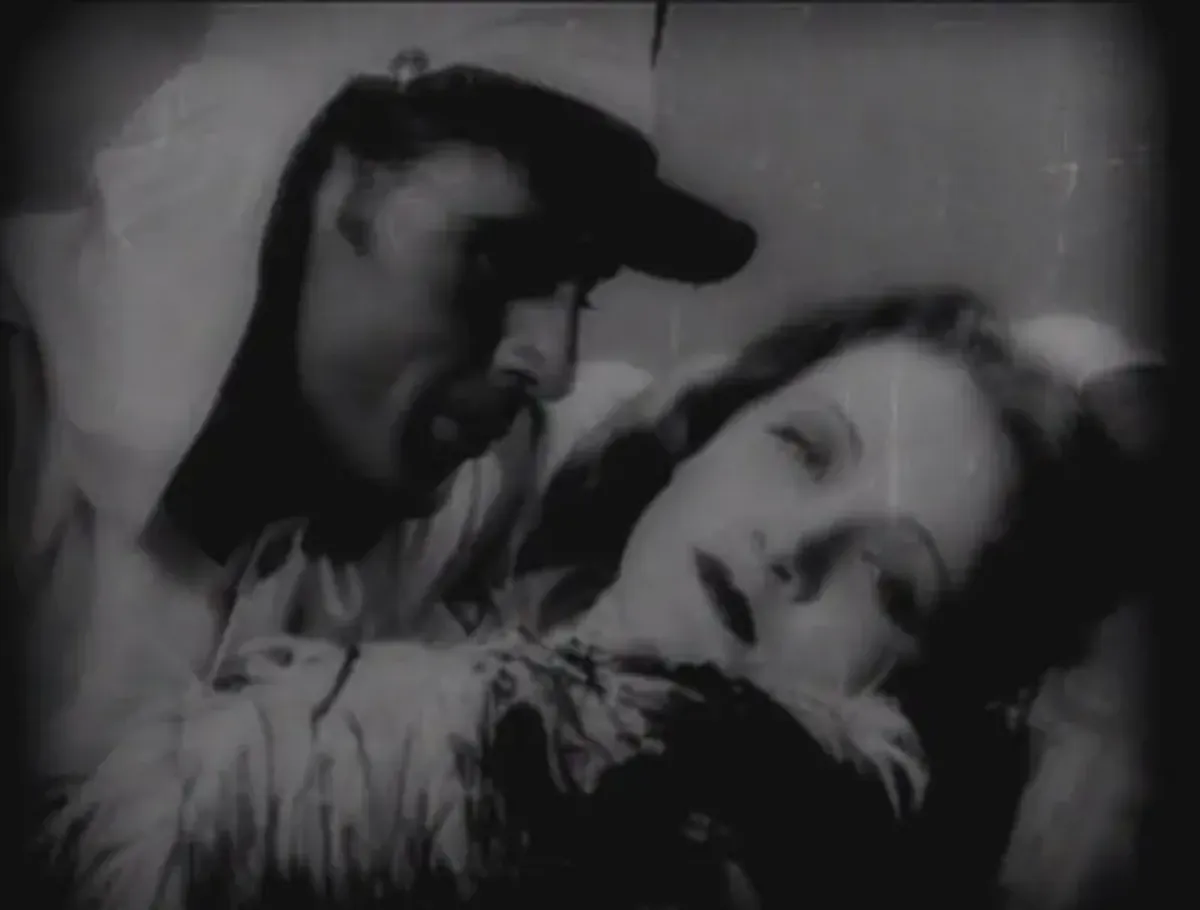
A scene from the film “Morocco” (1930)
Between 1930 and 1935 Sternberg and Dietrich made six more films together, including Shanghai Express. Sternberg drew a new depth of performance from his protégé, shaping a screen persona of elegant slenderness, refined manners, and the gestures of the classic vamp. He controlled many elements—script, makeup, costumes—to create the effect. Critics later argued that after their partnership ended, neither director nor actress matched the success they had together.
“I Was Right for Him”
“Without you, I’m nobody,” Dietrich wrote to Josef von Sternberg, adding, “Only you manage to highlight my charms.”
Looking back on their alliance, she put it plainly: “I was right for him. I never interfered, never argued, and when necessary I shared my thoughts, which the director listened to.”
Sternberg described her behavior as a “miracle”: “She was more diligent than any prop master—first to hand me a pencil or a chair—because all her attention was on me.” He acknowledged that she always tried to please him and serve his vision, and he often filmed scenes with her in a single take.
The one thing Sternberg could not expect from his “best companion and like-minded person” was fidelity. Playing with people’s feelings came easily to the straightforward and independent Marlene. At first this attracted both men and women; later it left many hearts broken. Her acting lessons became a kind of life manual: she believed one must learn to master emotions rather than be mastered by them.

James Stewart and Marlene Dietrich in the film Destry Rides Again (1939)
Without Spotlights and Cameras
“Happiness comes to the diligent,” the actress said. She had tender feelings for Ernest Hemingway (they were friends); for Erich Maria Remarque—there’s an anecdote about Remarque sitting down at a table where Marlene and Sternberg were, and Sternberg leaving the pair alone; and for Jean Gabin, whose six-year relationship with her ended after he proposed.
Because of her unusual openness, Dietrich sometimes showed love letters from her lovers to her legal husband Rudy, whom she had brought to America and supported financially. Rudolf lived on a California ranch with their daughter and his mistress, a Russian ballerina named Tamara Matul (Zvyagintseva), who was murdered by a mentally ill patient in a psychiatric clinic in 1965.
“I am not bothered that it is impossible to keep one’s personal life a secret with a public career,” Marlene Dietrich said. “But what I do without spotlights and cameras is nobody’s business.”
“Get Home!”
Before World War II, Dietrich refused the Nazi government’s offer to film in Germany. After she received a U.S. passport in 1939, she took part in anti-war broadcasts on American radio and spent three years entertaining Allied troops in North Africa, France, and Italy. The U.S. military awarded her a captain’s medal, and France honored her with two orders.

Dietrich with U.S. military pilots during World War II, 1944.
Back home she was branded a traitor. Her 1960 performances in Germany were met with boos; crowds held signs saying “Get home!”, threw eggs at her, and even spat on her.
After the war she supported herself with tours—singing and occasionally playing the violin again—plus memoirs, advice and recipe books, and radio journalism.
A Life Without Roots
In her last film, 1979’s Just a Gigolo, the 78-year-old legend failed to attract audiences and did not appear on screen again. The biographical interview she gave to director, actor, and producer Maximilian Schell ended up only on the soundtrack because she flatly refused to sit for the camera. By then she had moved to her beloved Paris. After a hip fracture in 1975—sustained when she fell off the stage in Sydney—Dietrich retired from concert life, secluded herself in her Paris apartment, and spoke to the world mostly by phone. “One must have a strong character to live without roots, in solitude,” Remarque wrote about his former lover.
Marlene Dietrich died at 91 on May 6, 1992. After her death she was brought back to Berlin and buried in the neighborhood where her long and often misunderstood life began.
