
 Gaby
Gaby
Today, Vincent Callebaut’s project Timber Mobilities sounds fantastical. But it could become reality sooner than you think. Many of the bold ideas from the Paris-based Belgian architect have already been realized.
To avoid provoking skeptics, the project’s creators frame it as a research initiative. They used 3D modeling and artificial intelligence to visualize a near future of transportation, presenting five prototypes of individual and collective vehicles for land, water, and air.
The prototypes share ergonomic architecture, aesthetic design, a focus on renewable energy, and a mix of biomaterials (laminated wood, bamboo-based materials) with recycled materials (aluminum, fiberglass).
Eco-architect Vincent Callebaut says future mobility will be more diverse, smarter, and greener. Cities should be designed for people, not cars. Today the transportation sector accounts for the largest share of global CO2 emissions—24 percent—and the average driver spends about 90 hours a year stuck in traffic. Callebaut believes that has to change.
The prototypes developed by his studio aim to bring us closer to an eco-friendly tomorrow.
Flying ‘Shuttle’ Timber eVTOL
This ambitious design is a vertical takeoff and landing (VTOL) aircraft that runs on electricity or hydrogen.
Most eVTOLs carry only a few passengers and serve as private aircraft or air taxis. Vincent Callebaut Architectures designed a low-carbon, propeller-driven vehicle that could carry 10 to 20 passengers, which would cut travel times and ease pressure on ground transportation during peak hours, Designboom reported.
Other potential uses include cargo transport and urban logistics.

Shuttles Timber eSHUTTLE
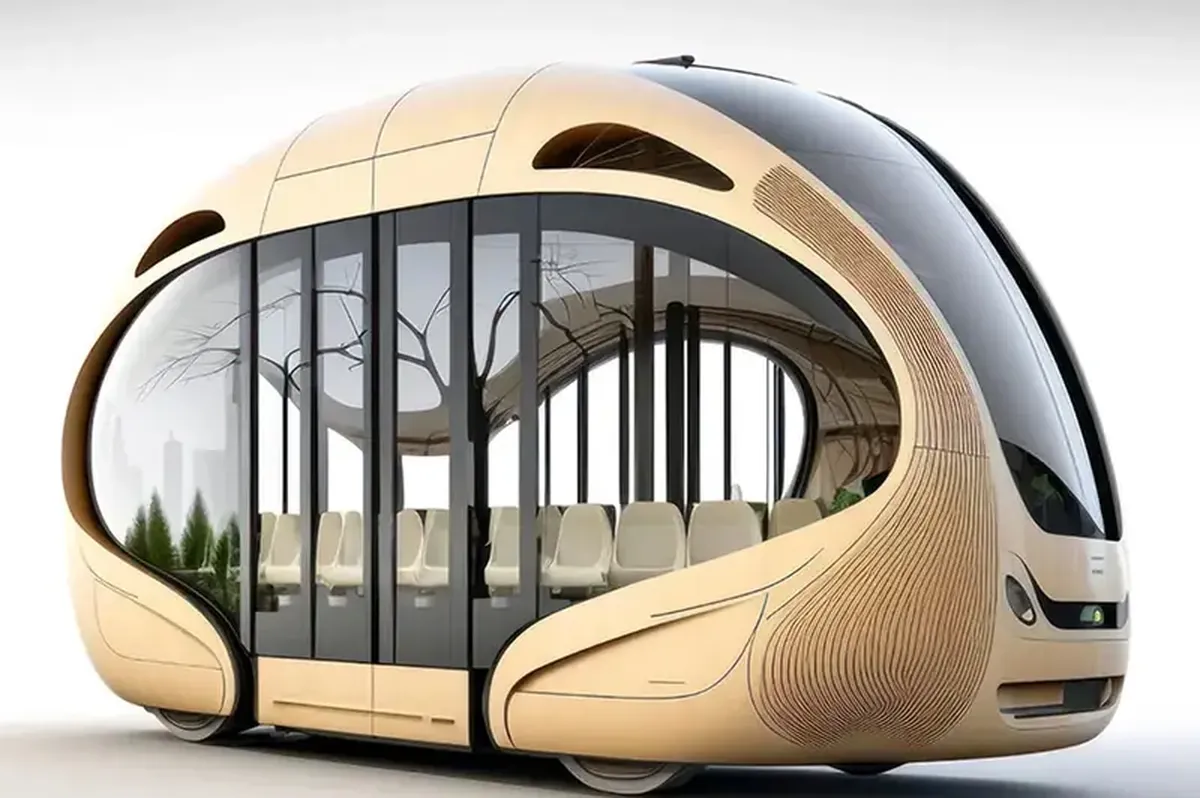
Continuing their exploration of eco-friendly public transport, the studio developed the autonomous Timber eSHUTTLE. This computer-controlled shuttle, packed with sensors, blends features of personal vehicles and public transit. It’s comfortable, ergonomic, safe, and fitted to carry about a dozen passengers.
The team says the driverless, steer-free shuttles would be built from biomaterials like cross-laminated timber (CLT). They would run on solar power and batteries charged via dynamic induction roads—getting energy directly from the road as they travel.
Wooden Car and Bicycle
Vincent Callebaut Architectures also unveiled compact vehicles for private trips.
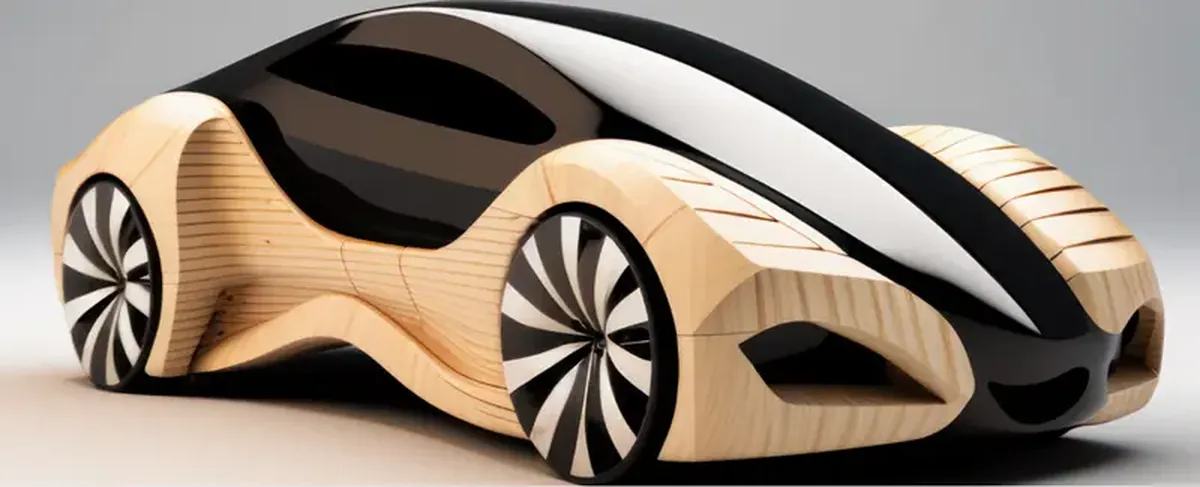
Aiming to move away from heavy steel SUVs, the studio designed maneuverable, autonomous urban cars made largely from wood or bamboo. These electric, solar-assisted vehicles could make the Timber eCAR one of the most eco-friendly concept cars.
They also showed the Timber eBIKE, a prototype bicycle built from laminated wood and graphene. It features aerodynamic geometry, a simplified drivetrain, and wheels without axles, hubs, or spokes. It should appeal to commuters who bike to work every day.
Wooden Hydrofoil Vessel Timber HYDROFOIL
This hydrofoil is more environmentally friendly than an electric bus and promises calm, fast rides—gliding over waves without jolts or bumps.
These self-sufficient vessels draw power from solar panels, wind, and tidal turbines. They also use less energy thanks to optimized hydrodynamic hulls and foils. Callebaut’s futuristic boats would be built from biomaterials and recycled materials, and they could be disassembled and recycled at the end of their service life.

