
 Carlos Solis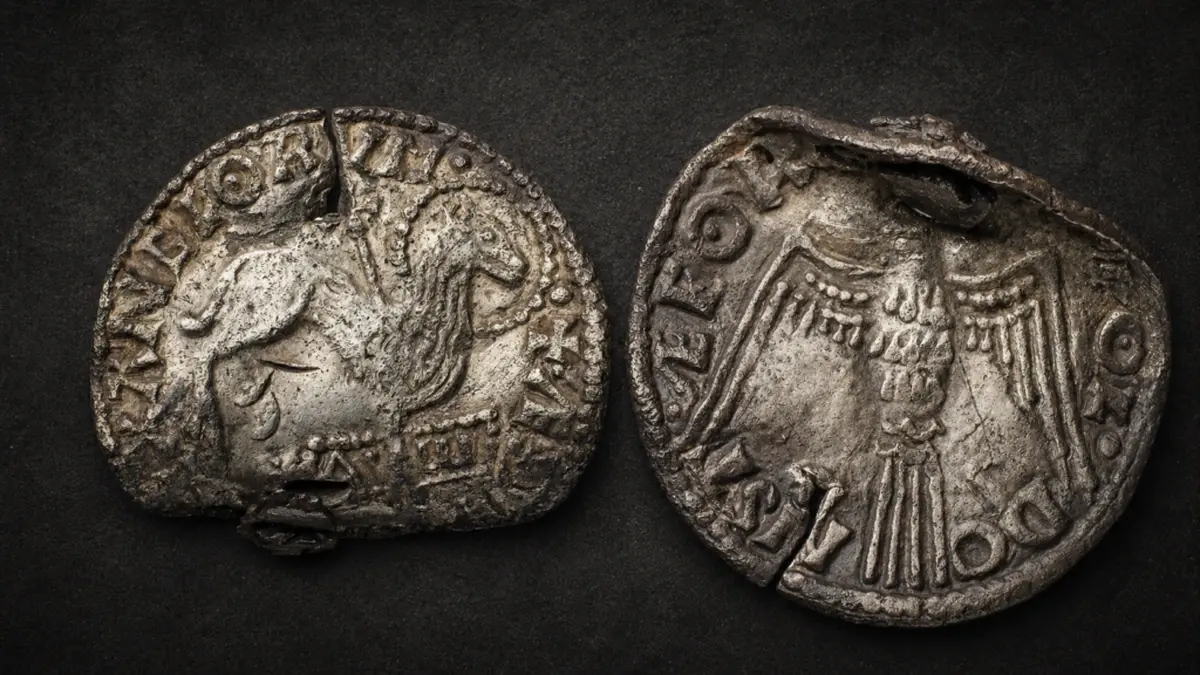
Two ancient pennies stamped with Christian symbols were made more than a thousand years ago. On one side of both pennies, there is a clear image of the Lamb of God above the Greek letters Alpha and Omega — symbols that in the New Testament link the beginning and the end of time and that frequently appear in the Book of Revelation. These examples are extremely rare: there are roughly 30 such coins known worldwide, so finding two at once is a genuine archaeological sensation.
They were discovered by people using metal detectors on the Jutland peninsula. After the find, the discoverers handed the coins over to the National Museum of Denmark for study. Museum experts say that small silver pennies could have served not just economic functions but also protective or amulet-like purposes.
“We know that in 1009 King Æthelred of England resorted to every possible measure to repel Viking attacks: he instituted fasts, urged almsgiving, and minted coins with Christian motifs that were meant to protect the English,” the museum said.
But given what happened afterward, those so-called “protective” coins apparently didn’t work: many of them made it to Scandinavia, possibly as war booty or as exotic souvenirs. People often wore such coins as jewelry.
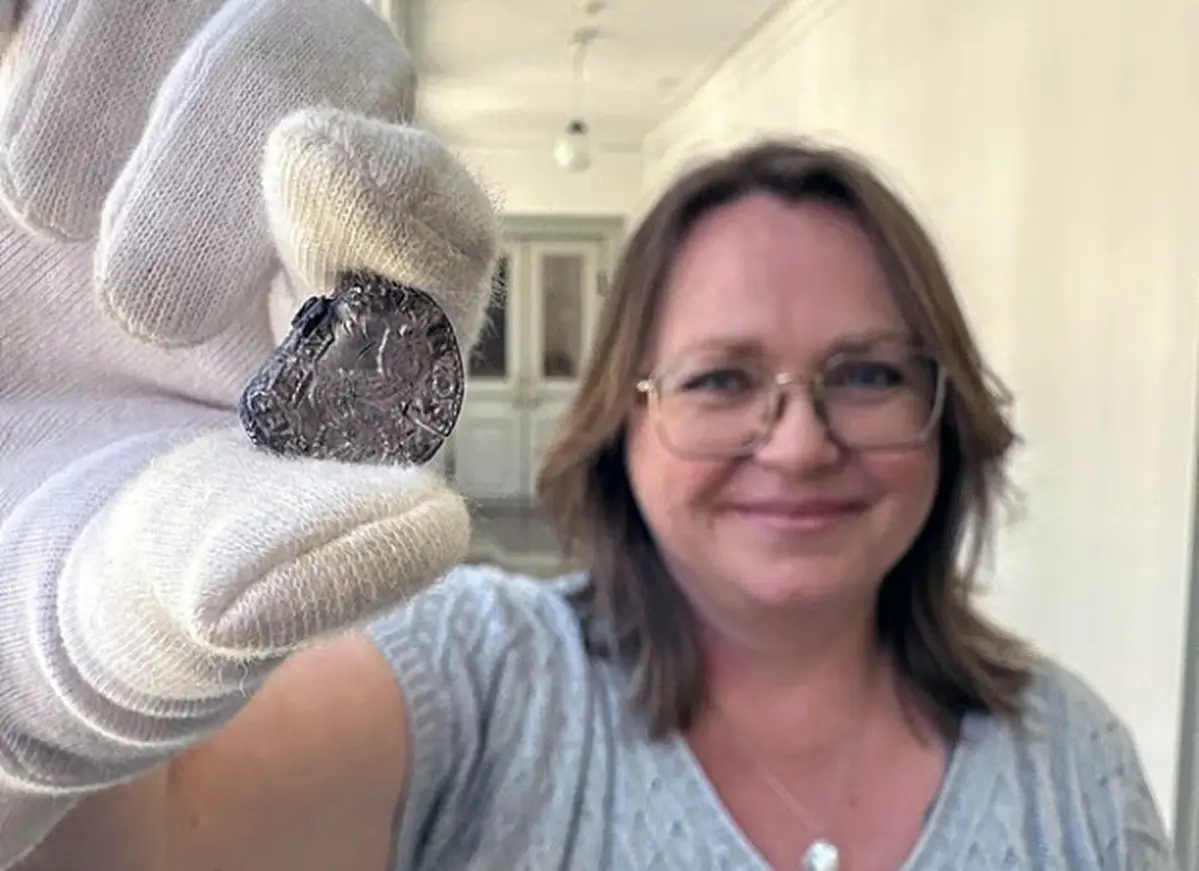
Gitte Tarnow Ingvarson, an inspector at the National Museum of Denmark, called the discovery both rare and paradoxical. She said these coins connect the histories of English kings and Christianity with Danish history, the emergence of coin circulation in Denmark, and the early formation of the Danish state.
What the ‘Lamb of God’ Symbol in the Book of Revelation Means
The image of the Lamb of God plays a central role in the Book of Revelation by John the Divine. In the text, that title refers to Jesus Christ and appears 28 times: the Lamb is simultaneously the suffering and the risen one, the conqueror of death, and the one who has the right to open the scroll of history sealed with seven seals.
In John’s vision, the Lamb stands at the center of the throne and functions as both redeemer and judge: he fights evil, executes God’s judgment, and at the same time redeems people through his sacrifice. In heaven, angels and living creatures praise the Lamb, declaring him worthy to receive power, wealth, wisdom, and glory.
The text also describes images that symbolize the fullness of power and spirit: the Lamb has seven horns and seven eyes — signs of complete might and the fullness of divine knowledge, the sevenfold Spirit of God. The book describes the preparation of the great “marriage supper of the Lamb” for the Lamb’s followers, a symbol of final victory and unity with believers, and in the final vision it portrays a new order in which suffering ends, death is overcome, and every tear is wiped away.
The discovered coins remain under study by museum specialists. Their discovery offers a rare opportunity to trace cultural and religious contacts between England and Scandinavia at the turn of the second millennium — and it reminds us how much history even the smallest artifact can reveal.
This article is based on reporting by the Daily Mail
