
 Gaby
Gaby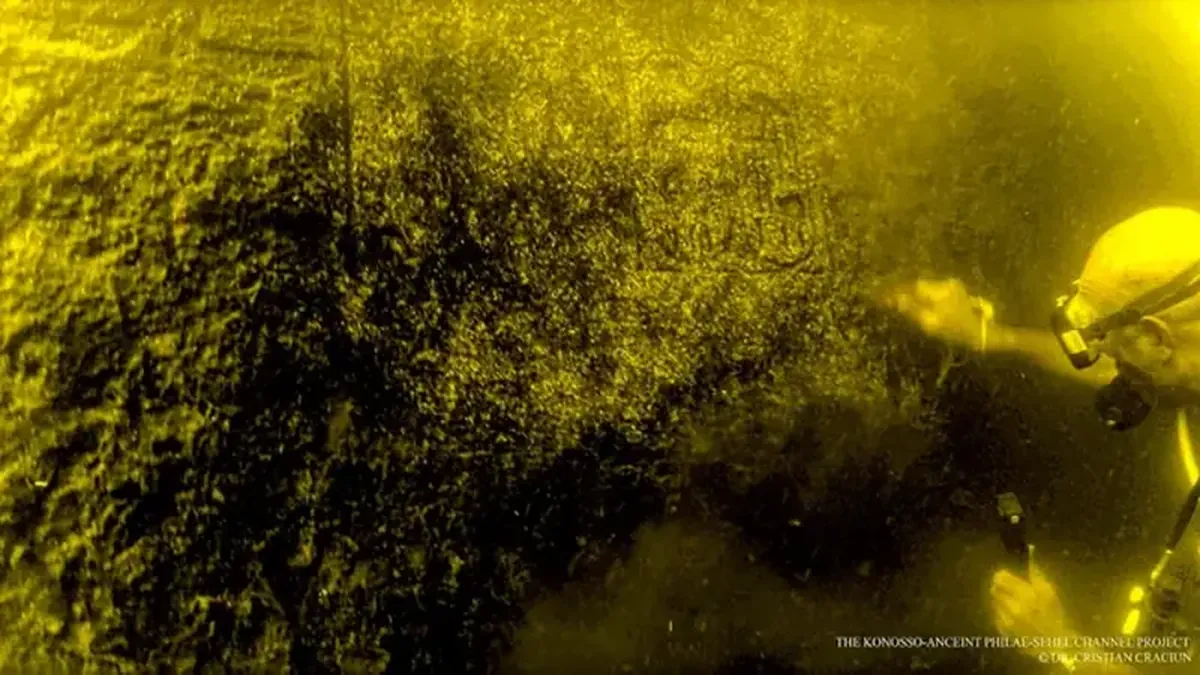
A team of underwater archaeologists from Egypt’s Ministry of Tourism and Antiquities and Paul Valéry University (Montpellier, France) discovered rock carvings of ancient Egyptian pharaohs in the Aswan Reservoir, also known as Lake Nasser.
What Makes This Discovery Interesting?
Researchers found these rare artifacts during a diving expedition, according to Live Science. The team reported carved images of several pharaohs and hieroglyphic inscriptions on rock remnants in Lake Nasser — stones that were submerged during the construction of the Aswan Dam between 1960 and 1970.
Before the dam was built, UNESCO coordinated the documentation and relocation of many archaeological artifacts in the area. Still, many items couldn’t be moved in time and ended up underwater.
Aswan marked Egypt’s southern border and held several important temples, including Abu Simbel, which is decorated with four colossal statues of Ramses II. The nearby Philae temple complex is famous as the site of the last known Egyptian hieroglyphic inscription, carved in 394 AD.

Egypt’s Ministry of Tourism and Antiquities said the team’s current goal is to identify and document the inscriptions and carved figures preserved underwater. Expedition participants photographed the artifacts. Later, researchers can use photogrammetry to turn the underwater photographs into 3D models of the carvings.
The carvings include images of Amenhotep III (who ruled from 1390 to 1352 BC), Thutmose IV (who ruled from 1400 to 1390 BC), Psamtik II (who ruled from 595 to 589 BC), and Apries (who ruled around 589 to 570 BC).
The ministry’s statement gave few details about the inscriptions’ content, the appearance of the pharaohs’ figures, or how well they have been preserved.
