
 Gaby
GabyInventors from the technology company Naicker Scientific in Gloucestershire, England, have developed an advanced water purification system designed to operate beneath the surface of the Moon. This new technology will enable the production of clean drinking water for astronauts participating in long-term lunar missions.
The company received the main prize of the international Aqualunar Challenge — £150,000, The Independent reported.
The scientists were inspired by an ordinary microwave
The SonoChem technology is modeled after a kitchen microwave oven. The system uses microwaves and ultrasound to thaw and break down contaminants in water extracted from frozen lunar soil.
“Imagine you are digging in your garden in the middle of winter, trying to extract frozen water for drinking. Now imagine doing this in an environment with a temperature of -200 °C, almost in a perfect vacuum, with low gravity and very little electricity. This is what we will have to overcome on the Moon,” said Lolan Naicker, the lead author of the study and technical director of Naicker Scientific.
“If we can make the SonoChem system work there, we can make it work anywhere, whether on the glaciers on Mars or here on Earth, in regions where access to clean water is still challenging,” the researcher added.
Using powerful sound waves, the “moon microwave” creates millions of tiny bubbles in contaminated water. The intense temperatures and pressures inside each microbubble create highly reactive chemical species that break down pollutants and allow them to be removed.
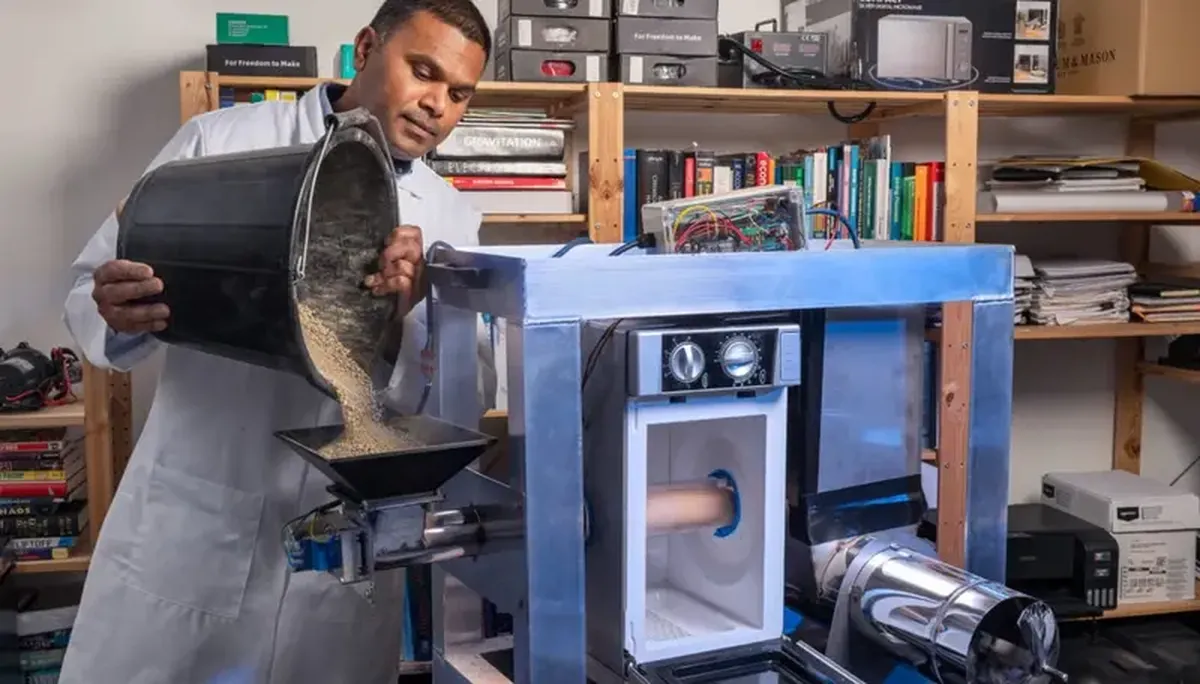
The SonoChem system uses microwaves and ultrasound to purify water from the frozen soil of the Moon.
The scientific community highly appreciated the technology
The invention won the international Aqualunar Challenge, which had a total prize fund of £1.2 million. The competition was organized by the UK and Canadian space agencies to promote development of water purification technologies for lunar exploration.
Megan Christian, head of the judging panel for the Aqualunar Challenge, said the competition responded to NASA’s plans to establish a permanent crewed base on the Moon by the end of this decade. “Astronauts will need a reliable supply of water for drinking and growing food, as well as oxygen for air and hydrogen for fuel,” she said.
Christian said about 5.6 percent of the regolith around the Moon’s south pole is frozen water in the form of ice, and that if this water can be extracted, separated from the soil, and purified, a crewed base would be viable.
