
 Gaby
Gaby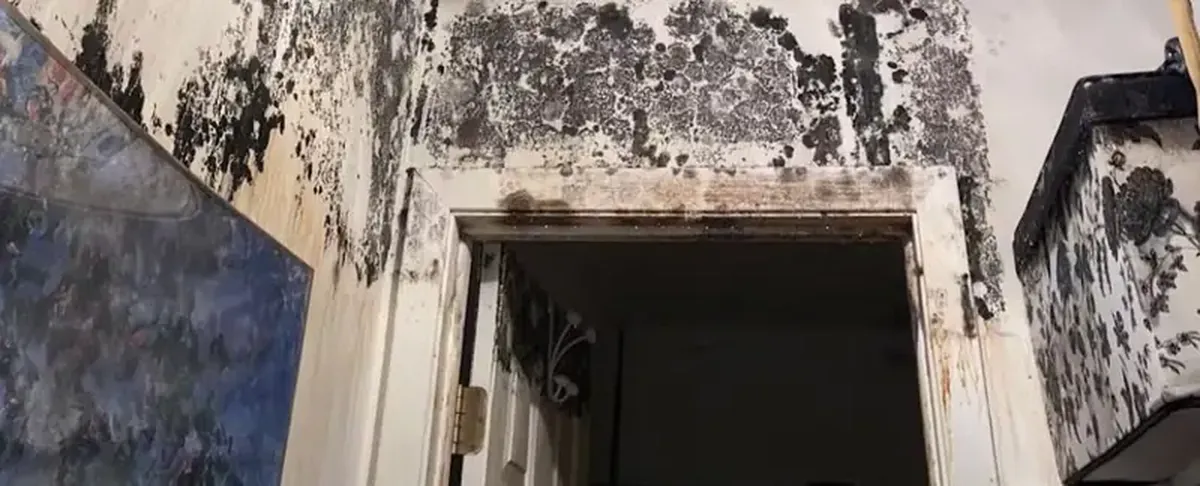
Many people know that microscopic fungi that invade the walls of homes can trigger asthma and other allergies. Professor Nicholas Mani of the University of Miami says indoor mold may cause even more serious health problems.
Ubiquitous Mold
Mold appears almost everywhere: on houseplants, pantry food, a building’s exterior and interior surfaces, and in cracks on concrete walkways; they even live on our bodies.
But mold can also be useful. This isn’t just the kind cheese lovers prize. Microscopic fungi are excellent recyclers, breaking down organic material and returning nutrients to the environment.
All fungi, including mold, produce tiny airborne spores. Mold releases huge numbers of these spores, and we breathe them in constantly—especially when mold has taken over a house.
Professor Mani explained that when spores land on a surface, they germinate and form threads that elongate and branch out. That leads to spider-like colonies spreading across surfaces. Once a colony settles in a new spot, it produces a new generation of spores.
Where Does Mold Settle Indoors?
Mold can thrive even in the cleanest homes. It commonly grows under sinks, on shower curtains, and in the drains of dishwashers and washing machines. In humid climates, it often attacks walls.
Professor Mani says there are many species of mold that grow indoors and only a biologist can tell them apart. Common home molds include Aspergillus and Penicillium, which are hard to distinguish, and Cladosporium and Chaetomium, which favor damp carpets.
Stachybotrys is another household fungus often found under flower pots.
When Does Mold Become a Problem?
Mold becomes a problem when it forms large brown or black patches and starts eating away at surfaces. If the affected area is smaller than a pizza box, you can probably clean it yourself.
Widespread mold growth requires professional intervention and may even mean significant home repairs. In those cases, consult an indoor air quality specialist first. The specialist will measure the concentration of spores in the house. High spore concentrations can be hazardous to health, Science Alert reports.
If indoor spore levels exceed outdoor levels, mold will keep spreading inside. The specialist will take professional air samples, identify the problem, and help fix it.
Why Fight Mold in Your Home?
Indoor mold causes three main problems, says Professor Nicholas Mani. First, it damages living spaces by discoloring surfaces and creating unpleasant odors.
Second, its airborne spores carry health risks such as asthma, allergic rhinitis, hay fever, and more. Third, some molds produce toxic chemicals called mycotoxins.
Stachybotrys—commonly called toxic black mold—is especially dangerous for children. In the 1990s, its spread in Cleveland was linked to pulmonary hemorrhage in infants. Black mold spores are sticky and don’t disperse easily in the air, but children’s developing lungs are especially vulnerable to their effects.
Professor Mani says recognizing indoor mold as a threat can help residents avoid unnecessary stress and protect their health.
