
 Gaby
Gaby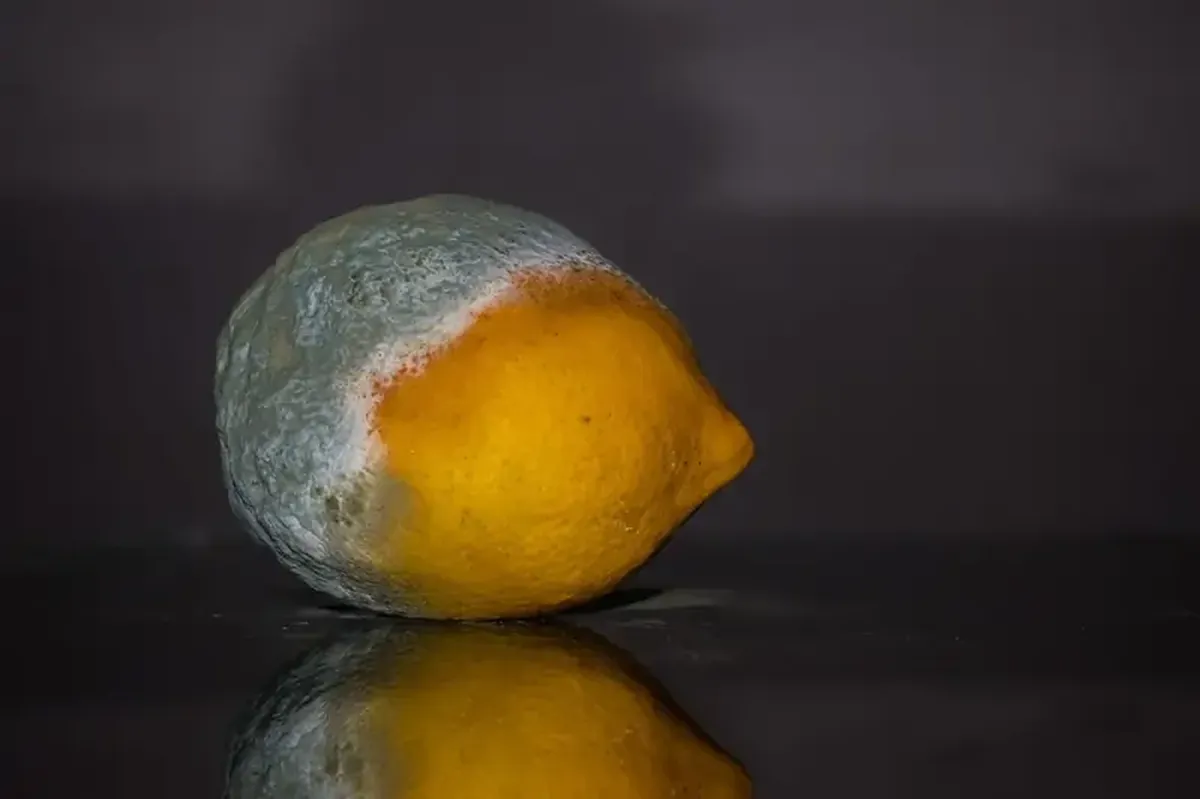
Not storing food properly or using it past its expiration date can cause both obvious and hidden spoilage. Eating food that has mold you don’t see can be risky.
Molds Come in Many Forms
Certain varieties of mold are actually beneficial to people. For instance, Aspergillus niger is used to produce citric acid from sugars, while Penicillium chrysogenum was the original source of penicillin.
Some Penicillium species—like P. roqueforti, P. glaucum, and P. camemberti—are involved in making specialty cheeses, which can vary in color because of the mold. Noble molds add distinctive flavors to blue cheeses (Bavarian Blue, Roquefort, Danablu, Gorgonzola, Cambozola, Fourme d’Ambert, Bleu de Coss, Bleu de Bresse, Bleu d’Auvergne, Parsifal), well-known white cheeses (Camembert, Neuchâtel, Boulet d’Avila, Brie, Care, Coulom, Rougette, Pont-l’Évêque, Chaource), as well as red (Marol, Livarot, Époisses, Remoudou, Munster) and green cheeses (Dorblu, Stilton, Saint-Agur, Bergader).

Side Effects
Many mold-ripened cheeses are prized because they typically don’t contain preservatives. As a result, their shelf life is limited—often around two months. Special paper packaging helps slow ripening and control mold growth in these products.
However, even noble molds can be harmful to health. Pregnant women should avoid moldy products because of the risk of listeriosis, which can lead to miscarriage. Children under 10 are also advised to avoid them, since low-level toxins can accumulate in their bodies at that age.
Those at risk include people allergic to penicillin and people with metabolic disorders, obesity, or high cholesterol. Unwanted side effects may include digestive upset and dysbiosis. Because of the higher bacterial content in some cheeses, experts recommend limiting portions to about 50 grams per day.
Hard vs. Soft
Have you heard this joke? “Do you have blue cheese?” — “What’s that?” — “Cheese with blue mold” — “We don’t have cheese. We have blue cheese sausages and blue bread.”
Often, people try to “save” a product that has gone moldy by cutting away the affected area. Experts warn that this approach is only acceptable for dry, hard cheeses with rinds (like Swiss, Cheddar, and Parmesan), and for firm vegetables or fruits with mold on the outer skin but not near the stem. In those cases, cut at least 1.5 cm around the damaged area. In contrast, it’s futile to try to “rescue” soft products: if they develop mold, discard them entirely. This rule applies to soft cheeses, berries, soft fruits, meats and meat products, homemade dishes (side dishes, soups, etc.), jams, yogurt, kefir, butter, and peanut butter.
Remember that mold often grows beneath the surface. Cutting away the fuzzy coating does not remove the invisible fine threads—mycelium. Mold typically penetrates deep into food, and a significant portion can be contaminated.

The “Silent Killer”
Microorganisms can produce toxins as they grow on food. The amount of these compounds depends on how long the fungus has been growing, but even small amounts of mycotoxins can cause serious illness.
For example, the T-2 toxin produced by Fusarium species can cause agranulocytosis—a severe drop in white blood cells that makes the body more vulnerable to infections. Grain molds like Aspergillus flavus produce aflatoxins—often called “silent killers”—that can increase the risk of liver cancer.

Better Safe Than Sorry
If you find mold where it shouldn’t be, throw the product away. Moldy food can also carry Listeria, Salmonella, E. coli, and other pathogens.
Airborne spores are particularly hazardous. When inhaled, spores can irritate the airways and worsen asthma. In some cases, they can lead to pulmonary candidiasis—a fungal infection caused by Candida. Although prognosis is often good, these illnesses can be uncomfortable and may lead to complications.
Summer is a prime time for fungal spores, since these organisms thrive in warm, humid environments. Consuming contaminated products can cause sudden illness, depending on the type and amount of mold consumed, a person’s sensitivity, overall health, and tendency toward allergic reactions. If you experience weakness, shortness of breath, sneezing, hives, migraines, dizziness, nausea, or vomiting, consult a doctor.
