
 Gaby
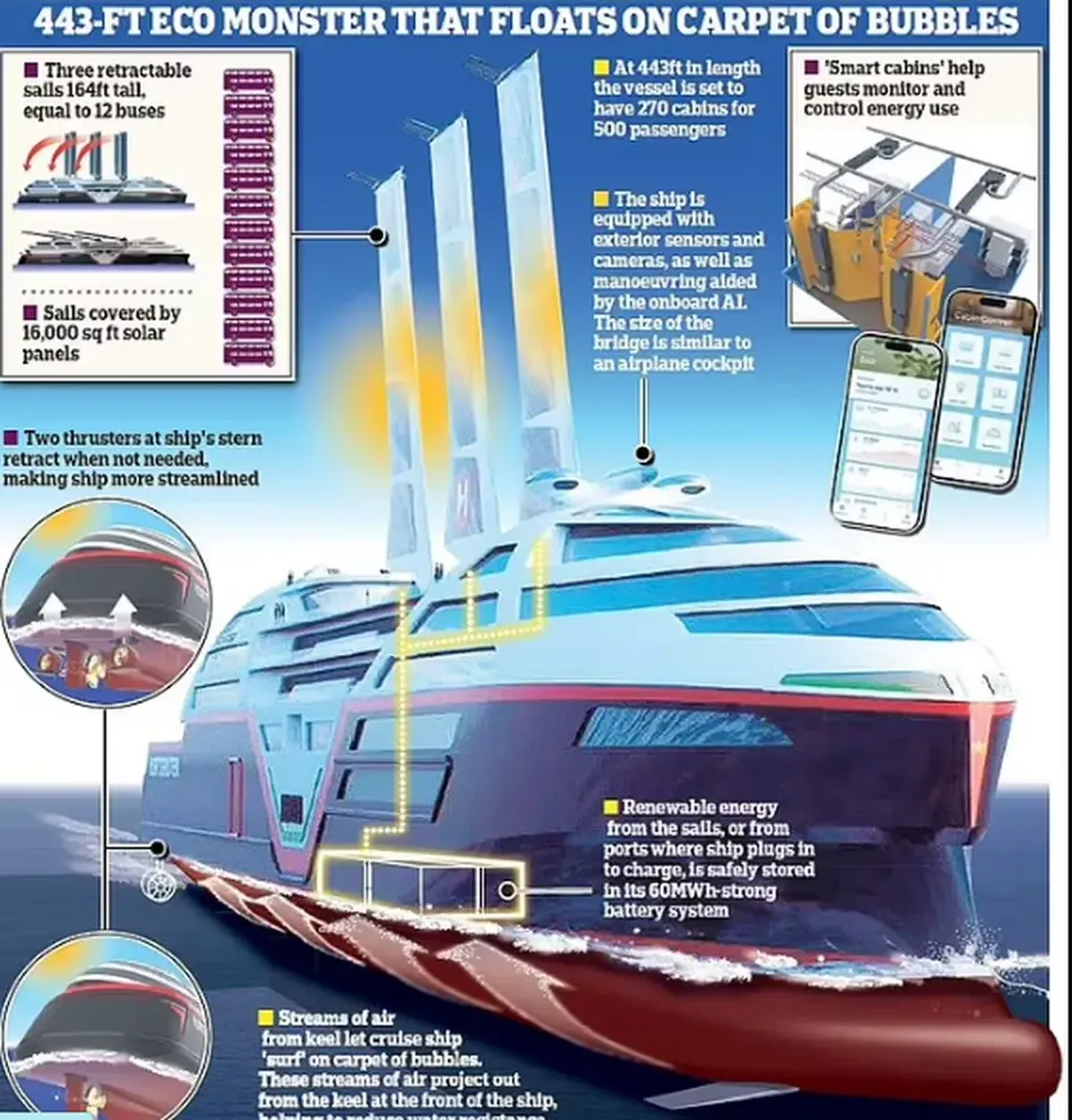
GabyThe 130-year-old Norwegian company Hurtigruten is currently developing what may be the most energy-efficient cruise ship in the world: it will have retractable 50-meter sails covered in solar panels, battery packs, and “smart” cabins. The liner will also be powered by wind energy, making a zero-emission vessel a real possibility for the global cruise industry.
Hedda Felin, the CEO of Hurtigruten, noted: “To sail for another 130 years, we need to change the way we sail.”
What else is known about the firstborn of the Sea Zero project?
Although many people are drawn to the idea of cruising on luxurious vacation ships, cruises have never really been environmentally friendly. But the arrival of a new electric liner could change that dramatically.
The ship that the company promises to launch in 2030 will be 135 meters long. It will have 270 cabins, accommodating 500 passengers and 99 crew members. The vessel will also transport cargo.

To work on the concept, Hurtigruten partnered with the research organization SINTEF. Researchers’ calculations showed that the design would consume approximately 40–50 percent less energy than modern ships, allowing the company to use battery packs as the primary energy source. The battery packs will have a capacity of 60 megawatts. The batteries will be charged in port.
Meanwhile, three retractable sails will be covered with solar panels totaling 1,500 square meters. That energy will charge the batteries while at sea, the Daily Mail reported.

The sails will also capture wind energy, which will be used to propel the vessel forward (just like on a traditional sailboat).
One detail: passengers will be able to control energy consumption in their cabins using an app on their mobile phones.
“Currently, we are modernizing our fleet, reducing CO2 emissions by 25 percent. But for our precious nature and for future generations, we need to do more,” said Felin. “The cruise industry is a significant source of pollution, so it is very important that we take serious steps to reduce emissions.” The company plans to soon transition all of its ships to clean energy.
Indeed, Norway’s geography helps these transformations: in summer, the sun shines there for 24 hours a day.
