
 Carlos Solis
 Everything we consume interacts not only with our bodies but also with other substances that enter our system. Doctors explain why not all vitamins and minerals work equally well when taken together and which dietary supplements should not be combined due to their opposing effects. To maximize the benefits of vitamins and other micronutrients, it’s essential to consider the principles of synergy and antagonism. In synergy, the combined action of substances enhances the positive effect of each. In antagonism, opposing substances hinder each other’s effectiveness. Besides following the rules for combining supplements, it’s also important to follow the conditions for taking them.
Harmonious Combinations
When doctors recommend taking certain supplements together while advising others to be taken separately, they are guided by the principles of synergy and antagonism. For instance, vitamin B6 aids the absorption of magnesium into cells, while iron reduces zinc absorption when both micronutrients are consumed together. Therefore, it’s important to understand the compatibility of vitamins and minerals — whether they “get along” or “fight” with each other.
Vitamin B6 + Magnesium
Let’s start with the “friends.” The compatibility of B vitamins is particularly “friendly.” For example, vitamin B6, when taken with magnesium, enhances the mineral’s absorption. Magnesium regulates nerve and muscle activity, participates in protein synthesis, and influences more than 300 functions in the human body. Vitamin B6 supports the nervous and immune systems, hemoglobin production, metabolism, skin and hair health, and helps convert food into energy.
Vitamin B12 + Vitamin B9
Another example of a compatible combination is vitamins B12 and B9. Vitamin B12 supports the nervous system and the production of red blood cells, while folic acid (vitamin B9) aids DNA synthesis, supports a healthy pregnancy, and promotes cardiovascular health. Together, these vitamins amplify each other’s benefits.
Vitamin C + Iron
Vitamin C’s antioxidant and immune-boosting properties are well known. It also improves iron absorption, and iron is essential for transporting oxygen in the blood, supporting immunity, and promoting healthy hair, nails, and skin.
Vitamin D + K2
These vitamins support bone health and cardiovascular wellness. Vitamin D helps the body absorb calcium from food and maintain optimal blood levels. Vitamin K2, working with vitamin D, directs calcium to the teeth and bones, preventing its buildup in the arteries.
Vitamin E + Omega-3
Omega-3 fatty acids support mood, heart health, brain function, skin, eyes, and metabolism. Vitamin E acts as an antioxidant, protecting cells from damage. Taken together, vitamin E and omega-3s improve each other’s effectiveness and absorption.

Unwanted Combinations
The following combinations are considered detrimental, as these supplements are poorly absorbed together or even neutralize each other’s effects. Doctors advise against combining these nutrients and recommend taking them separately, with at least a two-hour gap.
Zinc + Copper
This is an unfortunate combination because high doses of zinc hinder the absorption of copper.
Iron + Zinc
When taken together in large doses, iron reduces the absorption of zinc.
Calcium + Iron
Taking these minerals together reduces iron absorption in the intestines.
Magnesium + Calcium
High doses of these minerals can interfere with each other’s absorption.
Vitamin C + Vitamin B12
Vitamin C can interfere with vitamin B12, so avoid taking them together.
Supplement Intake Guidelines
Before starting vitamins or other supplements, consult a doctor and follow their dosage recommendations. Read user reviews, check the manufacturer, review the product’s composition, and read the instructions on the packaging. Use tracking stickers or a pill organizer to remember to take your vitamins. Separate incompatible nutrients by at least two hours. Store compatible micronutrients in pairs, in separate containers, and keep them at the proper temperature away from direct sunlight. A compatibility chart for vitamins and minerals can help you navigate combinations: yellow indicates neutral interaction, green indicates compatibility, and red indicates incompatibility.
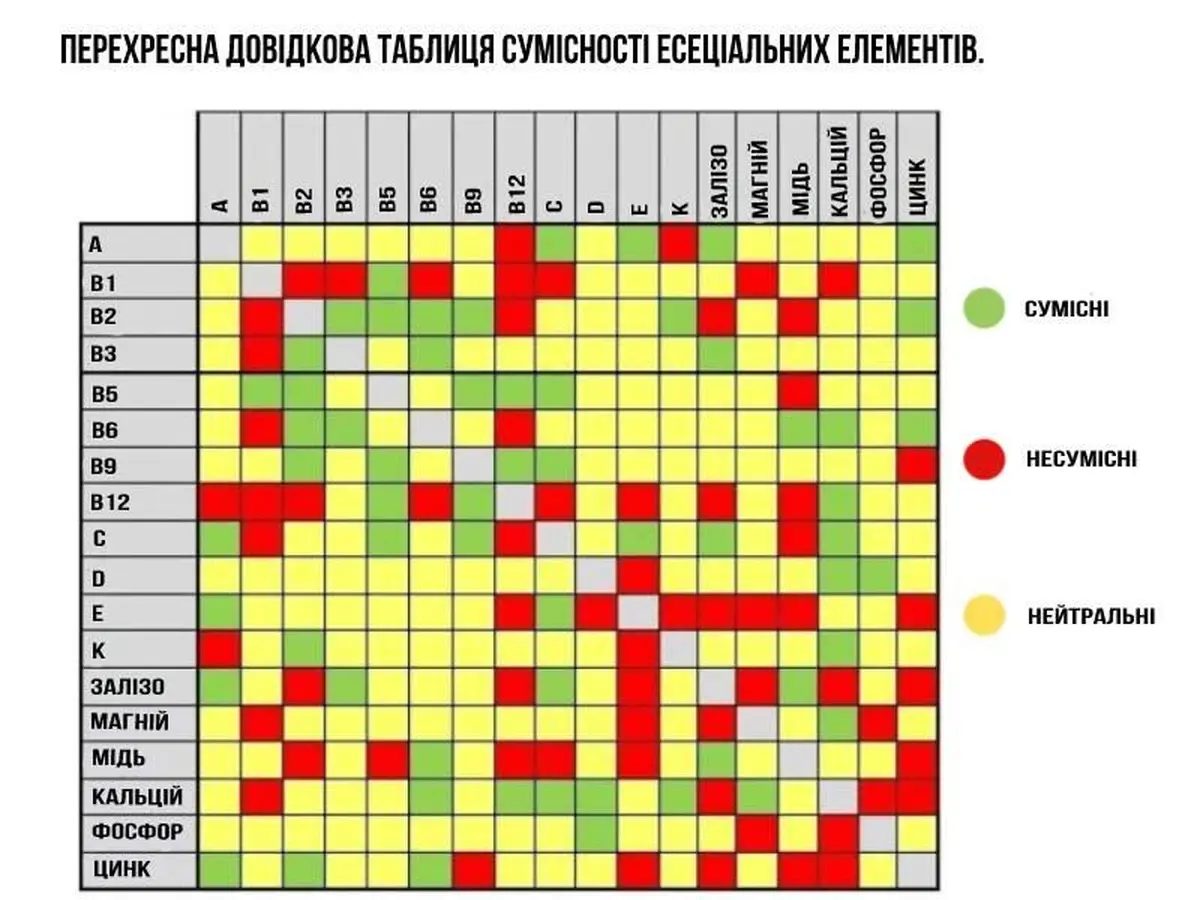
Photo: Unsplash
