
 Gaby
GabyAnalysis of isotopes from volcanic rock on the Hawaiian Islands has confirmed the presence of precious metals, including gold, in the Earth’s crust. A team from the University of Göttingen in Germany says those metals seeped from the Earth’s core and made a long journey to the surface through magma. “Upon receiving our initial results, we realized we had stumbled upon gold! Our data confirmed that material from the core, including gold and other precious metals, is infiltrating the Earth’s mantle,” said geochemist Nils Messling, the lead author of the study.
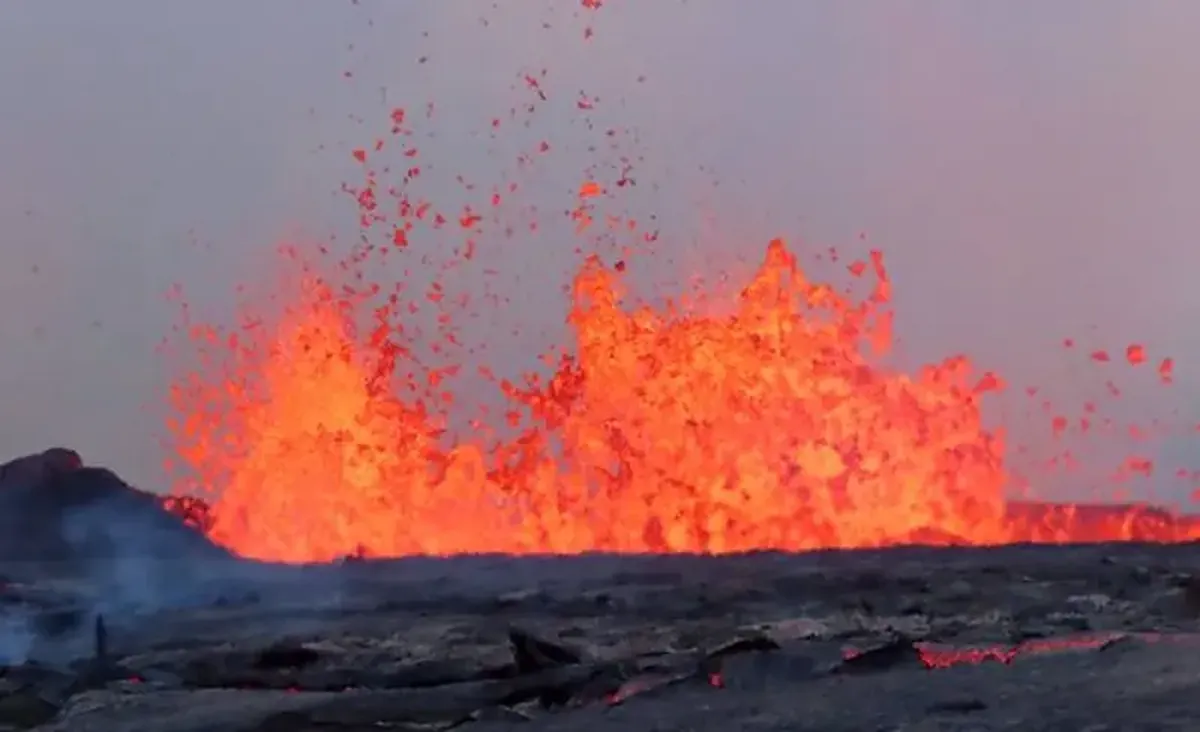
What did the scientists discover? While researchers can access gold in the Earth’s crust, that represents only a tiny fraction of the planet’s total reserves of the metal. According to the team, more than 99 percent of Earth’s gold is locked in the core — enough to cover all land on the planet with a 50-centimeter layer of gold. The university researchers made their case using isotopes of the platinum-group metal ruthenium. The key point is that ruthenium isotopes in the Earth’s core differ subtly from those in surface rocks. Messling and his colleagues developed new analytical methods that let them distinguish between those isotopes. By extracting this metal from volcanic rock in Hawaii, the scientists found a significantly higher amount of ruthenium-100 than is typically found in the surrounding mantle. That indicates the rock contained ruthenium that had migrated from the Earth’s core, as reported by Science Alert.
This discovery suggests that all siderophile elements have leaked from the core. (Siderophile elements are metals that became part of the core when the Earth was still young and molten. – Ed.) That group includes ruthenium, palladium, rhodium, platinum, and gold. The scientists say those metals don’t leak quickly, and they can’t simply be extracted from a depth of 2,900 kilometers. But the finding matters because it gives new insight into our planet — and possibly other rocky planets too. “Our results not only showed that the Earth’s core is not as isolated as previously thought. We can now also demonstrate that vast amounts of superheated mantle material — several hundred quadrillion metric tons of rock — are generated at the boundary between the core and mantle and rise to the Earth’s surface, forming oceanic islands like Hawaii,” said geochemist Matthias Wilbold, a participant in the study. The study was published in the journal Nature.
