
 Gaby
GabyResearchers at the European Space Agency (ESA) remembered building strange creations with Lego as kids. Inspired by those memories, they developed a new building material for constructing structures on the Moon.
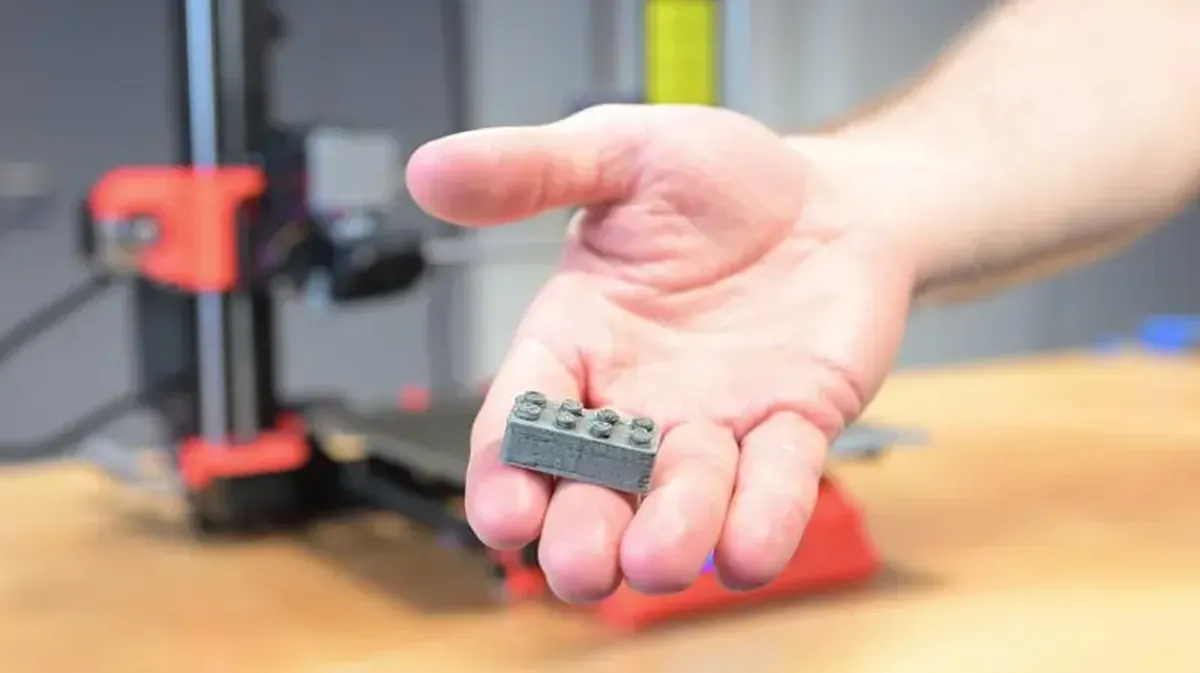
These “space bricks” — reminiscent of the famous Lego — are made from dust from a meteorite about 4.5 billion years old. The meteorite was discovered in 2000 in northwest Africa.
Meteorite dust acts as a substitute for lunar regolith — the loose material that covers the Moon’s surface. Lunar regolith is largely the product of meteorite impacts on the Moon.
Because actual lunar regolith is scarce on Earth (Apollo astronauts returned only limited samples), scientists settled on the meteorite dust as an optimal substitute.
The development of space bricks is part of ESA’s contribution to the international Artemis program, which aims to send astronauts to the Moon and establish a base there for habitation.
Transporting materials from Earth is prohibitively expensive and logistically difficult, so ESA hopes to use lunar regolith for building bases and launch pads.
Laboratory work
This work is part of ESA’s in-situ resource utilization (ISRU) program and is being carried out by the EAC Spaceship group in Cologne, Germany.
Aidan Cowley, head of the EAC Spaceship lab, says his team favors “creative construction.” They decided to form small blocks from space dust, similar to Lego bricks. After printing a number of these bricks, the researchers will test different construction methods.
“No one has ever built structures on the Moon, so we will have to think not only about how to build them but also what materials to use, as we cannot take any materials with us into space,” Cowley said.
To get a material suitable for 3D printing, the team crushed pieces of the meteorite into dust and mixed it with a small amount of polylactic acid (a biodegradable bioplastic) and a “regolith simulant” — a mix of terrestrial minerals that closely resembles lunar surface soil.

ESA says printing the small blocks required fine tuning of the 3D printer. The bricks fit together like Lego; that familiar interlocking system creates a surprisingly strong bond, Dezeen reported.
“The result is stunning, and although the brick has a somewhat rougher appearance than usual, it’s important that the adhesive strength still works, allowing us to test our projects. It was both fun and useful,” Cowley summarized. Meanwhile, the Lego Group has showcased 15 ESA space cubes in its stores around the world. Company representatives hope to inspire children to build their own “space” objects.
The Artemis program has been underway since 2017, with a crew landing on the Moon scheduled for late 2026. As part of the program, the construction company ICON has been working on 3D printing technology for the Moon. Meanwhile, Prada has been designing spacesuits for Artemis, and Lockheed Martin, General Motors, and Goodyear have been developing concepts for a lunar spacecraft.
