
 Gaby
Gaby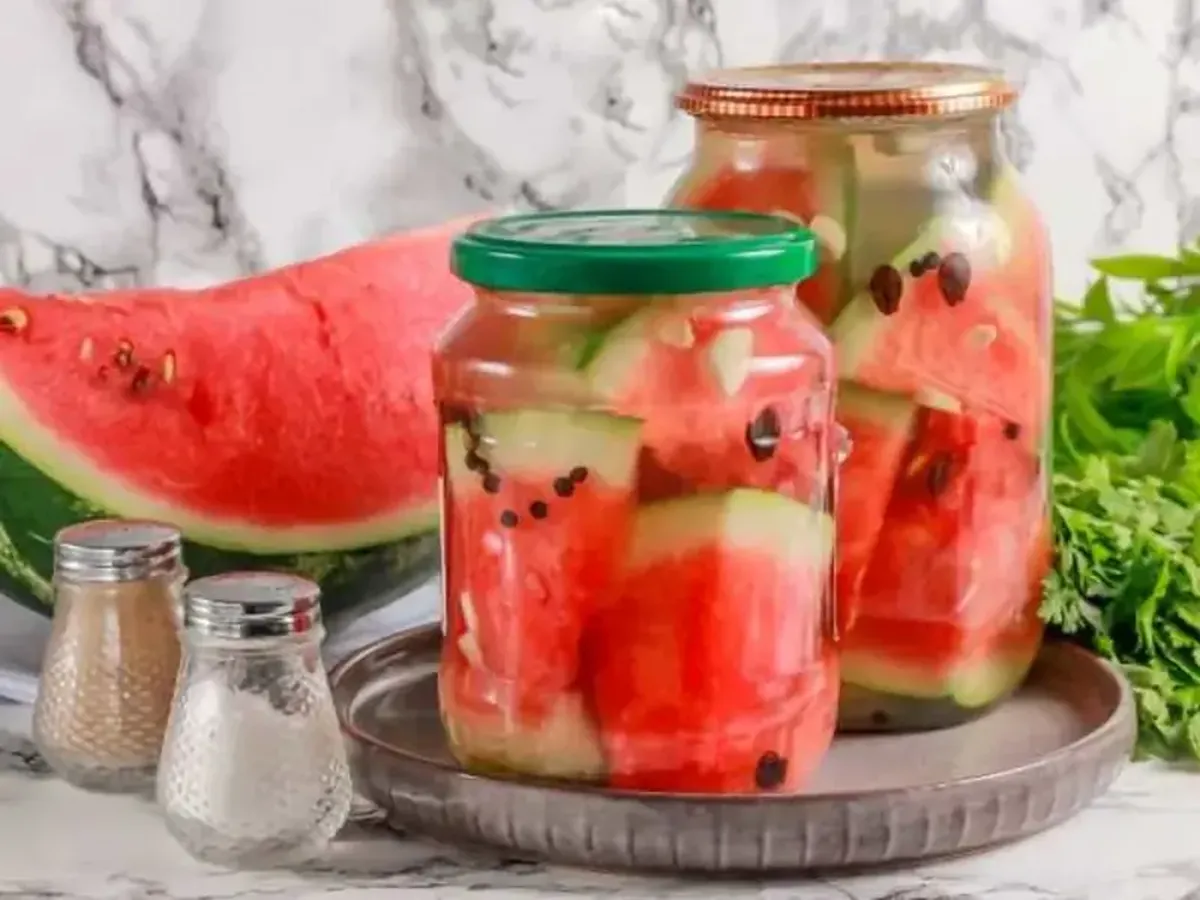
The flesh of a large, juicy watermelon contains up to 13% easily digestible sugars: fructose, sucrose, and glucose. As it ripens, fructose and glucose dominate the flesh, while sucrose builds up during storage. The fruit also contains pectin, some alkaline compounds, and protein. Watermelon is a source of magnesium, potassium, iron, calcium, sodium, and phosphorus, plus folate and vitamin C, beta-carotene, riboflavin, niacin, and thiamine. A 100-gram serving of edible watermelon has only 38 calories.
Ingredients (for a one-liter jar): 1 watermelon, 1 tablespoon vinegar, 1 clove garlic, a 2-cm piece of hot pepper, 2 sprigs dill, 2 teaspoons sugar, 1 teaspoon salt.
Sterilize jars. Put the hot pepper (seeds intact), dill, and garlic into the sterilized jars. Pack the jars with watermelon flesh, add the salt and sugar, then pour in the vinegar. Fill the jars with boiling water and seal them with sterilized lids.
Line the bottom of a large pot with a towel. Place the filled jars in the pot and heat them in the hot brine for 10 minutes to sterilize. Remove the jars, seal the lids tightly, and store the pickled watermelon in your pantry.
Life Hack
When canning, choose a whole watermelon with an undamaged rind and firm, fresh flesh. Signs of spoilage include changes in the flesh’s texture or natural color, a sour or bitter smell, dark spots, or mold on the rind. Avoid watermelons that are mushy, sticky, or have a paste-like texture—spoiled fruit is not suitable for pickling.
