
 Gaby
Gaby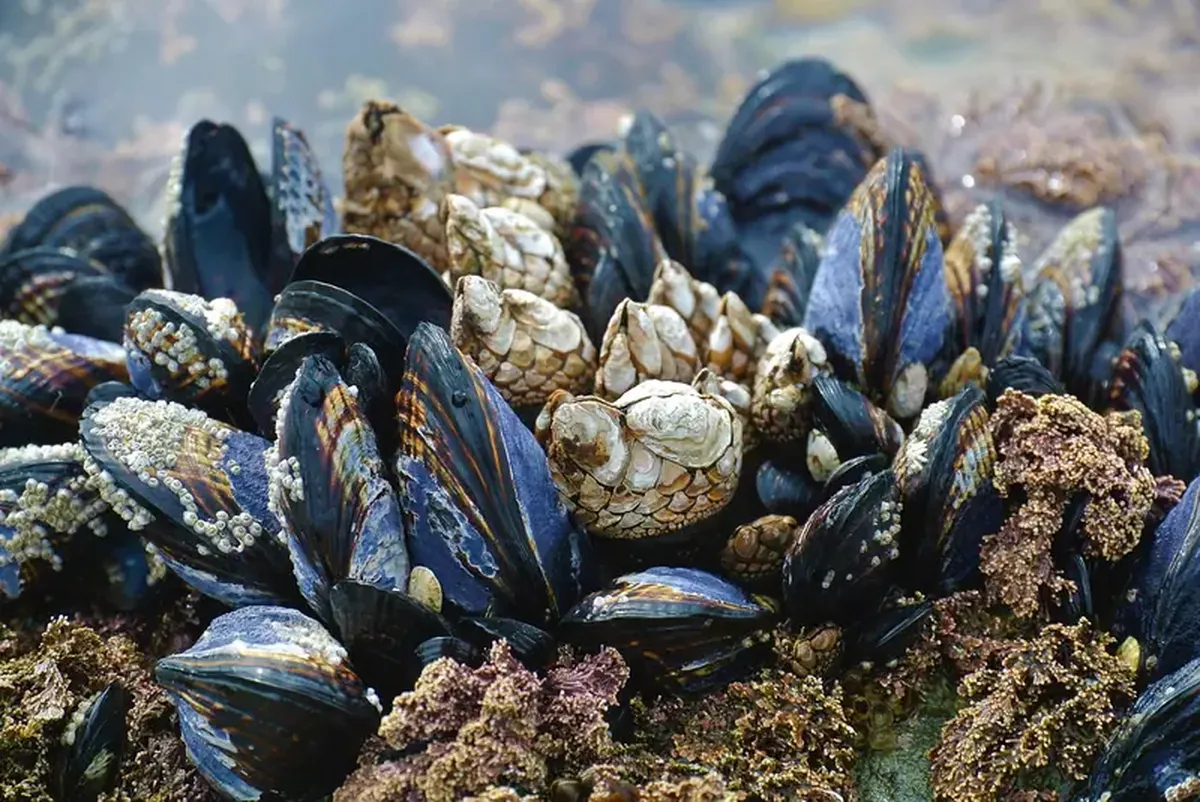
A team from the Massachusetts Institute of Technology (MIT) and the Free University of Berlin has harnessed mussels and mucus to create a new superglue.
Researchers have long observed that mussels cling to ship hulls with bonds that are incredibly hard to break. That raised the question of whether the same chemistry could be turned into an adhesive useful for medical care.
The Evolving Idea
In their study, the team combined slimy and sticky proteins to create a new kind of superglue.
They wanted a waterproof, antibacterial adhesive for surgery, wound care, and preventing infections after medical procedures.
They pointed to mucus—made of mucin proteins—as a natural material that both sticks to surfaces and limits bacterial buildup. Mucus coats parts of the body not covered by skin, helps buffer pH, wards off bacteria and viruses, and aids functions like swallowing, coughing, and sneezing.
Ultimately, they combined the antimicrobial traits of mucus with mussels’ waterproof stickiness.
How the Experiments Were Conducted
First they tested the idea. The team collected proteins from mussel shells and mixed them with pig mucin proteins and synthetic mucin polymers.
They examined how the mixtures formed gels and measured their mechanical properties. They then evaluated the materials as tissue adhesives and antimicrobial coatings, a process reported by IFLScience.
They found they could precisely control how quickly the liquids gelled—anywhere from seconds to hours—by changing the polymers’ molecular architecture.
“We can control the speed at which liquids turn into gel and adhere,” said Rainer Haag, a co-author of the study. He said the team achieved this on wet surfaces at room temperature and under very mild conditions—a capability Haag called unique.
On pig skin (a common stand-in for human tissue), the glue both bonded surfaces and prevented buildup of Pseudomonas aeruginosa, a common cause of postoperative infections.
So far they haven’t tested human samples. “We expect our approach to be compatible with human mucins, such as salivary mucins,” said George Degen, a co-author.
The glue is still in early development, but the authors say it could be adapted into an injectable or a spray that forms a sticky gel. They foresee it improving patient safety during implant placement and serving as a wound dressing to prevent infection.
The study was published in the Proceedings of the National Academy of Sciences.
