
 Gaby
GabyThe Amazon River stretches at least 6,400 kilometers (some sources claim up to 7,100 km), and remarkably, it has no bridges crossing it. Given humanity’s tendency to reshape natural landscapes, the absence of bridges in such a vast region might seem strange. But the main reason is simple: there is little demand for crossings over the Amazon River. The dense tropical forests of the Amazon are sparsely populated, with relatively little infrastructure and few roads. This makes bridges unnecessary, unlike the Thames, which is dotted with numerous crossings. “There is no urgent need to build a bridge over the Amazon,” explained Walter Kaufmann, head of the Department of Civil Engineering at the Swiss Federal Institute of Technology in Zurich. According to Kaufmann, a specialist in concrete structures and bridge design, there are also technical and logistical challenges in the Amazon. Building infrastructure in dense tropical forests is very difficult. As a result, there are very few sizable human settlements in the region. The ground is soft and unpredictable, so any man-made structures can easily be swallowed by the encroaching vegetation of the rainforest and by harsh conditions such as heavy rains.
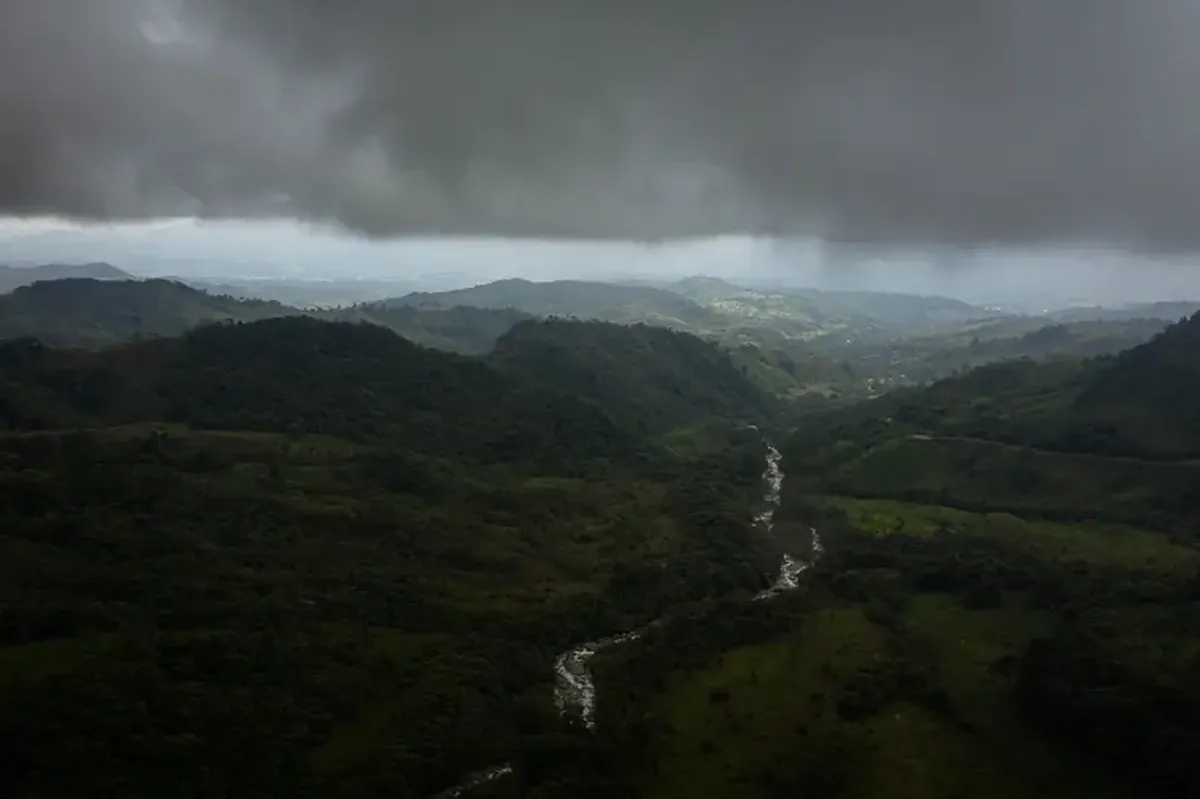
Any attempt to construct a bridge that isn’t perfectly planned is likely to fail, with foundations quickly overtaken by vegetation.
Despite the lack of bridges, these lands have their own remarkable feature. They are literally dotted with long-lost remnants of human settlements, as reported by IFLScience. New visualization technologies have revealed that throughout the Amazon basin there are likely over 10,000 pre-Columbian archaeological sites hidden beneath the surface. Unlike the archaeological remains of ancient cultures found in other parts of the world, Amazonian structures are waterlogged, engulfed by vegetation, and buried. In the 1970s, a highway known as BR-319 was proposed to cut through the Amazon forests—an 870-kilometer road intended to connect the Brazilian cities of Manaus and Porto Velho. Ultimately, the highway was abandoned in the late 1980s due to high maintenance costs and the constant repairs required because of rapid deterioration.
Some argue it’s better that bridges never cross the Amazon River. The river is an incredibly rich and unique hub of biodiversity and human culture, currently under immense pressure from logging and mining. Building roads, highways, and bridges would likely accelerate that exploitation. Research has shown that 95 percent of deforestation occurs within 5.5 kilometers of a road, because roads provide access for loggers, vehicles, and heavy machinery.
