
 Gaby
Gaby
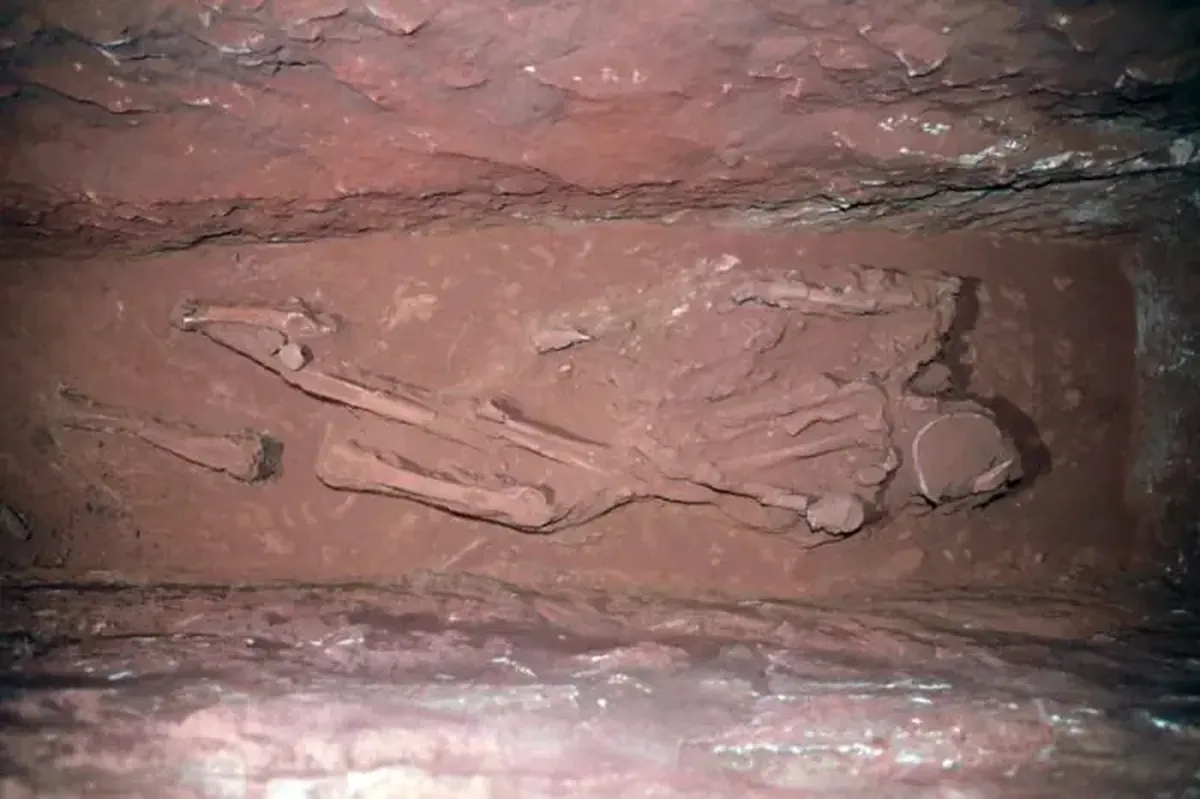
Researchers have uncovered a 2,000-year-old, previously unknown tomb under the rock-cut temple of Al-Khazneh in Petra, Jordan, containing the remains of 12 people and burial artifacts. They found it using ground-penetrating radar.
Al-Khazneh, known as the Treasury, is one of the Middle East’s most remarkable landmarks. It has often served as a filming location for Hollywood blockbusters, including “Indiana Jones and the Last Crusade.”
One of the people buried there was found clutching the upper part of a broken ceramic cup — a find that reminded the team of the Holy Grail from that film.
“When we saw something resembling the Grail cup, we all literally froze,” said American TV host Josh Gates, who took part in the excavation. The discovery is the focus of a new Discovery Channel documentary. Gates called it an astonishing moment where art echoed life.

Why Is This Discovery Important?
“We had no idea these excavations could completely change our understanding of the Treasury,” said Dr. Pierce Paul Chrisman, executive director of the American Research Center and the project lead.
Researchers were astonished by the hidden chamber. “Since nearly all tombs in Petra have been found empty, this may be the most significant tomb ever discovered here, and this finding is of historical magnitude,” Gates noted.
“It’s incredible that we now have ceramics, ecofacts, and deposits dating to the time of the Treasury’s construction,” said Tim Kinnard, an ecologist at the University of St. Andrews. “Previously we were working from assumptions and guesses. Establishing an exact date will be a monumental achievement for us.”

About Petra and Its Treasury
The ancient city of Petra was built and carved into the sandstone cliffs of a desert canyon in southern Jordan more than 2,000 years ago by the Nabataeans, a nomadic Arab people.
The city became their capital, which they named Rakmu. At one time it was a hub of trade between the Mediterranean, Arabia, and Asia. Today it stands as one of the New Seven Wonders of the World, hiding many mysteries, as Science Alert reports.
By 700 A.D., Petra had inexplicably fallen into disrepair. By then, Al-Khazneh had been stripped of artifacts. No one truly knows how old the Treasury is or what it was used for. Al-Khazneh is called the Treasury because people believed the urn crowning its facade held gold and precious stones.
Archaeologists believe the tomb was built as a mausoleum and crypt for King Aretas IV Philopatris in the early 1st century A.D.
This king ruled the Nabataeans from around 9 B.C. to 40 A.D. Under his reign, what had been a community of goat and sheep herders prospered into a kingdom dominated by wealthy traders. That prosperity funded the construction of many lavish buildings in Petra, which drew the attention of the ancient Romans. Around 100 A.D., the Roman Empire annexed Petra. The Romans ruled here for the next 300 years before gradually abandoning the city.
It remains unclear what happened to the Nabataeans after that. They likely gradually assimilated into Roman society. Much of what we know about them comes from Roman chronicles.

“We can expect that the burial, possessions, and human remains will help fill in the gaps in our knowledge about how Petra emerged and who the Nabataeans were,” said geophysicist Richard Bates at the University of St. Andrews, a co-author of the study.
