
 Gaby
Gaby
If you gathered all the compliments Hollywood directors gave one star, you’d end up with the description “a wild dark horse who kept her beauty in check.”
Beauty
According to family legend, Vivien’s mother, Mrs. Hartley, was pregnant with her daughter while accompanying her husband—an English cavalry officer—during his service in India. Day after day she was mesmerized by the Himalayas’ phenomenal views, and that unique beauty was said to have been passed on to the girl born on November 5, 1913. Little Vivien, born in Darjeeling, inherited English, Irish, French, and Armenian blood from her parents and would become one of the brightest actresses in Britain and Hollywood.

And it was this beauty—the thing that should have helped her career—that Vivian Leigh saw as her biggest obstacle. Neither the Royal Academy of Dramatic Art in London, her thirty years of stage experience, nor two prestigious Best Actress awards could erase the bias of directors who assumed beauty and talent couldn’t coexist. The stunning actress had to work twice as hard to transform herself.
These efforts did not go unnoticed by critics, who wrote that “her beauty often overshadowed her acting achievements.” George Cukor, the first director of the legendary film “Gone with the Wind,” called Vivian “a convincing actress who restrains her beauty.” Garson Kanin, a contemporary writer-director, said, “Great beauties are not expected to be great actresses, but Vivian is made of different stuff: serious and persistent, ambitious and inspired.”
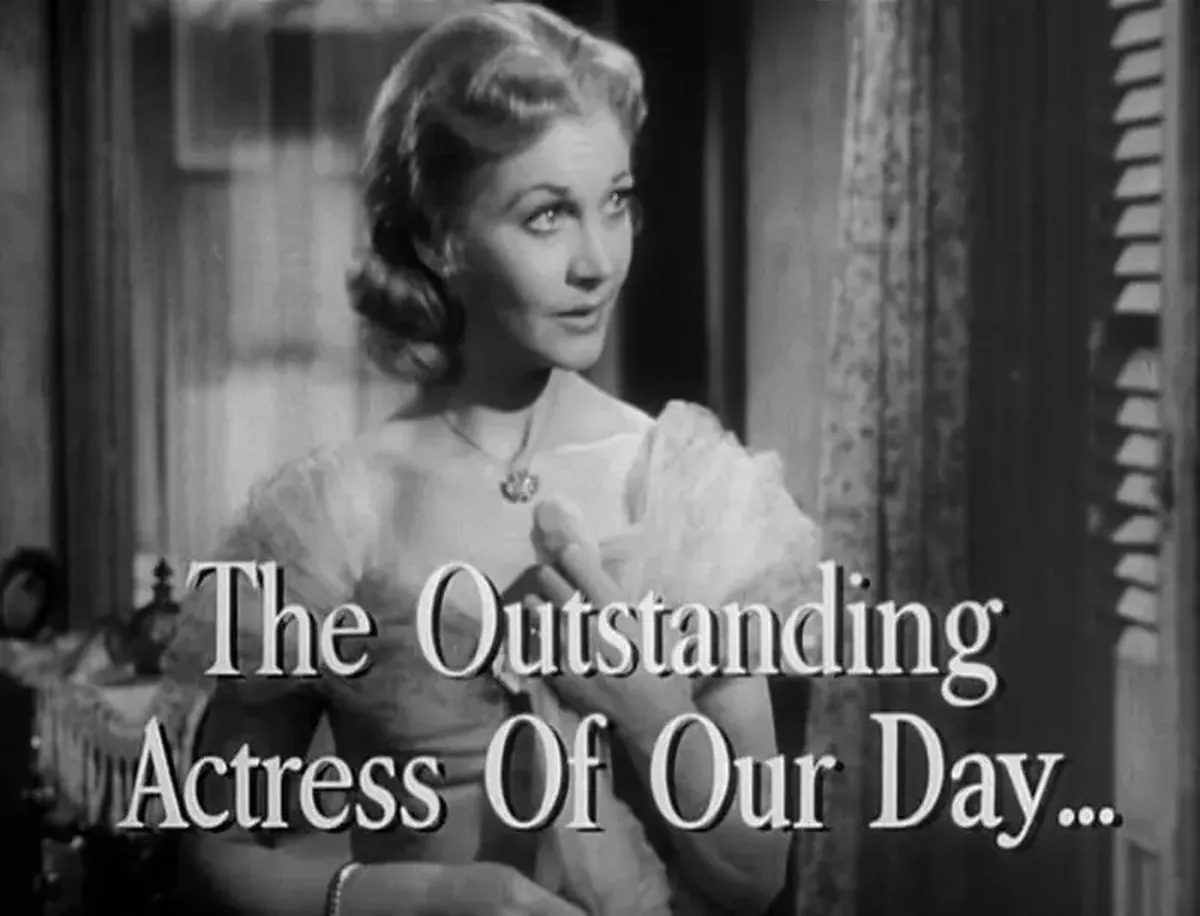
Vivian Leigh as Blanche DuBois in “A Streetcar Named Desire” (1951)
For her role as Blanche DuBois in “A Streetcar Named Desire” (1951), the 36-year-old actress agreed to aging makeup that hid the charm she had shown as Scarlett O’Hara in “Gone with the Wind” (1939). The two Oscars she won for those roles confirm both performances as authentic. One of her statuettes reportedly served as a doorstop in her bathroom, while another was sold by her descendants at auction in the early 1990s for $563,000.
Temperament
Vivien Leigh’s impulsiveness and obsessive intensity marked both her work and her private life, earning her a reputation as a “difficult” partner. That label was not only about the creative process but also about the emotional extremes she brought to her craft. Mood swings and bursts of aggression, followed by exhaustion and memory loss, showed that Leigh struggled with her mental health.
Among her partners, her second husband and colleague Laurence Olivier often experienced the symptoms of Leigh’s bipolar disorder: they lived and performed together. Their romance began after working on the film “Fire Over England,” where they played passionate lovers. By then both were married with children. Leigh’s daughter stayed with her lawyer father after the parents’ divorce, while Olivier’s son remained with his mother. Their divorces were not immediate, but they formalized their relationship in 1940; their marriage ended twenty years later, in 1960. Although fidelity was not central to the marriage, a framed portrait of Olivier remained by Leigh’s bedside even after their divorce. Vivian Leigh retained the title “Lady Olivier” from 1947 until her death.
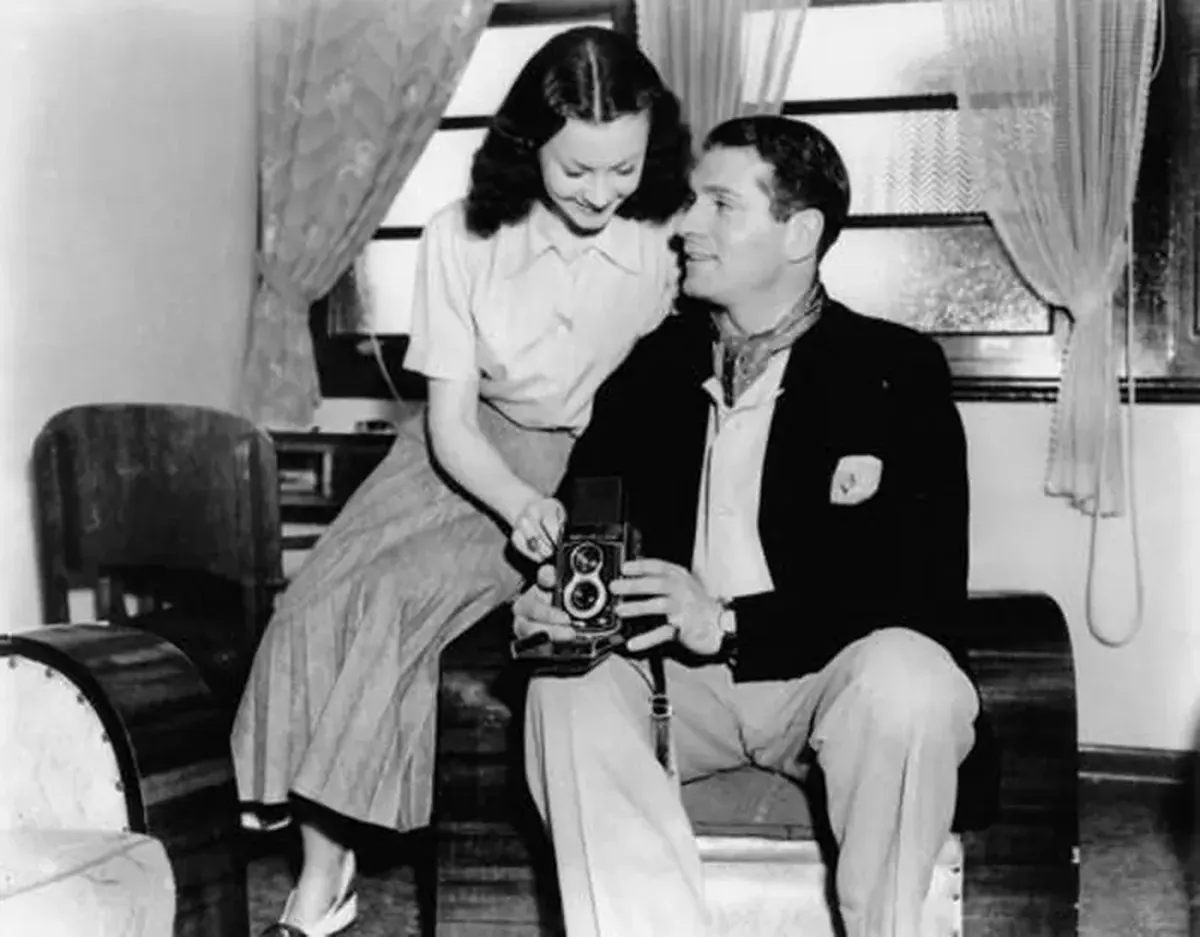
Vivian Leigh and Laurence Olivier in “Gold Coast,” June 1948
In his autobiography, Olivier wrote that as early as the 1940s his then-wife had told him their marriage was over. She suffered from depression after a miscarriage and later developed tuberculosis, a disease that contributed to her death at 53.
Coughing fits—caused by damage to Leigh’s left lung—sometimes kept her off the stage, but during periods of remission after treatment the actress returned to work with renewed vigor. She often misjudged her strength, so during tours a stand-in would sometimes support her. There were occasions when Leigh refused to perform amid scandal, and tensions with Olivier spilled into physical confrontations. Olivier would reportedly try to “bring his wife back to her senses” with a slap and receive one in return; after those exchanges, Leigh would still take the stage. Addressing the press, the exhausted couple told reporters, “Perhaps you still don’t understand that you’re dealing with cooling corpses.”
Fate
It was with Olivier that Leigh starred in one of her favorite films, “Lady Hamilton” (1941), in which she played Emma Hamilton and Olivier portrayed Horatio Nelson. After that work the couple became favorites of Winston Churchill, who enjoyed their company at dinner and praised Leigh and her on-screen character as examples to admire.

Vivian Leigh and Laurence Olivier in “Lady Hamilton” (1941)
Leigh considered her most challenging work to be the controversial stage production and later film of Tennessee Williams’ “A Streetcar Named Desire.” The play dealt with chaotic relationships, sexual violence, and homosexuality, forcing “well-mannered” British actors to push beyond accepted restraint. “Vivian would crawl over shards of broken glass if it would help her better embody the character,” director Elia Kazan said; he admitted he initially struggled to connect with her but ultimately got a performance he had never imagined. After performing Blanche in 326 shows and the film over nine months, Leigh said the character still controlled her—the role pushed her closer to the edge of madness.

Vivian Leigh in 1958
On July 7, 1967, actor John Merivale, who had accompanied the actress after her separation from Olivier, returned home after a performance and found Vivien’s lifeless body on the floor beside her bed. On the day of her funeral, theaters across London dimmed their lights for an hour. Per her will, she was cremated and her ashes were scattered over a lake near her family home in East Sussex.
