
 Gaby
GabyDongral Ryu, a professor of hydrology at the University of Melbourne, and his colleague Ki-Won So report that global warming has sharply reduced the amount of water available worldwide, especially in soils, lakes, and rivers. That loss poses serious, potentially irreversible risks for agriculture. Meanwhile, sea levels keep rising. What did they find? The researchers say the large transfer of water from land to ocean is particularly dangerous for farmers. Over the past 20 years, the Earth’s soil moisture has fallen by more than 2,000 gigatons. For comparison, that is more than twice the ice loss from Greenland between 2002 and 2006.
At the same time, droughts have become more frequent, sea levels have risen, and the Earth’s poles have shifted. To confirm that the planet now holds less water on land than it once did, Ryu’s team used three different data sources. Ryu said the study’s findings reveal a harder truth farmers must face: when drought is followed by intense rainfall and massive flooding, it doesn’t necessarily replenish underground water reserves.
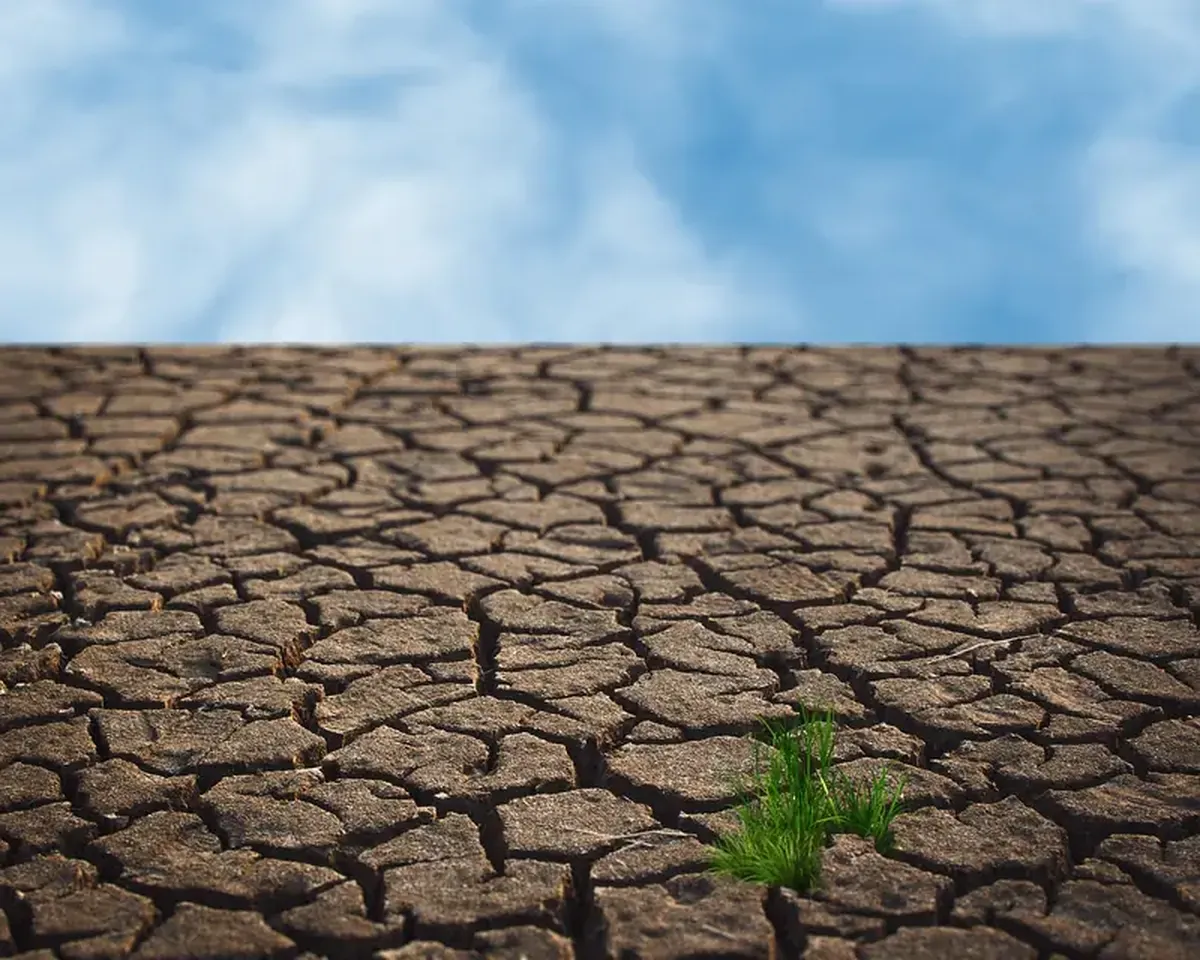
“It seems that the land has lost its elasticity and cannot return to its former state,” Ryu said. The return of that elasticity will depend on how humanity responds to climate change and how people adjust their approach to water use.
Meanwhile, plants are under increasing heat stress. Agriculture, especially irrigated farming, is still consuming water at rates that aren’t sustainable. People are not cutting greenhouse gas emissions or taking serious steps to fix the problem, according to Phys.org. Katherine Jacobs, a professor of environmental sciences at the University of Arizona who was not involved in the study, warned that long-term climate changes similar to those in Earth’s past could eventually reverse this trend — but probably not within our lifetime. “As greenhouse gases continue to drive global warming, evaporation and transpiration rates are unlikely to decrease anytime soon,” she said.
The study also offers an explanation for small fluctuations in the Earth’s rotation. The team found that those fluctuations are linked to changes in the planet’s moisture levels. Luis Samaniego, a professor of hydrology at the University of Potsdam in Germany, said the discovery is more than fascinating — it’s a worrying signal. “Imagine the planet’s fluctuations as an electrocardiogram of Earth,” he said. “Seeing this result is akin to discovering an arrhythmia.” The study’s findings were published in the journal Science.
