
 Gaby
Gaby
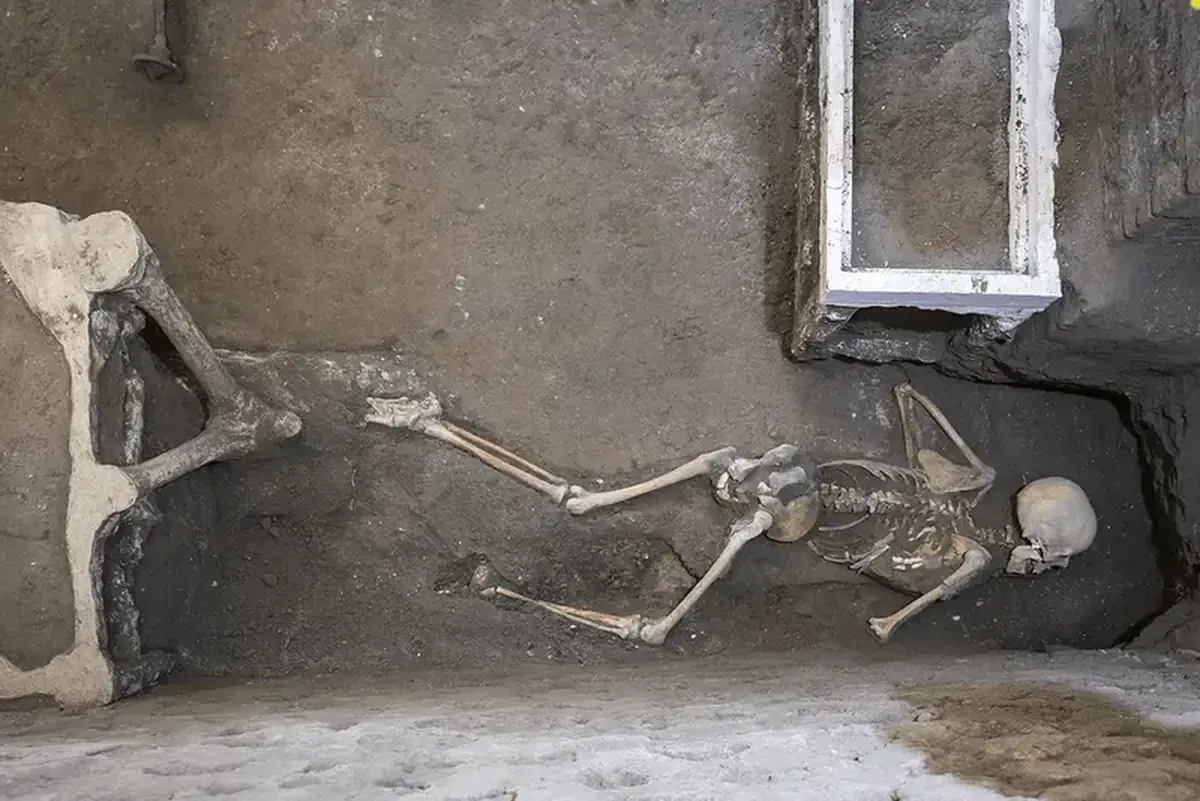
Archaeologists uncovered the skeletons of two previously unknown victims of Mount Vesuvius’s eruption in 79 A.D. in Pompeii’s Regio IX district. A man and a woman died in a room researchers call “Zone 33.” The woman, about 35 to 45 years old, was found lying on a bed in a fetal position, while a young man of roughly 20 was discovered beneath the rubble of a collapsed wall.
The find helps researchers reconstruct the final moments of panic those who died during the eruption experienced. The young man and the middle-aged woman were likely seeking refuge in a room that ultimately became a trap.
Next to the woman’s body, archaeologists recovered valuable items, including earrings and a collection of coins. Archaeologists think the woman tried to save her valuables from the approaching disaster.
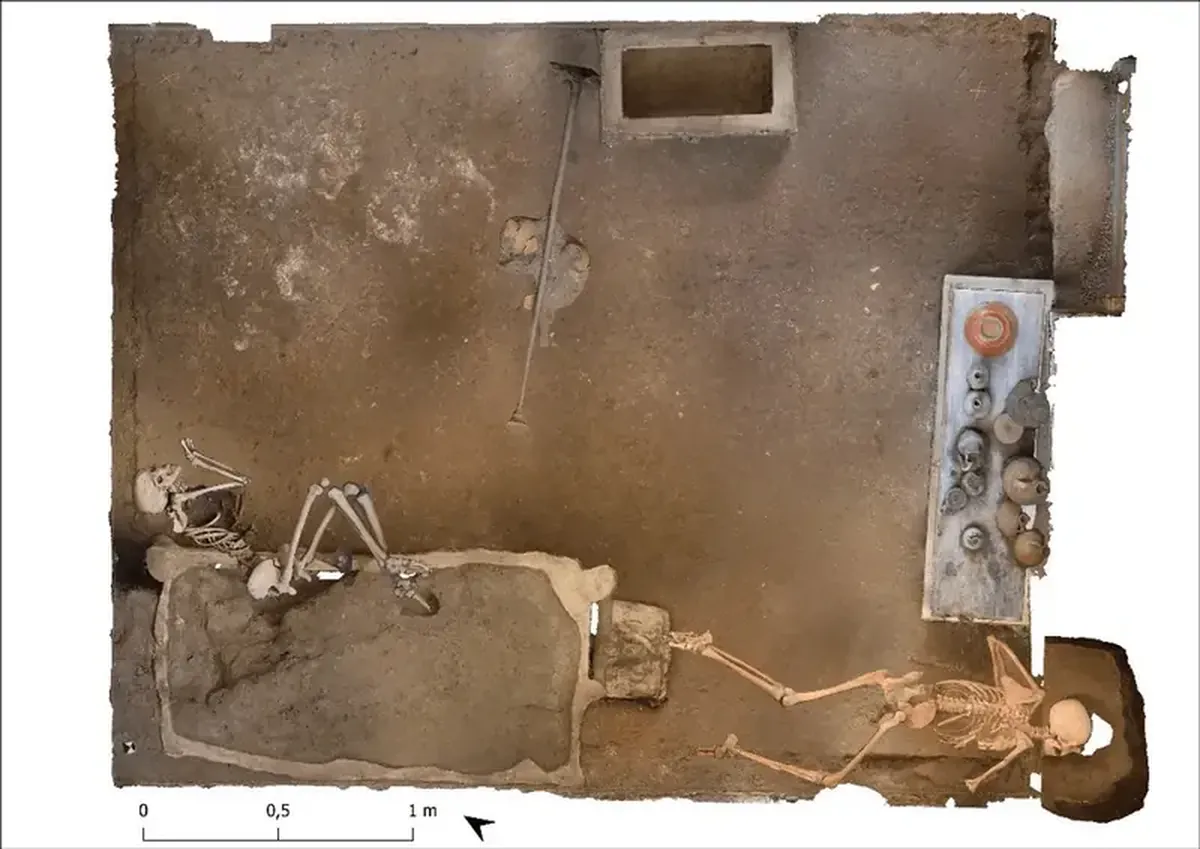
Because the room wasn’t filled with pumice, researchers believe the pair took shelter from volcanic fallout after the eruption. But when pumice filled the adjacent room, the two became trapped, IFLScience reports.
Several centimeters of ash on the floor suggest they died in a pyroclastic flow — a fast-moving current of hot gas and volcanic material. That flow probably caused the wall to collapse, killing the young man.
Experts think the woman may have survived a little longer. She may have resigned herself to lying on the bed and waiting for death. It is unclear how long she endured, but her final moments were likely agonizing.
You Can’t Take Gold and Pearls with You to the Afterlife
Around the woman’s skeleton, archaeologists found a set of iron keys that may have belonged to a nearby chest. She also had gold, silver, and bronze coins and gold-and-pearl earrings — evidence she tried to protect her valuables before she died.
The earrings were in the “crotalia” style, named for the rattling sound the pearls make when they clink together. Her belongings also included an amulet-shaped pendant that may have been used for protection during childbirth.
From these finds, researchers infer the woman intended to flee with her treasures but did not make it in time.
Archaeologists reconstructed the room’s layout by pouring plaster into depressions left in the ash, creating casts of the wooden furniture. Those casts revealed traces of a bed, an overturned stool, and a wooden table with a marble top.
