
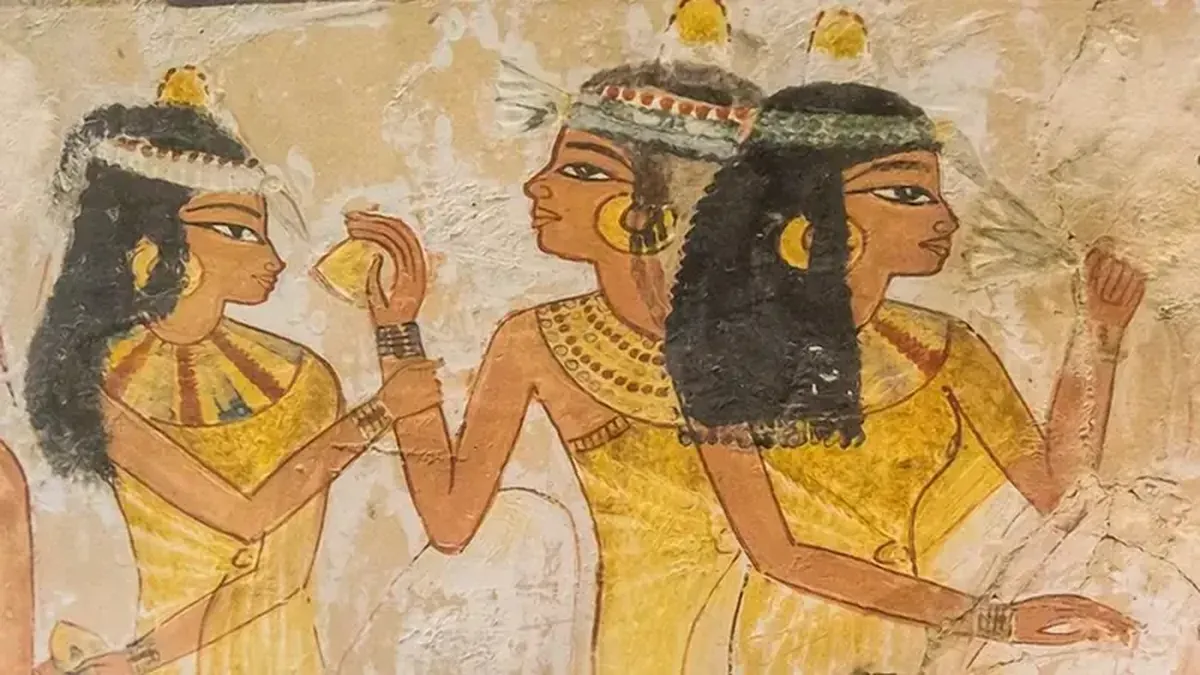
For years, researchers have speculated about the meanings behind the peculiar wax hats worn in ancient Egypt. The oldest burials where archaeologists found these small, cone-shaped headpieces—about the size of a coffee cup—date to roughly 3,300 years ago.
The Mystery from the Banks of the Nile
Many works of ancient Egyptian art dated between 1550 and 30 B.C. depict men and women wearing small conical decorations on their heads. One notable example is a painting in the tomb of Nakht in the Valley of the Nobles, where all the women are shown wearing the accessory.
The people who wore these hats took part in a variety of activities. For instance, they wore them while hunting, at funerals, and while playing musical instruments. Women often donned the headpieces during childbirth, Live Science reported.
Until recently, archaeologists had only seen these hats in artwork and had never found actual cones in tombs. In 2019, however, an international research team uncovered two burials in cemeteries at Amarna—the ancient city that once served as Egypt’s capital. The team published the findings in the journal Antiquity.
In those burials, the team found skeletons with cone-shaped objects atop their skulls. The researchers hypothesized that the cones were more than decorative clothing. Analysis of the remains indicated the cones were made from beeswax and that their owners were not wealthy; most likely they were undernourished workers.
But those conclusions didn’t clarify the cones’ purpose. One theory suggests the cones were made from scented wax balm that released a pleasant aroma when it melted—and which could have masked unpleasant smells. Another theory argues the cones aided conception, because the cones often appear in paintings alongside the fertility goddess Hathor.
The researchers proposed that the conical headdresses were mainly associated with rituals of sensuality, sexuality, and fertility. But it’s still too early to draw definitive conclusions.
