
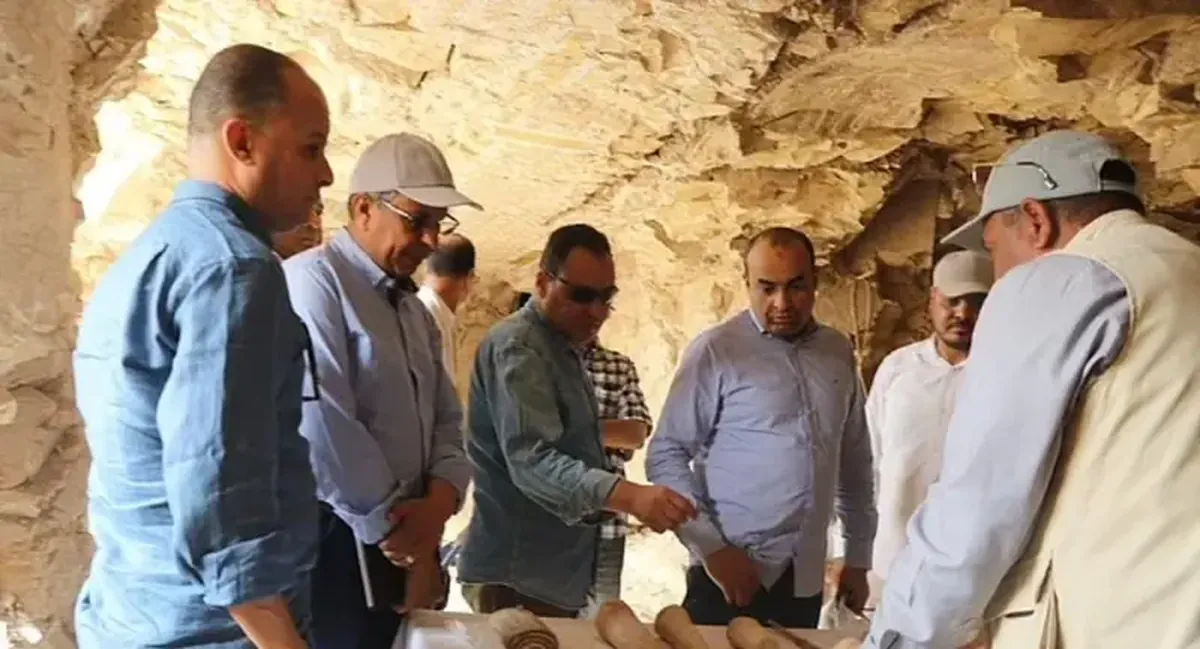
Archaeologists uncovered previously unknown burials during excavations at the Dra Abu el-Naga necropolis on Luxor’s west bank. Experts believe these tombs date back to the height of Egypt’s New Kingdom, which spanned three dynasties from 1550 to 1070 BC.
Scientists were able to identify the names and titles of the buried individuals from inscriptions found inside the tombs. The researchers say the tombs belonged to three adult men who were not members of the royal family but held relatively high status in ancient Egyptian society.
The Dra Abu el-Naga necropolis, located near the Valley of the Kings, served as a burial site for high-ranking officials, overseers, and scribes.
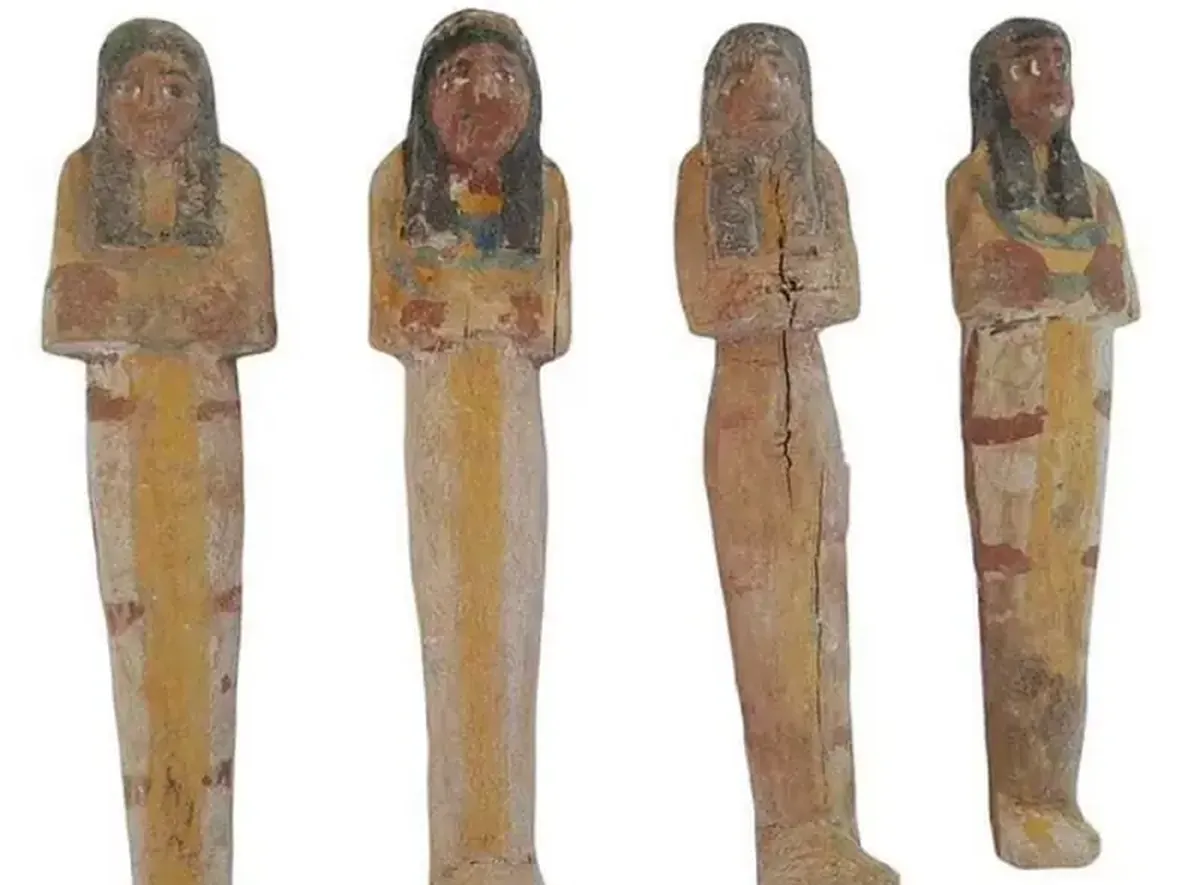
The graves also contained several burial artifacts, including miniature mummy figurines, according to the Daily Mail.
Who was buried here?
The Egyptian Ministry of Tourism and Antiquities announced that one of the tombs belonged to a man named Amum-em-Ipet. Scholars have dated it to the reigns of the 19th or 20th dynasties. Experts believe Amum-em-Ipet worked in the temple of Amun, the ancient Egyptian god of air and fertility.
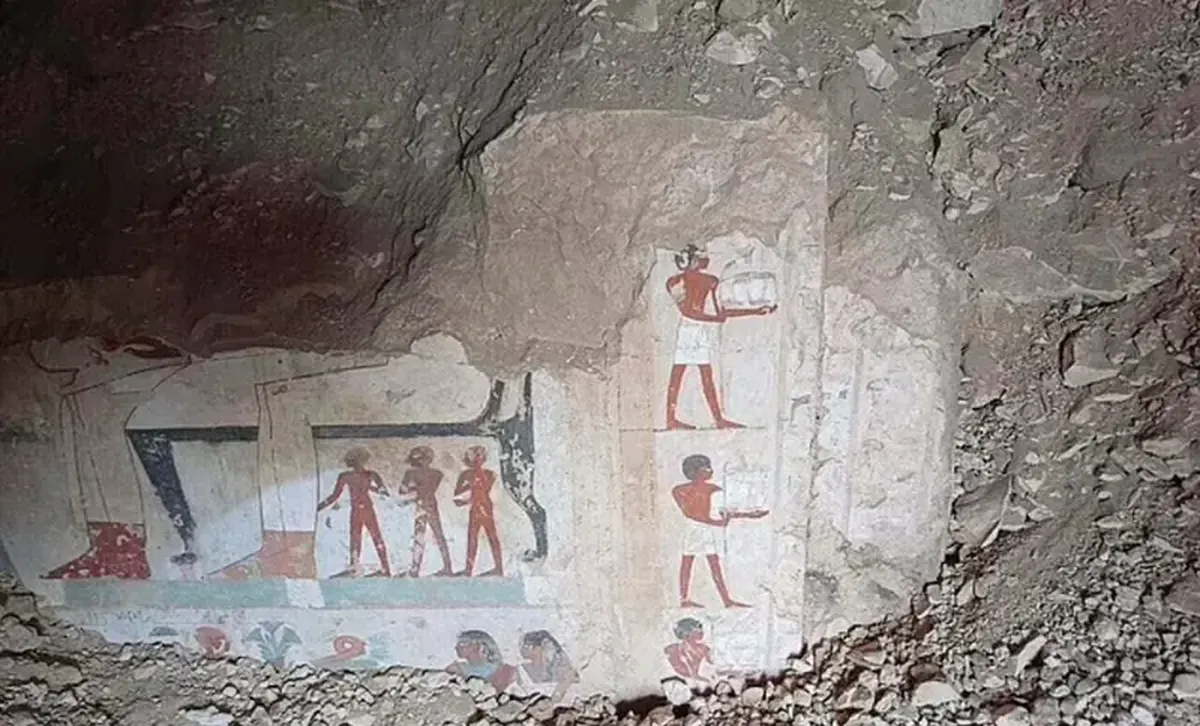
In this nearly destroyed tomb, archaeologists discovered images of a banquet and figures carrying funerary furniture.
The second burial has been dated to the 18th dynasty. That tomb belonged to a man named Baki, who served as the caretaker of a large granary. It featured an inner courtyard leading to the main entrance.
The third burial, also dated to the 18th dynasty, held a man identified only as “S.” During his lifetime he served as a caretaker of the temple of Amun, worked as a scribe, and was the mayor of the northern oases—fertile desert areas used for growing plants and raising animals.
The ministry says the Dra Abu el-Naga necropolis could become a major tourist draw for travelers interested in Egypt’s rich cultural and historical heritage.
