
 Gaby
Gaby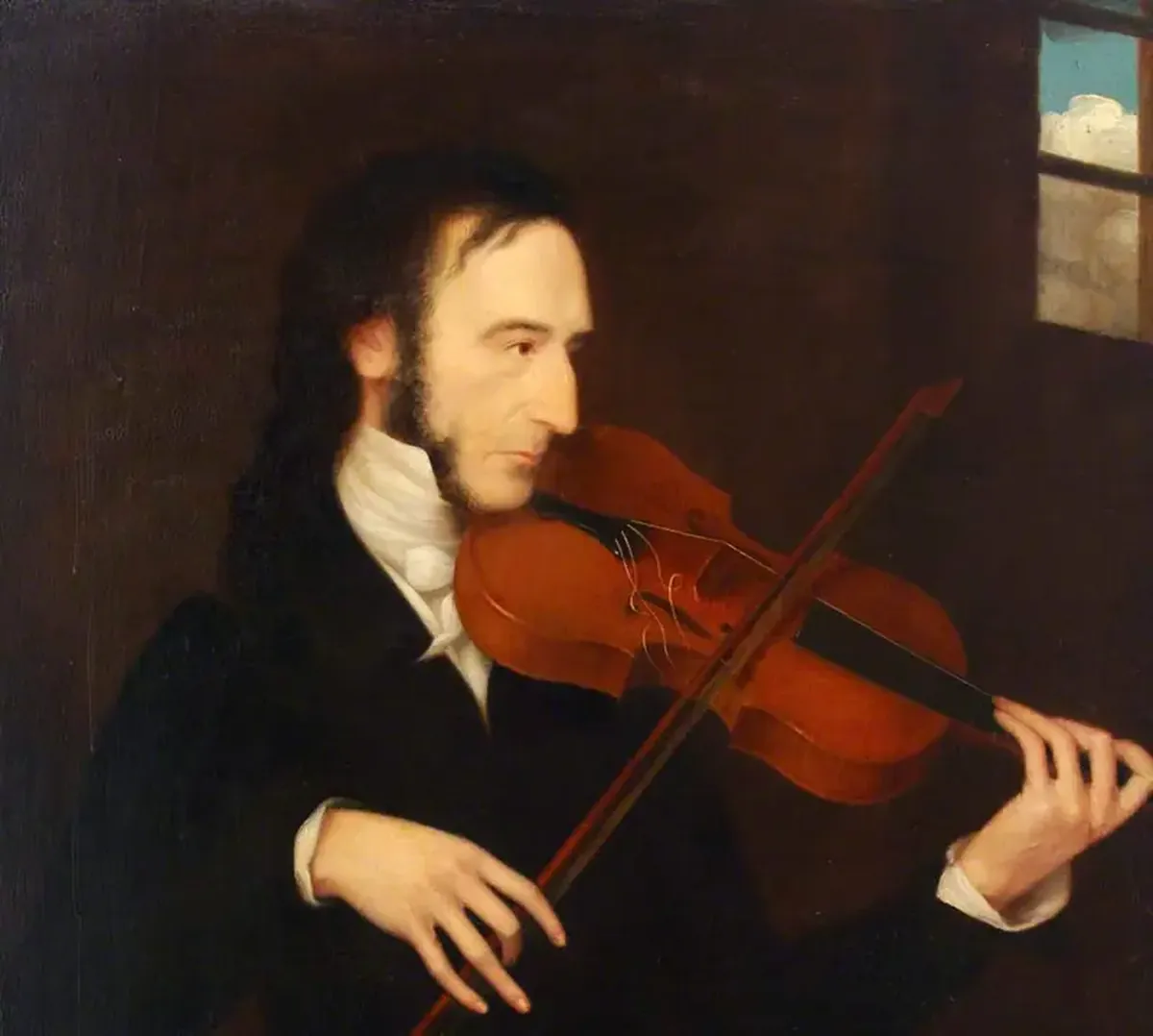
He was compared to a unicorn sent to humanity by an angel, yet rumors said a demon controlled him. His “superhuman” command of the instrument led detractors to imagine “black wings” behind him. The “vampire” from Black Cat Street could perform harmonies of incredible complexity, draw unusual sounds from the violin, and play pieces on a single string. Witnesses said the only things connecting him to other violinists were the violin and the bow.
The Genoese Freak
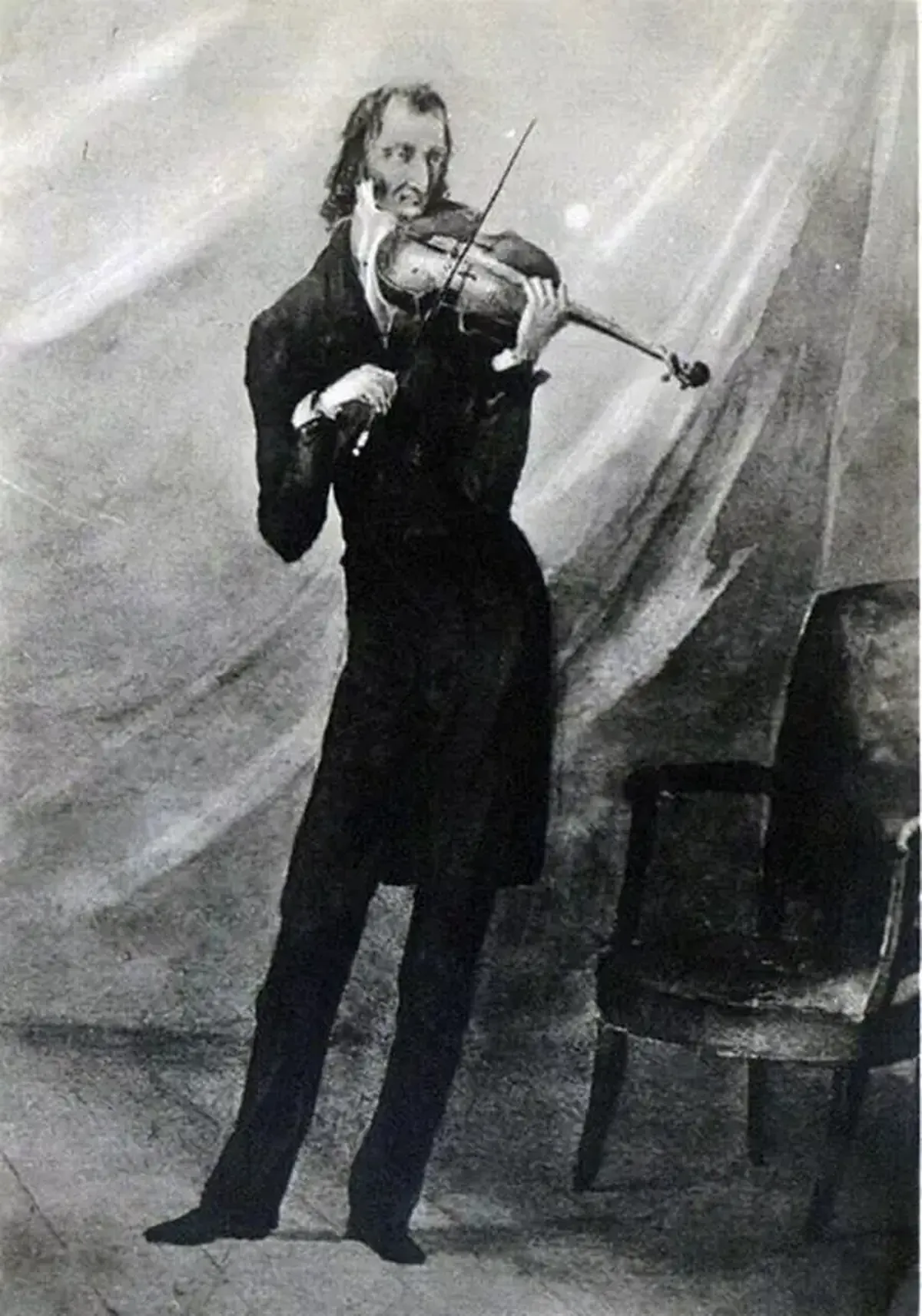
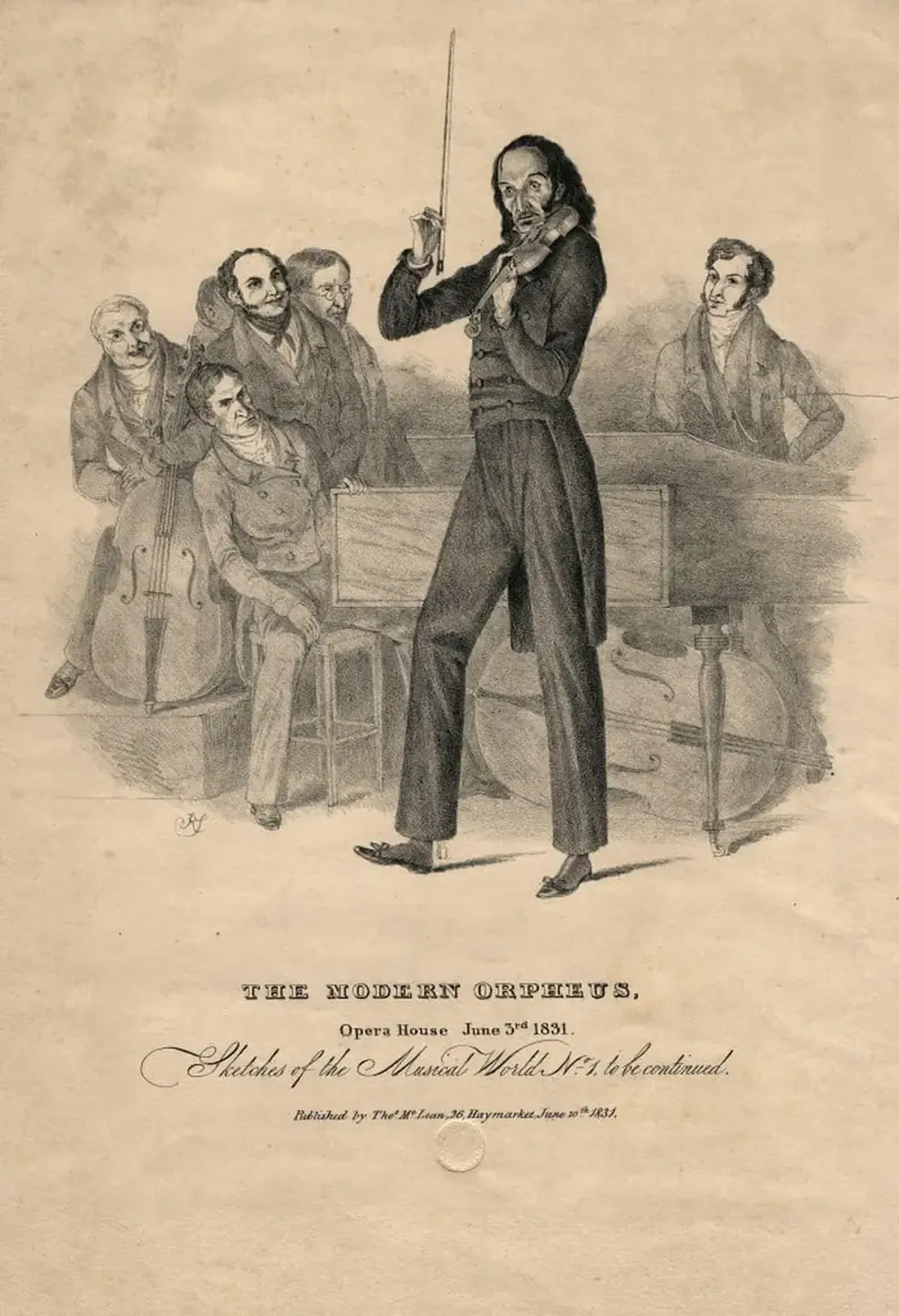
The dramatic life story of the legendary violinist and composer from the first half of the 19th century was brought to life in the biographical film “Paganini: The Devil’s Violinist,” in which modern virtuoso David Garrett played the title role. Contemporaries, however, often described Paganini as a “Genoese freak.” A rare congenital condition—Marfan syndrome, which some biographers have suggested affected Hans Christian Andersen, Abraham Lincoln, and Charles de Gaulle—gave him elongated limbs and unusually lax connective tissue. The musician became the subject of caricatures, depicted with a devilishly curved figure, an unnaturally twisted neck, and an unusually formed left hand.
According to Dr. Francesco Benatti, one of Paganini’s shoulders sat significantly higher than the other, with a misalignment that reached about 15 centimeters: the left shoulder was roughly six inches higher than the right. The doctor also noted unusual stretching of the ligaments in the forearm, wrist, hand, and finger phalanges. “The length of a normally sized limb could be doubled by stretching all parts,” the doctor testified. “The phalanges that touched the strings transmitted flexible movements with surprising speed and precision, allowing the fingers to move easily in the direction opposite their natural bend without shifting the wrist.”
A Cruel Joke
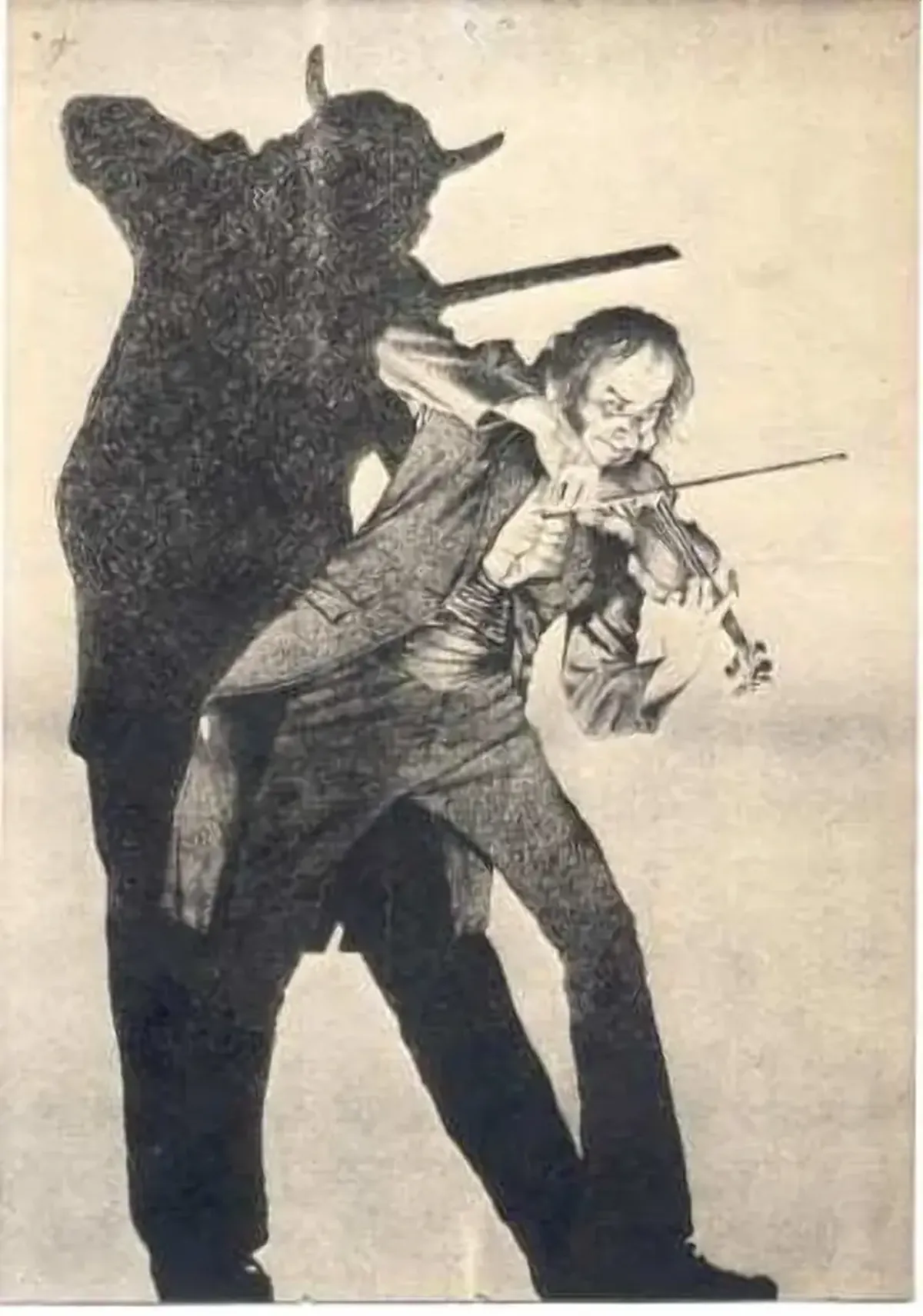
The resemblance between the violinist and the devil, combined with his fiery stage energy and the mystery around his personality, sparked rumors that “a red-horned creature with a tail stands behind the musician and guides his hand with the bow.” People attended Paganini’s concerts hoping to catch a glimpse of the figure the gossip described. Paganini did not deny the myths and played them to his advantage—he was a master of publicity stunts before that phrase existed. He turned public fascination into profit. For instance, Paganini’s performances in Vienna earned 28,000 crowns, while Schubert’s parallel concerts brought in just 800.
The association with unclean forces haunted him after death. Bishop Domenico Galvani of Nice declared the deceased a heretic and banned his burial in consecrated ground. Several Italian cities refused to accept the “vampire” into their cemeteries—even his hometown of Genoa, despite Paganini bequeathing his beloved violin (known as “the widow of Paganini”) to the city. It took 56 years after his death at age 58 before his remains were laid to rest in a normal cemetery.
No Lessons to Teach
Could a “pagan”—the surname Paganini derives from the Latin paganus—born in a Catholic city on Black Cat Street (the Genoese address Pasco di Gatta Mora) ever be content? Niccolò was the third son of Antonio Paganini and Teresa Boccardo, who had six children. Biographers wrote that an angel appeared to Teresa in a dream the night before the birth. On October 27, 1782, “a freak was born on Black Cat Street,” they recorded. When his father, a porter, opened his own shop, he listed himself in the city census as “the owner of mandolins.” The child reached for the mandolin strings at age five and had mastered the violin by six. From early on, he honed his playing and invented new techniques to draw startling sounds from the instrument.
By age 11, Niccolò regularly played at church services, where he performed not only sacred music. At 13, he gathered an audience for his first public concert—an academy in which he included his “Variations on the Theme of Carmagnola.” The proceeds from that performance at Teatro Sant’Agostino and subsequent earnings from Florentine concerts were intended to pay for studies in Parma under Alessandro Rolla. However, the renowned mentor, like other would-be teachers, refused to take the gifted boy on as a student after hearing him play, saying he had nothing left to teach him.
Demonic Techniques
The cellist Gaspare Giretti agreed to teach Paganini harmony and counterpoint; under Giretti’s tutelage, the student composed 24 four-part fugues using only pen and ink. Perhaps an unfamiliar instrument influenced Paganini’s ability to make the violin cry and laugh, produce bird trills, bark, and chirp. No one understood how an ordinary violin could imitate birdsong or suggest the sound of a flute, horn, or trumpet. The strange array of sounds that came from the church during Paganini’s performances drew the attention of clerics, who said such harmonies had no place near the altar. Paganini astonished listeners with incredible staccato, pizzicato, double trills, harmonics, dramatic dynamic shifts, and dissonant chords.
In search of the secret behind his gift, experts examined his violin inside and out. Throughout his life, Paganini owned several instruments crafted by old masters—he gifted many of these treasures to colleagues and even adversaries—but he could not part with his most precious violin, which he bequeathed to his hometown and which remains in a museum today.
An 1885 examination revealed significant wear on the Guarneri instrument in areas that contacted the musician’s body, indicating the force of his strokes on the strings and the strength required to hold the instrument during rapid passages. That wear explains the scuffed edges at the bouts, a large spot near the neck, and a long groove. The deformation of the violin reflects the effort he expended and the enormous tension he experienced after performances; contemporaries described him as constantly pale (people with Marfan syndrome can die from aortic rupture).
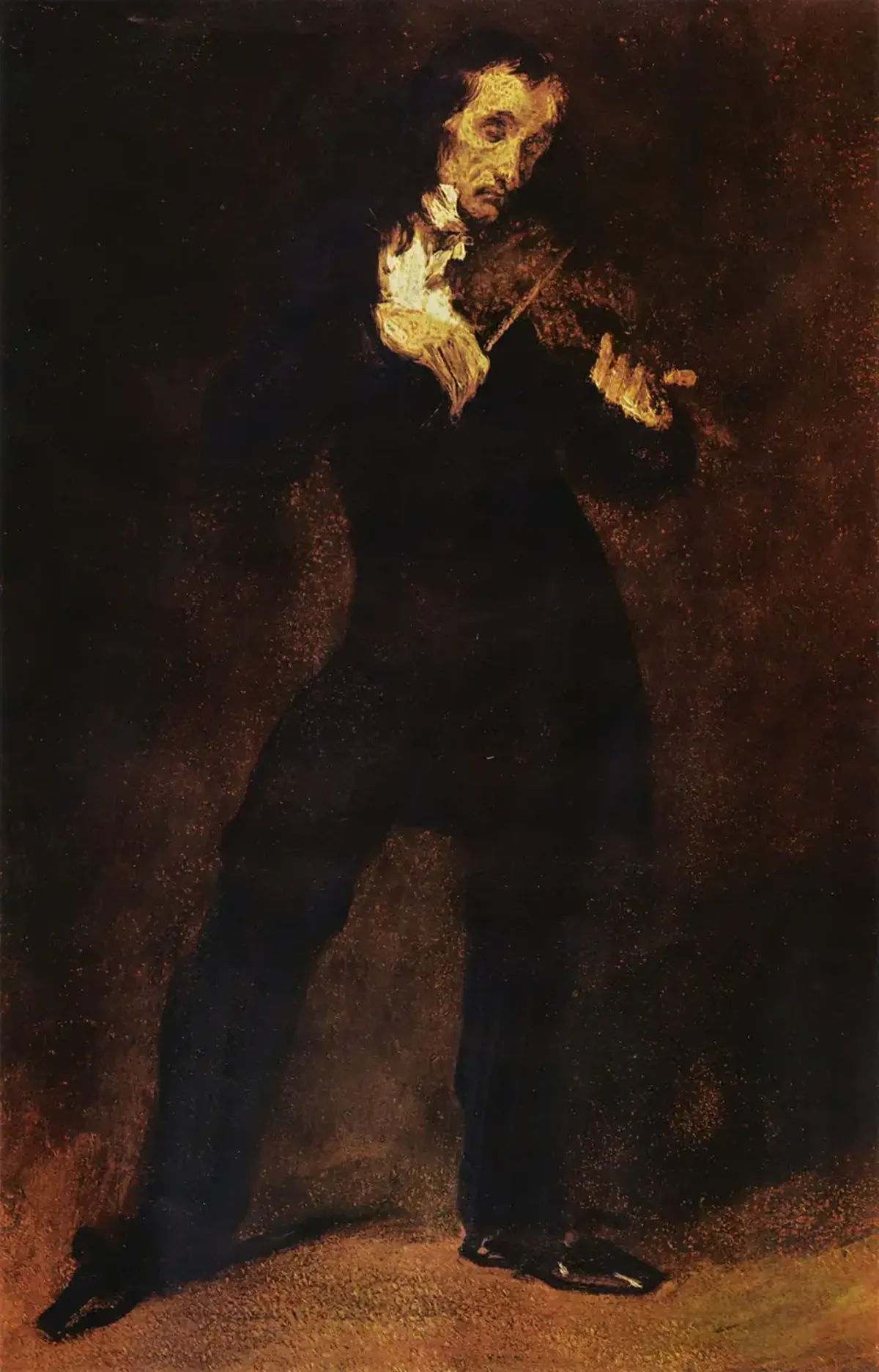
Portrait of Paganini, by E. Delacroix
The Genoese Jacobin
After his parents stopped supporting him in 1801, the free-thinking musician—dubbed the “Genoese Jacobin” by the press—took the position of first violin in the city-republic of Lucca. There, Paganini taught and worked with orchestra players. This period is also linked to a mysterious romance: at a Tuscan estate he secluded himself with a well-known woman whose name he kept secret for life. Biographers described him as Scorpio-like in temperament: passionate, thirsty for the unknown, independent, strong-willed, and able to keep secrets. He spent three years in isolation with the woman, playing guitar and composing; during this time he wrote 12 sonatas for guitar and violin.
Drawn to women and gambling in his youth, the musician sometimes lost everything and ultimately realized that only his art could save him. Obsessed with his passions, Paganini managed to conquer some of his demons: he gave up gambling once and for all and never touched cards again.
Court Virtuoso
Princess of Piombino Elisa Bonaparte gave Paganini the title of “court virtuoso” and made him captain of her personal guard. During his romance with Napoleon’s sister, the violinist composed “Love Scene” for two strings (A and E), and for the emperor’s birthday he wrote a sonata for a single string (G). Only Paganini could perform entire concerts on three, two, or even one string. Broken strings and tuning mistakes by the orchestra posed no problems for him.
Felice Blangi, musical director to Pauline Bonaparte at the Turin court, became an ardent admirer, calling Paganini a “superhuman performer.” Once, Paganini neglected to check his violin’s tuning before a performance and discovered during the piece that his instrument’s A was a whole tone off from the piano. He adjusted his fingering on the fly, and the audience noticed nothing unusual in his rendition of the sonata. The episode enhanced his fame, but the obligations of court service weighed on the “free thinker,” and he left to tour abroad.
To God — Through Witches
On October 29, 1813, on the eve of the European holiday we now call Halloween, Paganini premiered his variation of the “Dance of the Witches” from the ballet “The Nutcracker of Benevento”—a work titled “The Witches”—at a solo concert in La Scala. The piece shocked Milanese audiences; over six weeks they heard eleven of Paganini’s concerts at La Scala and the Carcano Theater.
His rapid popularity after performances in Leipzig allowed him to purchase a baronial title in Germany. On December 27, 1808, Paganini performed a Masonic hymn he had written before members of the Grand Assembly lodge. Records and Masonic symbolism confirm his acceptance into the brotherhood—Paganini is often seen as the prototype of the Masonic violinist. In 1827, a musician who was unpopular with many church officials (who considered him either an atheist or a blasphemer) received the Order of the Golden Spur, the second-highest papal honor, awarded by the Pope “for contributions to the spread of the Catholic faith and other deeds in glory of the holy Church.” That recognition seemed mysterious for a man who neither wrote nor performed sacred music, did not attend church, and had even been denied a requiem mass.
In the last months of his life, the exhausted Paganini could only manage to run his fingers over the strings of the violin that lay nearby. By then he had divorced his wife, singer Antonia Bianchi, and gained sole custody of their son Achille. He died on May 27, 1840, leaving a legacy that remains unmatched.
