
 Gaby
Gaby
In the complex persona of a man whose name has become shorthand for the lover-hero, sensuality was a primary—but not the only—facet. Born into an artistic family, he combined the passions of an actor with the improviser’s intellect. Like a stage repertoire, his professional life in the 18th century swung between lawyer and soldier, cleric and cabalist, doctor and musician, con man and pimp, traveler and spy, Freemason and diplomat, mathematician and philosopher, playwright and writer. Using his ingenuity, luck, perseverance, charm, manipulation, and deceit, this erotic adventurer lived by his own moral code. Entertainment and pleasure were legitimate pursuits for him, justifying risks and sparking his creativity. His love of play set his priorities—and often landed this extraordinary Venetian in trouble where caution might have brought success.

Giacomo Casanova in the company of women at one of the bohemian salons in Paris (engraving from a book about his life)
Childhood Impressions
Giacomo Casanova was born on April 2, 1725, in Venice. He was born on Easter in what was then Europe’s “capital of pleasures” — a city of carnivals, gambling houses, and courtesans that drew travelers to a republic unusually tolerant of vice. Tourists helped turn Venice into a highlight of the Grand Tour, a must-see for Europe’s aristocrats. That atmosphere of temptation shaped the young man with theatrical blood.
The eldest of six children of actor and dancer Gaetano Giuseppe Casanova and actress Zanetta Maria Farussi, Giacomo loved theater and music from an early age. As an adult he played the violin and wrote plays (his literary output includes more than 20 works), and one of his sisters followed their father to become a dancer. His father died when Giacomo was just eight.
While his mother toured, the children were raised by their grandmother, who introduced Casanova to the occult and secret knowledge. He remembered visits to a local witch who tried to cure his nosebleeds. Although the enchanted ointment did not help, the mystery of witchcraft left a lasting impression. He would later use mysticism as a tool to influence others.

Venice. The Church of Saint Samuel, where Casanova was baptized
Lessons and Discoveries
Casanova’s childhood ailments were actually caused by Venice’s heavy air; the remedy was leaving the coast. At nine, he was sent to a boarding school in Padua, where Abbot Gozzi taught him science and music. In Gozzi’s household, the 11-year-old first felt attracted to the opposite sex; his teenage infatuation was with Gozzi’s younger sister, Bettina. A sunny, bookish beauty, she later married, but Giacomo kept affection for her and the Gozzi family for life.
The naturally curious 12-year-old showed his inquisitiveness at the University of Padua, from which he graduated at 17. During his studies he began gambling for money. His grandmother summoned him back to Venice when she learned of his debts, but the taste for gambling had already hooked him, and after her death in 1743 his debts landed him in prison for the first time. By then he had earned a degree in law and enrolled in the seminary in Murano.
His guardian hoped that a respectable education would set him up as a church lawyer. But Casanova, who studied chemistry, mathematics, and ethics, felt an overwhelming aversion to the profession. He was more fascinated by healing; from a young age he had concocted remedies for himself and friends. “I would have been better off as a doctor,” Casanova wrote in his memoirs, “for in medicine, professional charlatanism is even more suitable than in legal practice.”

Portrait of young Giacomo Casanova (1750, engraver unknown)
Scandals vs. Career
By the time he took his vows in 1741, Casanova had become a striking dandy with curly black hair. Tall and dark-eyed, he attracted women’s attention, and after his first sexual experiences with the sisters Nanetta and Maria Savorian (one 16, the other 14), he found his calling. Alongside his primary pursuit — physical pleasure — Casanova sought influential patrons, a strategy he used throughout his life. His first attempt at making an influential connection ended badly: his flirtation with an actress who interested his patron quickly closed the doors of the palazzo of the 76-year-old Venetian senator Alvizo Gasparo Malipiero to him.
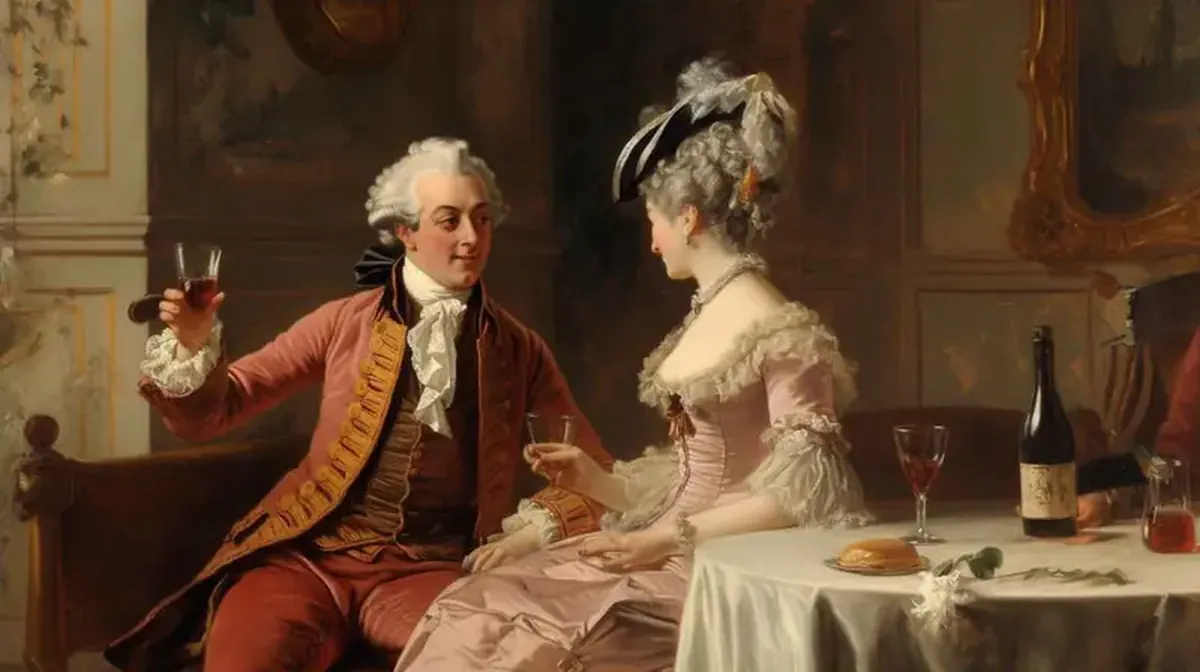
Scandals also disrupted Casanova’s brief ecclesiastical career. His mother had secured a position for him in the Calabrian diocese, but he rejected it after seeing the conditions of the job. Casanova explained his decision in his memoirs: “There will be a place for me, but can an 18-year-old boy improve himself without a good library, literary communication, an exclusive circle, and competition?”
He was also dismissed from his post as secretary to an influential cardinal in Rome. At a meeting with the pope the audacious young man asked permission to abstain from eating fish during Lent and to read books banned by the Catholic Church (later Casanova’s works would be censored by the Vatican alongside Goethe and Defoe). After the secretary Troiano Acquaviva d’Aragona began composing amorous letters at another cardinal’s request, the arrangement backfired and Cardinal Acquaviva dismissed Casanova, ending his ecclesiastical career.
“Determined to Impress”
Realizing he needed a new path, the enterprising Casanova decided to wear a military uniform of his own design. He purchased a commission as an officer in the Venetian Republic and had a tailor make an eye-catching white uniform “with a blue front and silver and gold epaulettes.” He completed the look with a long saber, a hand-carved cane, and a stylish hat trimmed with a black cockade and a queue. In this guise, he intended to make a splash.

After joining the officers of the Venetian regiment on Corfu in 1744, the adventure-seeker seized the first chance to escape to Constantinople (allegedly to deliver a letter on behalf of a cardinal), and he returned to Venice in 1745. The year in uniform felt like wasted time: the duties bored him, promotion was slow, and he spent almost all his pay gambling. He had no romances during that time, but his debts mounted. At 21 he decided he should become a professional gambler, but he had no money left after selling his officer’s commission.
Casanova’s next venture was “serving the highest art, which does not interest mediocrity and captivates those who achieve success.” Through acquaintances he landed a job as a violinist at the San Samuele theater. The new occupation “lacked nobility, but it was never dull in the artistic milieu,” he wrote. Musicians amused themselves with pranks, unmooring gondolas at night and sending false calls for doctors and midwives.
The Grimace of Fortune
Life changed when Casanova saved Venetian senator Giovanni Bragadin. During a gondola ride after a wedding banquet, the nobleman suffered a stroke. The attending doctor performed two bloodlettings and applied a mercurial ointment to the senator’s chest, which caused a fever and tracheal swelling. Casanova removed the doctor and washed off the toxic ointment at his own risk. The patient regained consciousness, and the rescuer gained a lifelong patron. The senator took Giacomo under his wing and helped him explore occult knowledge; like his patron, Casanova became a cabalist. He marveled at how his debauchery could coexist with the strict morals of his adoptive father.
Casanova considered his new lifestyle “the most commendable, noble, and only natural,” since it meant he would not have to go without life’s necessities. In the senator’s palace he lived like a count among his patron and cabalist friends. He joined a Masonic lodge, traveled across Europe, and wrote a play for the Royal Theater in Dresden. Yet he continued to gamble and to embark on new romances. Love scandals and his influence over the senator turned high society against him. He was accused of Freemasonry, atheism, magic, owning forbidden books, and corrupting the youth.
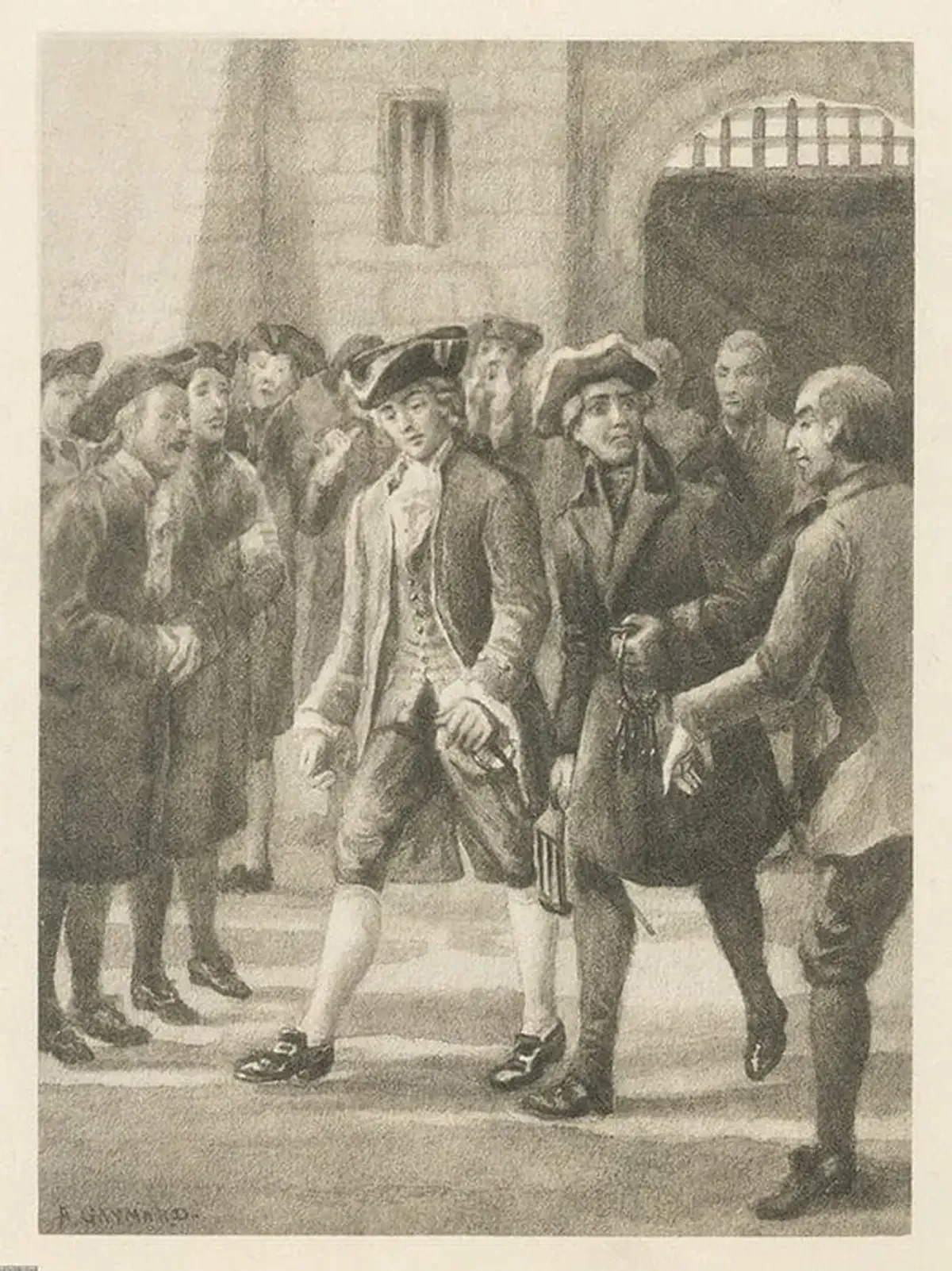
Arrested, Giacomo Casanova is led to trial (engraving from one of the books about his life).
“Moreover, I was accused of visiting foreign ambassadors,” Casanova later recalled about the treason charges. “As if, living with three patricians, I learned state secrets from them, which I then revealed to foreigners for large sums during my travels.” These baseless accusations aimed to paint him as an important conspirator and an enemy of the homeland. He was warned about the tribunal’s intentions and advised to leave the city. Many such incidents would follow, and Casanova learned to escape before a verdict. But at first he squandered the chance; in 1755 forty guards came to arrest him on behalf of the Inquisition.
Risk and Pride
Casanova was imprisoned for five years in the “lead” prison of Piombi in the Doge’s Palace. The small cells were infested with rats; the ceilings were so low prisoners could not stand; and the metal roof heated under the summer sun, making the cells feel like hell. For Casanova, hell was solitary confinement. He said he would have preferred to be near a contagious patient or a wild beast rather than go mad in isolation, where there was nothing to occupy his mind. He wrote: “In the dark, I could only move on bent legs, and I saw a person once a day when they brought me food,” and “Knowledge of the law could not protect me, for the tribunal was guided not by law but by tyranny.”

Casanova’s escape from prison
Realizing the futility of fighting the church’s authority through legal means, Casanova decided to escape. His detailed account reads like a how-to for prisoners. On All Saints’ Day he and an accomplice slipped away from the prison tier (the cells were on the palace’s upper floor), posing as servants who had been accidentally locked in. November 1, 1756, became a historic day: it was the only successful escape from the “lead” prison. “I take pride in my deed,” Casanova wrote. “Not because it worked out (there’s a certain element of luck in that), but because I took the risk and dared to execute my plan.” It was not long before the Inquisition would later grant him a monetary allowance.
Continuing to swindle at various levels, Casanova proved useful in raising funds for states. In Paris, under the patronage of an old friend who had become France’s foreign minister, he sold tickets for the first state lottery and collected money for government bonds from wealthy people and even rulers. Declaring himself an alchemist and a Rosicrucian, he dazzled European nobility with tales of the philosopher’s stone. He tricked some with numerology and others with supposed secret knowledge. “To deceive a fool is a worthy task for a wise man,” he believed. Contemporaries said he was easier to anger than to amuse; he loved making others laugh but rarely laughed himself.
The Last Hero
His earnings from bonds let Casanova establish a silk factory in 1759. The government promised him a title and a pension if he accepted French citizenship and worked with the Ministry of Finance. But at the height of his opportunities, Casanova rejected the offer, fearing that service would limit his travels and romantic odyssey. More debts, imprisonment, duels, and persecution followed. To escape his problems he moved from place to place. Financial schemes and a bad reputation eventually led the “great schemer of the 18th century” to be unwelcome in nearly every major European city. He became the last hero of the age of adventurers.
His final refuge was a job as librarian at Count von Waldstein’s castle in Bohemia. Out of boredom and loneliness there, Casanova began writing a comprehensive autobiography in 1789, covering his life from ages 8 to 50. Histoire de ma vie spans some 3,500 pages and remained unfinished. The womanizer candidly recounted his sins against the backdrop of an era, immortalizing not only his beloved women but also the notable figures he met: monarchs, popes, cardinals, and Enlightenment luminaries like Mozart, Goethe, and Voltaire.

Duchcov Castle in Bohemia, where Casanova lived from 1785
That work made him a legend of world culture. An educated, observant storyteller, he had a mastery of language: in addition to plays, Casanova wrote a fantastic novel, Icosameron, and a three-volume history, History of the Disturbance in Poland. A connoisseur of Italian poetry, he even translated Homer’s Iliad into Italian. He chose to write his memoirs in French so more people could read them.
Not Too Much, Not Too Little
Casanova never finished his story by age 73, nor did he return to his homeland after the Venetian Republic fell to Napoleon in 1797. He died the next year. On June 4, 1798, Giacomo spoke his last words: “I lived as a philosopher and die as a Christian.”
Those who expect to hear that Casanova was felled by a venereal disease are surprised: biographers believe he used “protective caps” during sexual encounters, which helped prevent or overcome such illnesses. The real problem in his later years was depression. Before he began writing his memoirs, Casanova even contemplated suicide. Creativity and the act of turning his memories into a book pulled him back from despair. To distract himself he worked on the memoirs for up to 12 hours a day. At 73, his health likely suffered from sheer exhaustion.

Casanova at the age of 62. Medallion featured on the title page of the “Icosameron” edition, engraver – Johann Berka
As for his excesses of music, food, and women (his memoirs also hint at same-sex encounters), some analysts do not consider his behavior extreme: 122 partners over 39 years averages to about three affairs a year. Not as much as his reputation suggests. The gourmet preferred quality over quantity, aiming to bring pleasure through the art of seduction and a ritualized parting gift rather than lifelong support. Reflecting on his life, Giacomo Casanova had no regrets and felt no remorse. He was one of the few who could truthfully say of himself: “I lived.”
