
 Gaby
Gaby
Virginia di Castiglione (1837–1899) would’ve been better off born a century—or even 150 years—later. Her talent for modeling and appetite for self-promotion would have been in higher demand then: magazine covers, influencer status, legions of Instagram followers. But it was her own era that made Virginia unique and irreplaceable.
The Florentine countess, born Virginia Elisabetta Luisa Carlotta Antoinetta Teresa Maria Aldobrandini, entered history as the first model. Throughout her life she spun intrigues, shaped European politics, captivated Parisian high society, and left behind hundreds of staged photographs, most of which are preserved in the Metropolitan Museum of Art in New York.
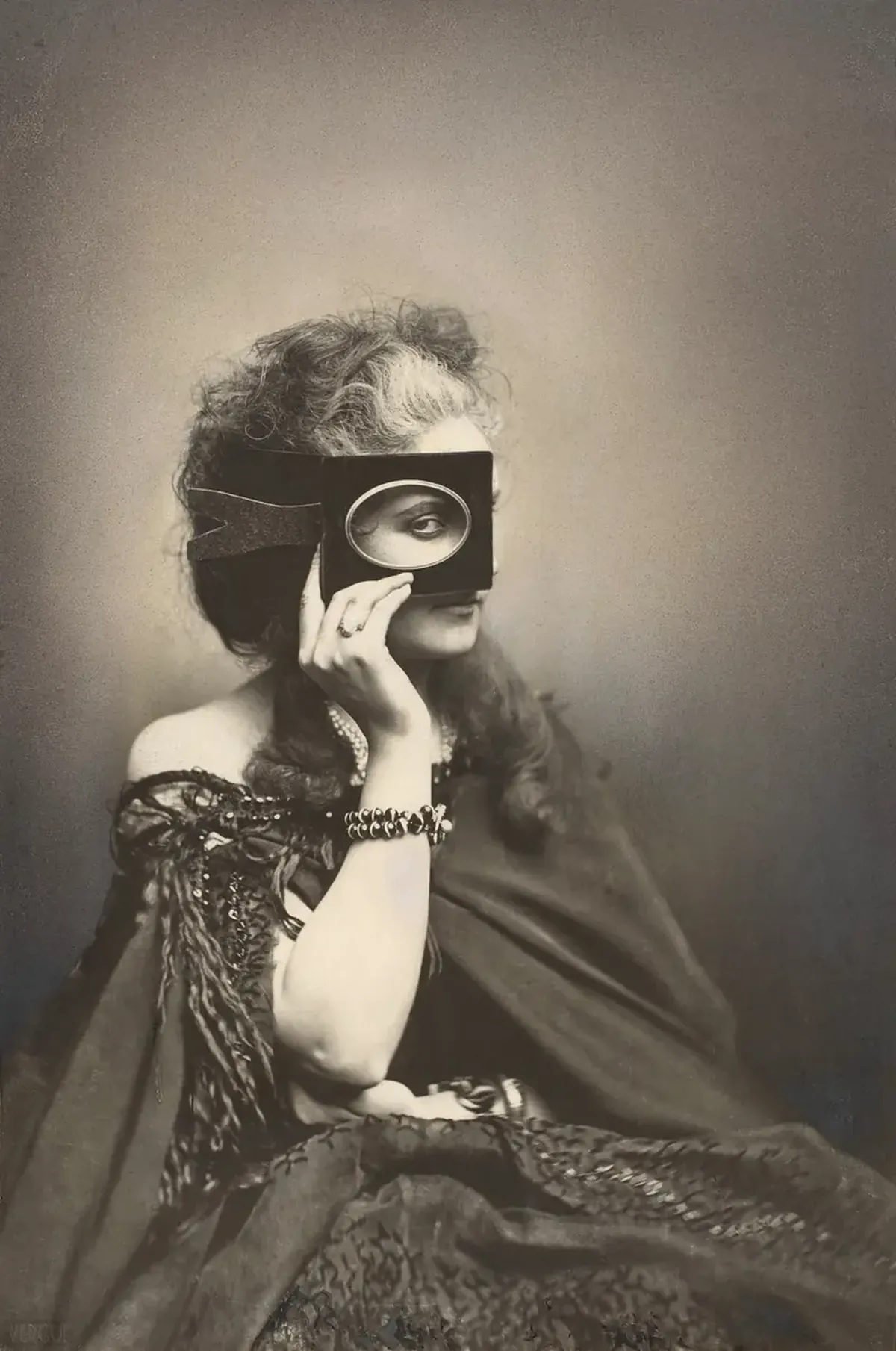
“The Most Beautiful Woman of the Century”
She called herself that. Beauty standards change, and the woman who once fired the imagination of many men might not fit today’s idea of a classic beauty. Or maybe she never was conventionally beautiful — she just made everyone believe she was. Her persuasive power probably came from an almost supernatural charisma. That charisma let Countess Castiglione win men’s hearts and influence politicians.

She found ordinary life boring. So she turned her existence into an endless carnival of images captured by leading Parisian photographers. Chief among them was Pierre-Louis Pierson, who shot roughly 700 portraits of the countess. She adored the young art of photography, and photography returned the favor. The aristocrat endlessly invented scenarios for her photos, chose new—often theatrical—costumes, built sets, and directed the sessions. Virginia di Castiglione was a real experimenter who thought in terms of angles and complete series. She pushed the limits in retouching, coloring, and collaging her images (skills that became especially useful as her youth faded). Even now, projects like her daring lifelong series of leg photographs read like finished photo projects.

She was done living inside conventional boundaries. After marrying Count Castiglione at 16 and giving birth to a son, she soon flipped her life on its head. Within a few years Virginia became Napoleon III’s favorite and, at her cousin’s request, persuaded the French emperor not to oppose Italian unification. The woman who ruled Parisian salons was rumored to have had affairs with Italy’s Victor Emmanuel II, Prussian chancellor Otto von Bismarck, and other prominent figures of the day. In the backrooms of politics, she was as much at home as she was in front of the camera.
Her refusal to live a dull life pushed Virginia to multiply her photographs, appearing in a parade of guises. She wanted recognition in a world still far from social media. And perhaps she dreamed that the world would remember her as she appears in the famous photograph “Queen of Hearts.”

Instead of an Epilogue
Later generations did remember her, and they dedicated films, books, and paintings to her. Robert de Montesquiou, a poet, aesthete, and collector who adored the countess, spent 13 years after her death working on her biography; it was published in 1913. He eagerly collected her photographic portraits and eventually amassed more than four hundred. Those portraits later entered the New York museum’s collection.
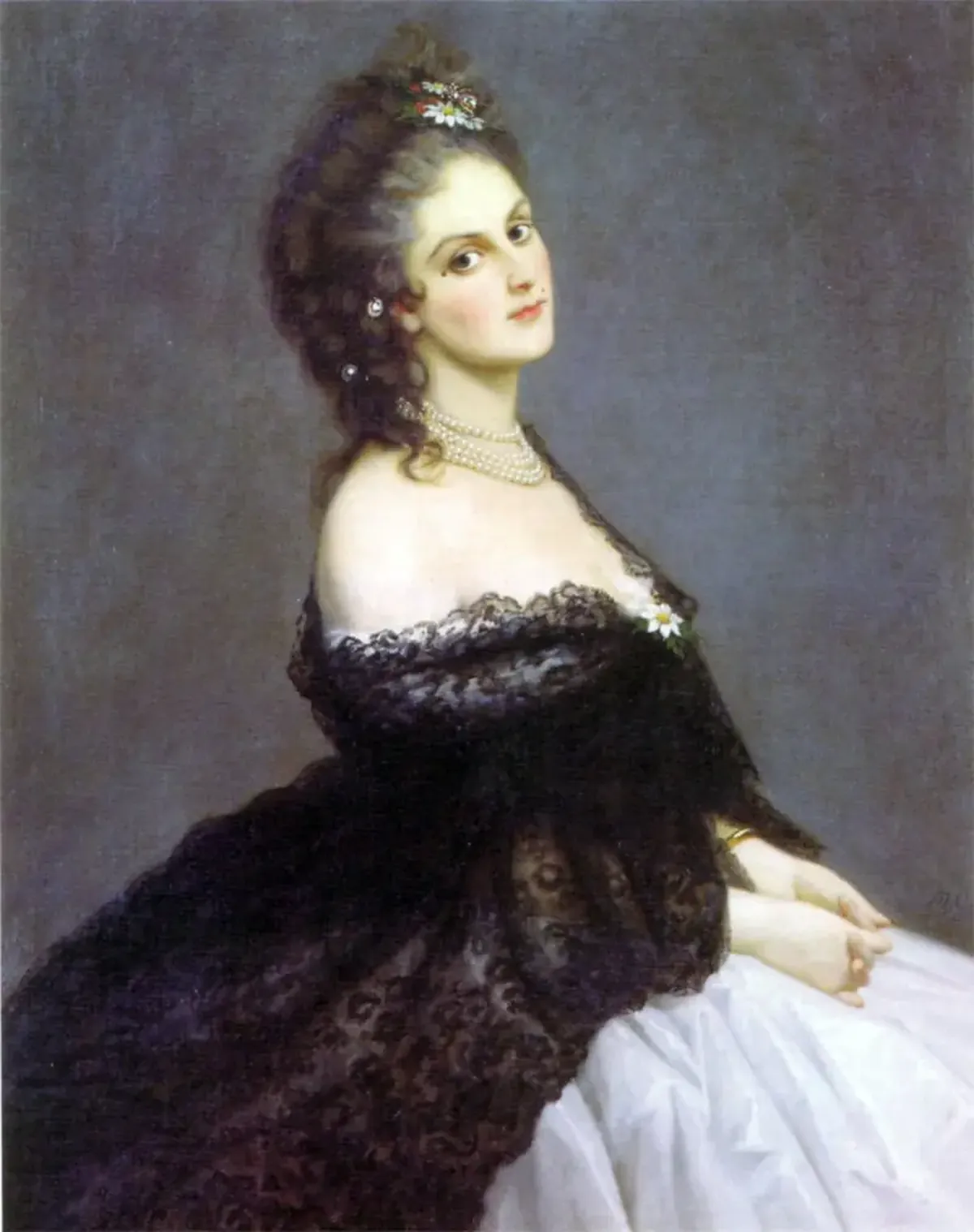
Portrait of Countess di Castiglione, Michele Gordigiani, 1862.
Life, especially a thrilling one, isn’t immune to aging. In Virginia di Castiglione’s time, people considered someone old much earlier than we do now. In 1863 one of her contemporaries called her “a stately woman no longer in her first youth”—and she was only 26.

She feared aging more than she feared death. Living out her last years in Place Vendôme in Paris, the former favorite of famed men covered mirrors and windows with fabric and only went out at night.
When news arrived that the 1900 World’s Fair would be held in Paris, she perked up and planned to exhibit five hundred of her photographs in its pavilions. It never happened: Virginia di Castiglione died in 1899 at 62, one year short of the century that would usher in photographic art and the rise of models.
There was an ironic logic to that. She didn’t have to share her claim as the first known model. The glory belonged to her—her historical niche, the 19th century.
