
 Gaby
Gaby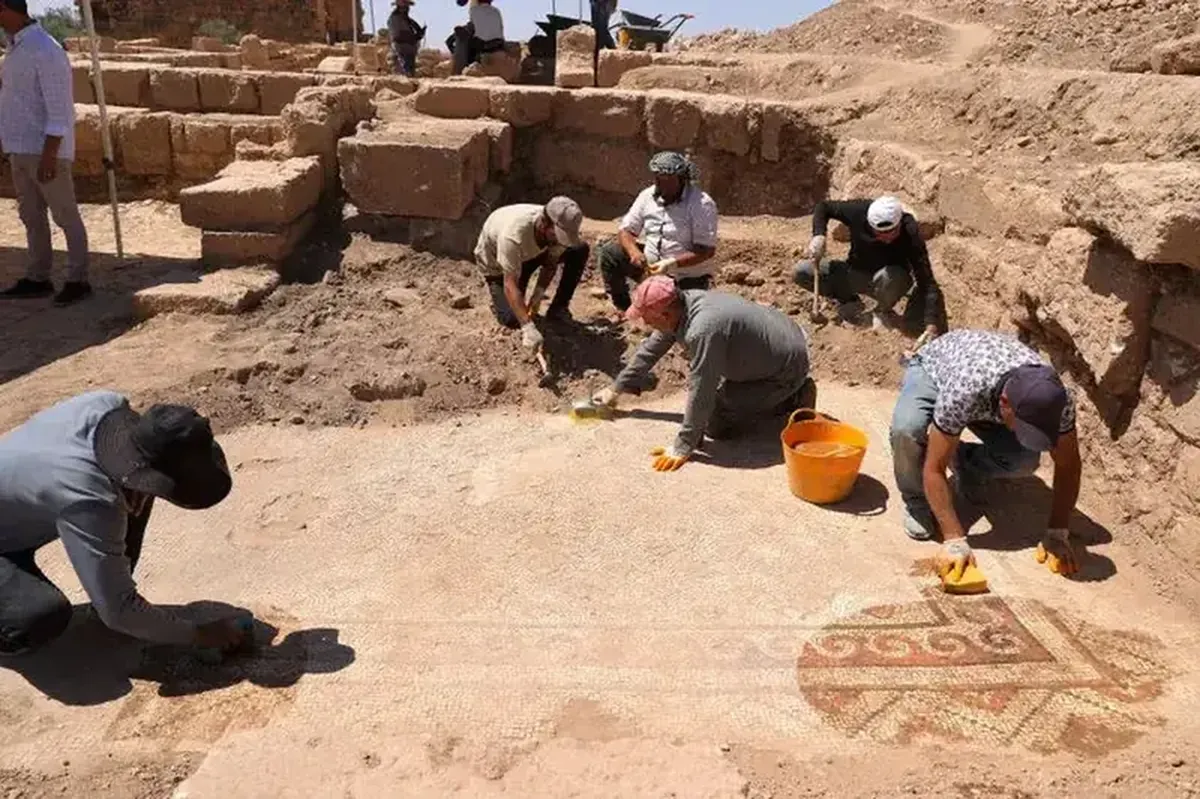
Turkish archaeologists have uncovered a vibrant, 1,500-year-old mosaic floor in a residential building in the ancient city of Dara, about 30 kilometers from the center of Mardin. The artifact shows remarkably well-preserved detail.
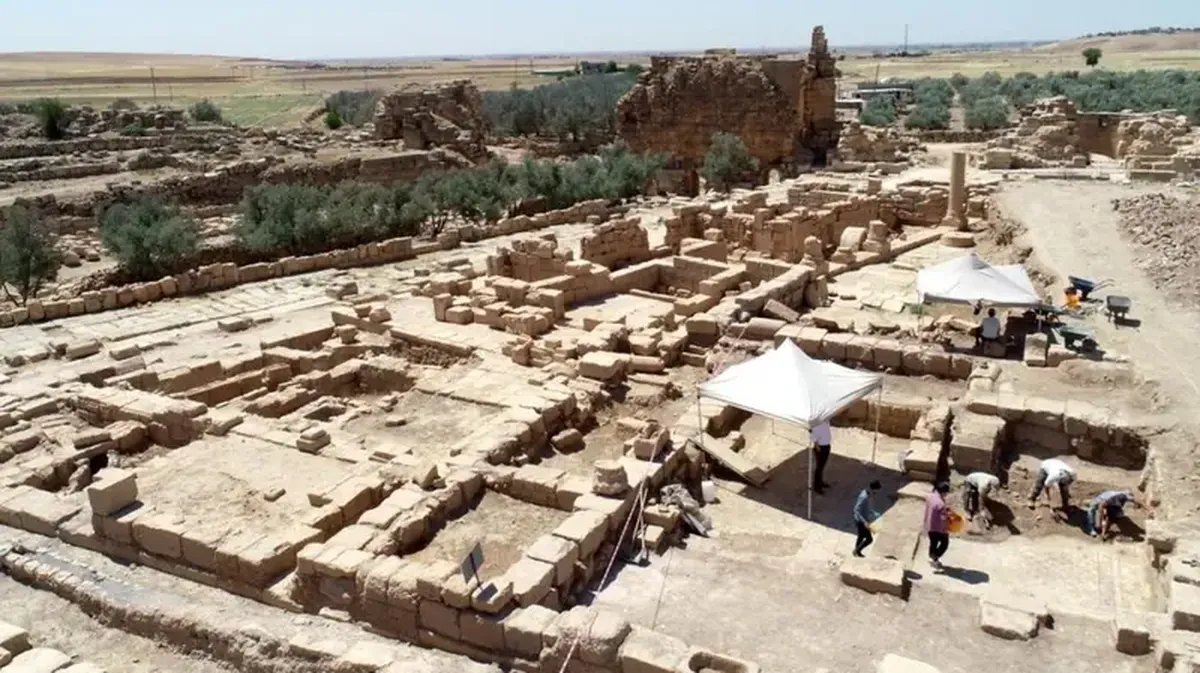
The Eastern Roman Empire founded Dara as a strategic border city to defend against the Sassanian Empire. The city served as an important military, commercial, and religious hub, featuring a palace, temple, necropolis, agora (market), prison, and a water supply system.
Another Discovery
Excavations at Dara have been ongoing for nearly four decades. Since the site was included in the Turkish Ministry of Culture and Tourism’s “Heritage for the Future” project last year, the intensity of work has increased significantly. Arkeonews reported that the project aims to preserve and study Turkey’s archaeological sites.
The mosaic floor was discovered in a residential building adjacent to the agora. Previously, the team had unearthed around 20 shops and workshops in the area, along with an advanced water supply system.
This nearly intact mosaic spans approximately 50 square meters and features intricate geometric patterns, including wavy and diamond shapes.
Ayhan Gök, the regional director of culture and tourism, said, “The recently discovered mosaic is particularly interesting because it has preserved evidence of ancient restoration and has remained intact for about 1,500 years.”
The Rich Mosaic Culture of Dara
Archaeologist Devrim Hasan Menteşe, who is leading the excavations, said Dara is renowned for its rich mosaic culture, especially in the area of the agora and surrounding residential buildings. “While many mosaic fragments have been found previously, this is one of the few instances where we have discovered an almost complete mosaic floor,” Menteşe said.
Based on coins found at the site, the mosaic dates back to the reign of Emperor Justinian I (525-575 AD). The discovery of this artifact underscores that the city was not only a military garrison housing around 25,000 soldiers but also a thriving cultural and spiritual center.
Other recent findings have confirmed Dara’s role as an important trading hub during the Roman Empire, Menteşe said. “Inscriptions indicate that it was also a site of religious pilgrimage,” he said.
Researchers and authorities expect that the discovered mosaic will attract tourists, further enhancing Dara’s status as a key archaeological and tourist destination in this region of Turkey.
