
 Gaby
Gaby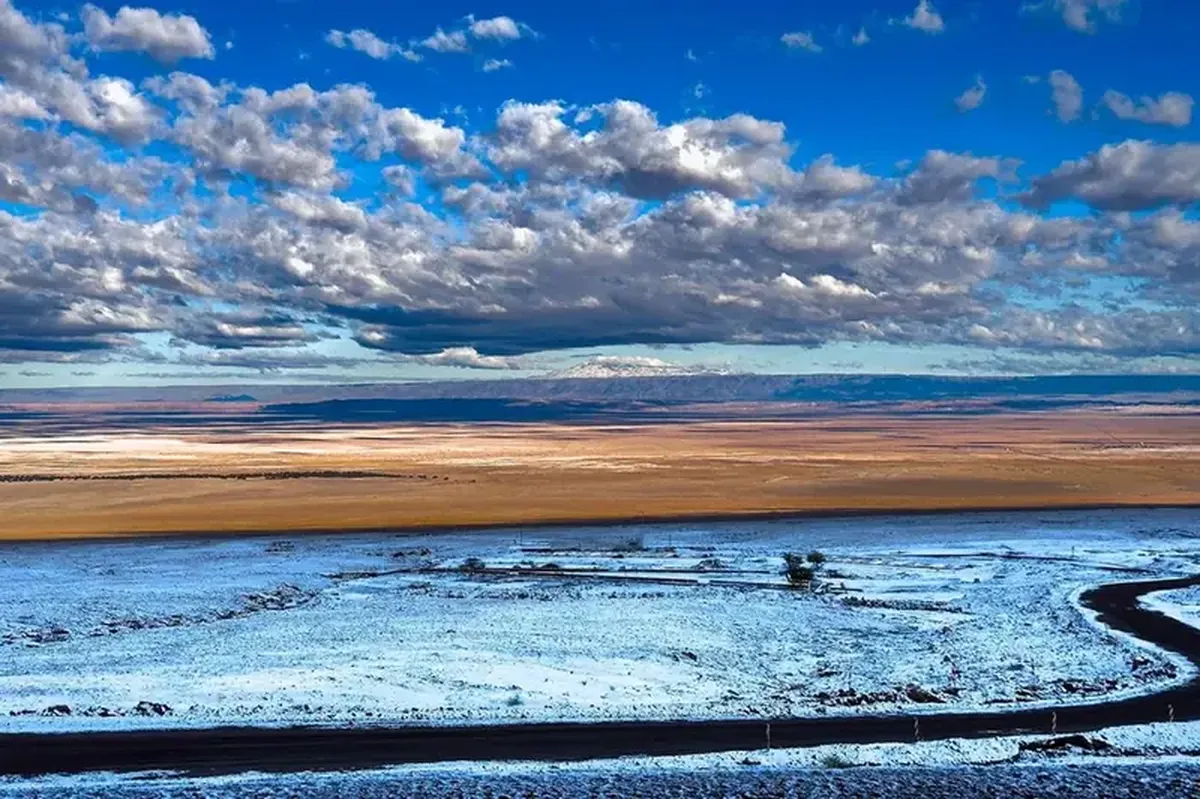
ALMA — the world’s most powerful network of radio telescopes — at 5,104 meters in Chile’s Atacama Desert temporarily halted operations after a rare snowfall.
It could be a sign that the observatory will face more extreme weather events as the climate changes.
What Did the Radio Observatory Team Report?
ALMA staff told Live Science that scientific research at the observatory has been temporarily suspended.
“There hasn’t been any snowfall recorded at the base camp for over 10 years,” the team said. In the Atacama Desert, typically only 1 to 15 millimeters of precipitation falls each year.
The current snowfall was caused by extraordinary atmospheric instability affecting northern Chile. The country’s meteorological agency issued warnings for snow and wind gusts of 80-100 km/h due to the passage of a “cold core” through the region, meteorologist Elio Brufort said.
Temperatures in the desert also dropped to minus 12 degrees Celsius, making operations at the high-altitude camp, situated at 2,900 meters, extremely challenging.
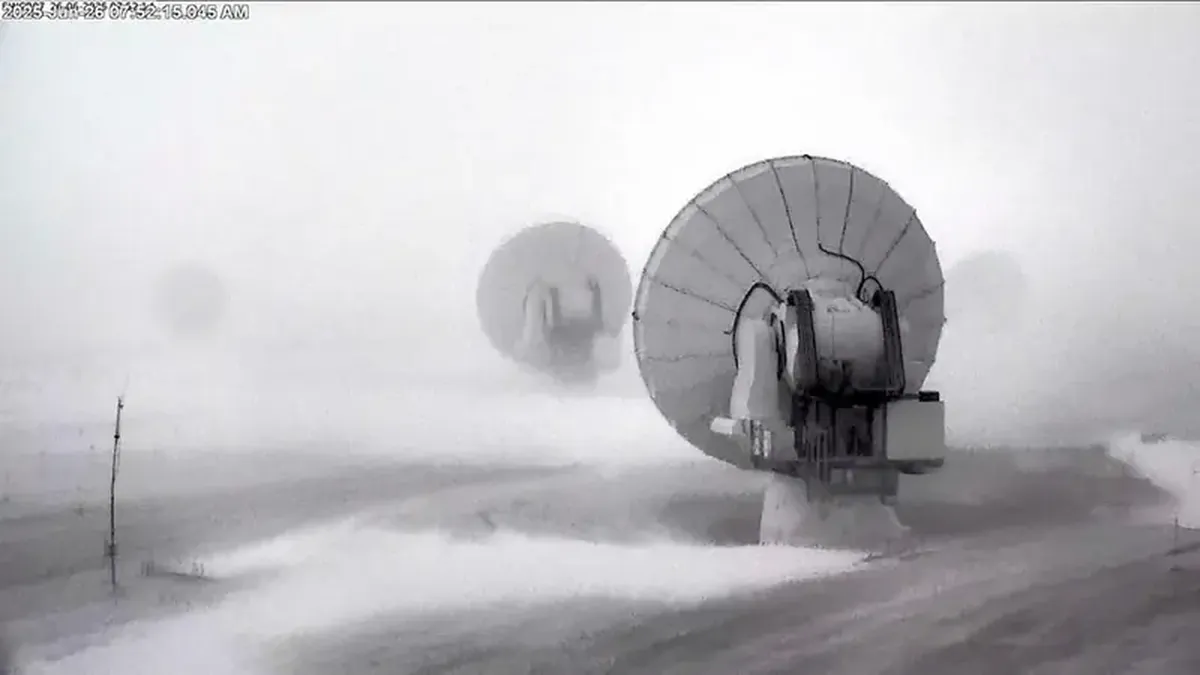
The observatory activated its “survival mode” safety protocol. Under that protocol, all major ALMA antennas were reoriented to face the wind to minimize damage from snow accumulation or strong gusts.
ALMA astronomers said that as soon as the storm subsides, snow-removal teams will mobilize to inspect each antenna. “This needs to happen very quickly, as the best conditions for observations arise right after a snowfall: the cold helps reduce air humidity, which is the biggest obstacle to our measurements,” they said.
Could Such Events Become More Frequent?
ALMA consists of 66 high-precision antennas spread across the high-altitude Chajnantor plateau. An international team works at the observatory, and one of their key tasks is responding to extreme weather events like this one.
Snow shutting the observatory raises questions about the network’s resilience as the planet warms.
Raúl Cordero, a climatologist at the University of Santiago, said, “While it’s still too early to directly link snowfall at low elevations in the desert to global warming, climate models predict a potential increase in precipitation even in this hyper-arid region. But for now, we cannot confidently say whether this increase is occurring.”
