
 Carlos Solis
Scientists from the National Aeronautics and Space Administration (NASA) examined geochemical maps of rock formations created by the Perseverance rover in Jezero Crater using the X-ray lithochemistry instrument known as PIXL. To interpret the PIXL data, the team employed a mineral-identification algorithm called MIST.
The researchers discovered more than twenty types of minerals that interacted with water over Mars’ long, dynamic history. The team says this pattern indicates that Jezero Crater hosted a habitable environment on multiple occasions.
What Did the Researchers Learn?
Eleanor Morland, a graduate student at Rice University who led the study, noted, “The minerals we found in Jezero confirm multiple fluid changes over time. This suggests that there were several moments in Mars’ history when volcanic rocks interacted with liquid water, indicating that this location has repeatedly hosted an environment potentially suitable for life.”
Jezero Crater, a Martian basin about 45 kilometers across, has been under investigation by NASA’s Perseverance rover since the spacecraft arrived in February 2021. The rover’s primary mission is to search for signs of ancient life.
Data collected by Perseverance have confirmed that an ancient lake and river delta once existed at the crater. The latest research indicates that conditions conducive to life may have arisen on Mars multiple times throughout its history.
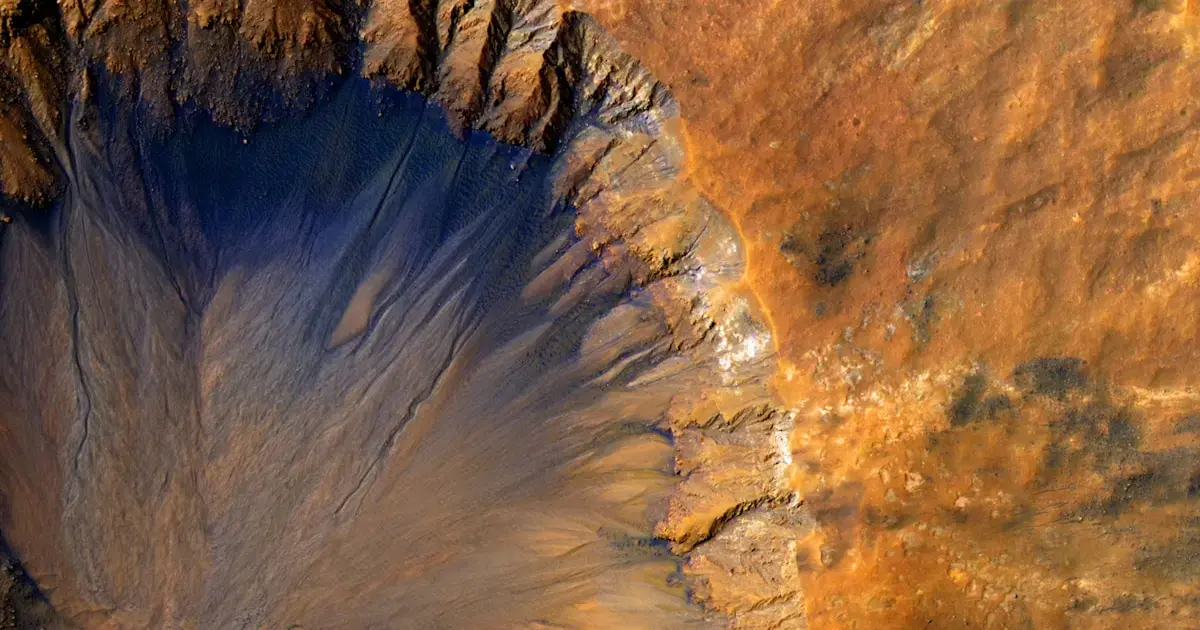
The minerals found in Jezero Crater revealed three types of fluid interactions, as reported by Daily Mail.
The first group of minerals—grinallite, hisingerite, and ferroaluminosilicate—formed in hot, acidic water at the bottom of the crater.
Grinallite is an iron-rich mineral that forms under high temperatures and acidity. Hisingerite is a clay mineral that results when volcanic rocks react with acidic water. Ferroaluminosilicate is a more complex mineral that forms in volcanic rocks exposed to hot acidic fluids. These minerals are among the oldest analyzed in the study. Their formation in extreme conditions makes them the least favorable for life due to the high temperatures and acidity.
Co-author Kirsten Zibah, an assistant professor of Earth sciences, said, “These hot, acidic conditions would be the most challenging for life. However, on Earth, life can persist even in extreme settings, such as the acidic waters of Yellowstone, so this does not rule out the possibility of life.”
The second group of minerals formed in moderate, nearly neutral water, indicating more favorable conditions for potential life across a large area of the crater. Among these minerals, the clay mineral minnesotaite was found both at the bottom of Jezero Crater and in its upper regions. Clinoptilolite was discovered only at the bottom.
The third group formed in low-temperature alkaline fluids, under conditions that are considered suitable for life on modern Earth. Sepiolite from this group—a mineral that forms under moderate temperatures and alkaline conditions on Earth—was found across all areas studied by the rover. The presence of this mineral indicates a widespread distribution of liquid water, which created conditions conducive to life and filled deposits throughout Jezero Crater.
“These minerals indicate that Jezero experienced a transition over time from harsher, hotter, acidic fluids to neutral and alkaline ones, and such conditions are more conducive to the emergence of life,” explained Ms. Morland.
Since samples from the rover cannot be prepared or scanned with the same precision as terrestrial rocks, the team created a model to confirm their results by mapping uncertainty. Using a statistical approach, MIST repeatedly verified mineral identifications while accounting for potential errors, similar to how meteorologists predict hurricane paths by running many simulations.
“Our error analysis allows us to provide confidence levels for each mineral match. MIST not only informs scientists and team members on the Mars 2020 mission but also creates a valuable mineralogical archive of Jezero Crater,” said Ms. Morland.
Each new mineral discovery on the Red Planet brings scientists closer to understanding whether life ever existed on Mars and helps Perseverance select samples for return to Earth.
Photo: Unsplash
