
 Carlos Solis
According to the head of the National Aeronautics and Space Administration (NASA), the first human settlement on the Moon will be established within the next ten years.
Sean Duffy unveiled plans to construct a permanent base on the Moon at the International Astronautical Congress (IAC) in Sydney. During a discussion with leaders from other international space agencies, he said, “We’re going to ensure permanent human life on the Moon. And it won’t just be an outpost; it will be a whole village.”
What else is known about NASA’s plans for the Moon and Mars?
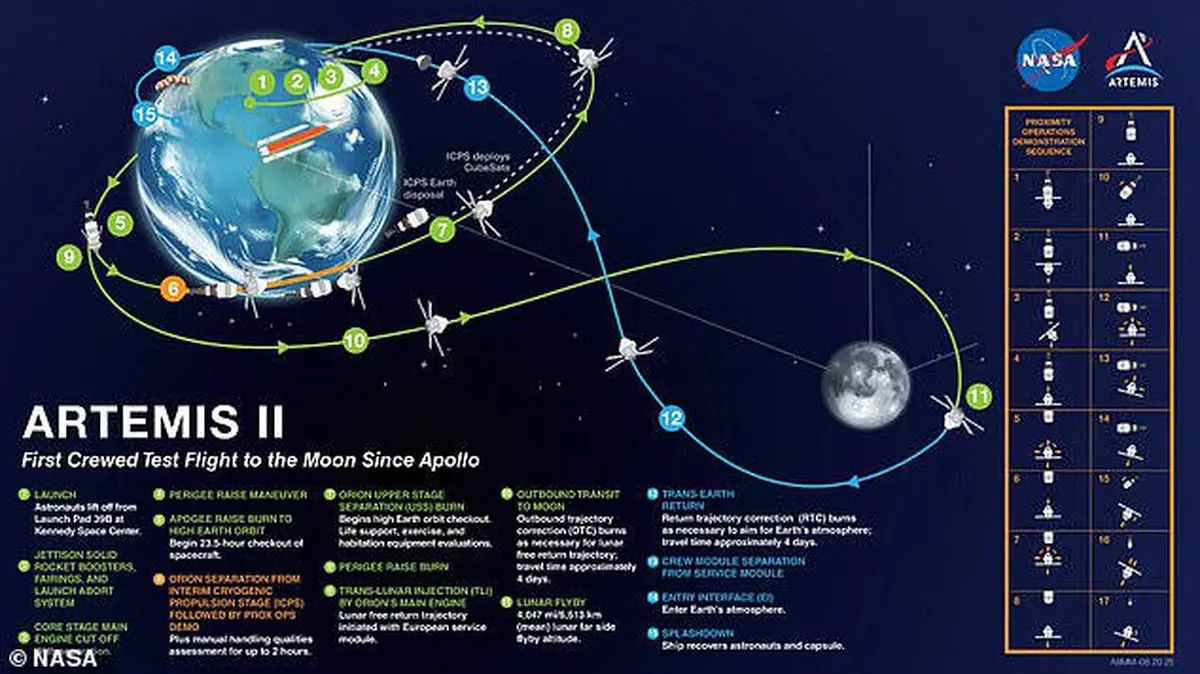
In February of next year, NASA will launch the “Artemis II” mission to Earth’s natural satellite. The agency will send four astronauts on the first lunar expedition in over 50 years. The crew will test the Space Launch System rocket and the Orion spacecraft, which will carry humans to the Moon. Over the course of 10 days, the crew will fly 9,200 kilometers around the Moon, check onboard systems, and collect data on how their bodies react to the journey.
However, NASA’s key goal is to establish a permanent base, or village, on the Moon. The base will likely run on nuclear power and house astronauts continuously. The settlement will be constructed using materials found on the Moon’s surface.
NASA will return humans to the Moon for the first time since the Apollo program in 1972, as reported by the Daily Mail. In mid-2027, following the Artemis II mission, the agency will launch Artemis III, during which two astronauts are expected to land near the Moon’s South Pole.
Unlike the Apollo program participants, who spent up to 22 hours on the lunar surface, the astronauts of the Artemis III mission will need to stay on the Moon for about seven days. The data they collect on the geology and environment of the South Pole will be used to prepare for the ultimate goal: building a permanent base on the Moon.
In August, Mr. Duffy announced that the U.S. would become the first country to place a nuclear reactor on the Moon. The system is called the Fission Surface Power System. It will weigh about 15 tons and produce 100 kW of electricity, enough to power the lunar base during the lunar night (about 14.5 Earth days).

NASA is also exploring materials that could be used to build the village. Scientists have suggested one option could be using microgravity conditions to mix materials and create cement for constructing habitable structures on the Moon.
If this approach proves viable, the base could be 3D printed using lunar soil and water found at the Moon’s South Pole.
“We are going back to the Moon, and this time, when we plant our flag, we will stay there,” said Mr. Duffy.
In addition to revealing its plans for the Moon, Mr. Duffy also made ambitious statements about Mars exploration. The NASA administrator noted that in the next ten years, the agency could make significant strides in that direction. Specifically, he said the U.S. is “on the verge of landing a human on Mars.”
