
 Carlos Solis
Even people who seem healthy usually carry viruses inside their bodies. These hidden microbes can cause disease later. But some of those viruses stay dormant, avoiding detection so they aren’t completely eliminated.
A new study from researchers at Harvard Medical School sheds light on which common viruses live inside the cells of healthy people and on the viral burden those infections produce.
What researchers discovered
The team analyzed blood and saliva sample records from more than 917,000 people across three medical databases and studied patterns in the amount of viral DNA circulating in people when those infections don’t cause illness.
The researchers used genetic fragment analysis to calculate viral load—the number of viral particles in a given volume of bodily fluid. This measure indicates both the presence of viruses and how effectively the immune system is fighting them.
The team linked viral load levels to regions of human DNA, identifying associations between specific genetic features (and demographic factors such as age and sex) and a person’s ability to suppress viruses.
“We are now approaching the point where we can use human genetics to try to answer fundamental questions about viral-driven pathology,” said geneticist and lead author Nolan Kamitaki.
Ultimately the researchers found 82 specific regions, or loci, in the human genome that were associated with viral DNA burden, especially in the major histocompatibility complex—the immune system’s control center.
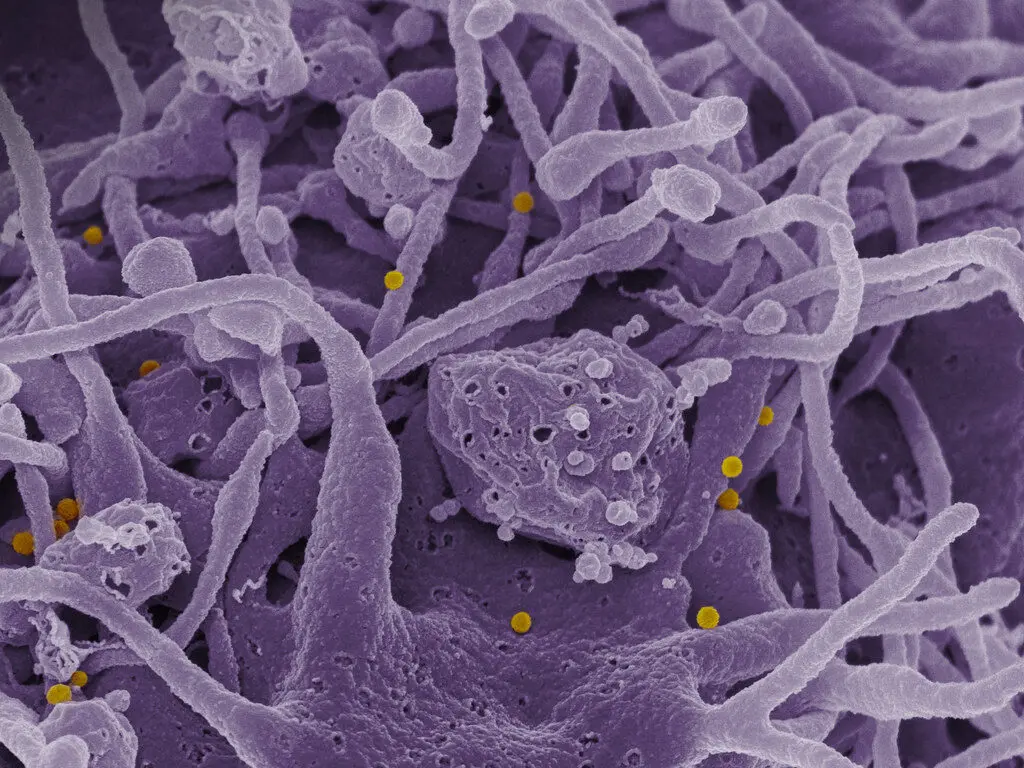
Different viruses showed different patterns, the researchers wrote on the Harvard Medical School website. For example, Epstein–Barr virus (EBV) was more common with age.
By contrast, human herpesvirus 7 (HHV‑7) became less common starting in middle age. EBV viral load rose in winter and fell in summer, while the patterns for other viruses were more stable.
Using a statistical method called Mendelian randomization, the investigators also identified links between certain viruses and specific diseases. The scientists found that a high EBV viral load is a direct risk factor for developing Hodgkin lymphoma in older adults.
The team did not find a similar direct link between Epstein–Barr virus and multiple sclerosis, even though EBV is a known trigger of that disease. This result suggests that the connection between EBV and multiple sclerosis may depend less on how much virus is present and more on how the immune system responds to the virus.
Three of the viruses the researchers studied are known as anelloviruses and are present in 80–90 percent of people, but it remains unclear how those viruses relate to disease.
“This work shows why studying viruses in large genetic biobanks is so important,” Kamitaki said.
Why it matters
The study was published in the journal Nature. Researchers can use the results to further investigate why one person’s disease risk can differ from another’s—even when the same viruses are present in both bodies.
A person’s health can be influenced not only by current infections. Ancient viruses that integrated into our genomes centuries ago and have since lost the ability to reproduce can still affect our health in surprising ways.
“It’s striking how much this study can tell us about dynamic biological processes and how our habits, our genes, and our biology shape those processes,” said geneticist Steven McCarroll, a coauthor of the study.
Photo: Unsplash
