
 Gaby
Gaby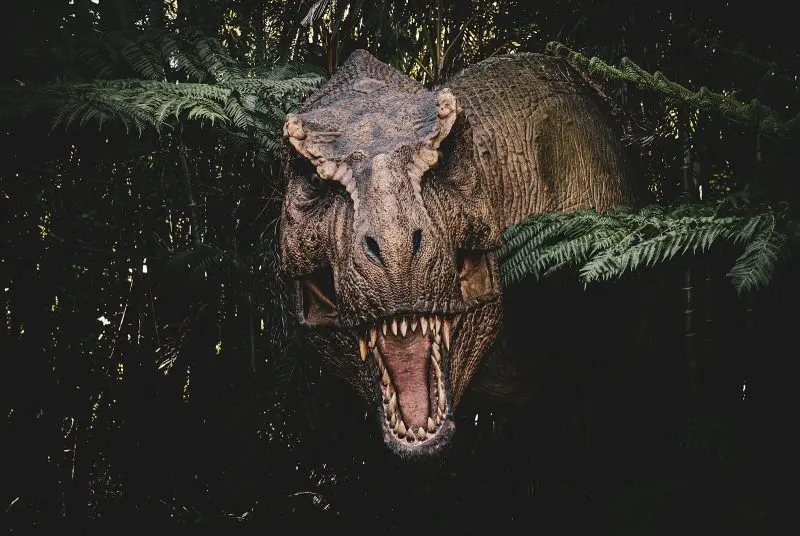
The digital biology company Organoid Company (Netherlands), in collaboration with Lab-Grown Leather Ltd (UK) and creative agency VML (USA), announced plans to create Tyrannosaurus rex skin based on its DNA. The team has already developed the necessary technology.
The project builds on a previous study in which paleontologists extracted a fragment of collagen from a Tyrannosaurus fossil found in Montana in 1988. At the time of discovery, it was one of the most complete specimens, with even blood proteins preserved.
Researchers will now use this fragment to artificially recreate a full-length sequence of T. rex collagen. Once they confirm that it is genetically similar to the original, they will incorporate it into lab-grown skin cells. This template can then be grown to the required size. The resulting eco-friendly material will be used to make products such as clothing and accessories.
The team says it will combine “creative innovations, genomic engineering, and advanced tissue engineering to begin the production of eco-friendly luxury materials from prehistoric species.”
Thomas Mitchell, CEO of Organoid Company, said, “This project is a great example of how we can use advances in gene and protein engineering to create new materials. By reconstructing and optimizing ancient protein sequences, we can develop Tyrannosaurus skin — a biomaterial inspired by prehistoric biology.”
Bas Korsten, creative director at VML, said the team is using “the biology of the past to create luxurious materials for the future.”
The team also says the ecological and ethical implications of the project are significant. Traditional leather production is linked to extensive deforestation, and the chemicals used in tanning pollute the environment. The technology for recreating Tyrannosaurus rex skin could significantly reduce environmental impact while also addressing animal cruelty associated with traditional leather production.
Initial production will focus on accessories. By the end of 2025, the team plans to launch a flagship commercial product — a “luxury fashion item.”
The team said that after the experimental work is completed, T. rex skin could be used beyond fashion, for example, in the automotive industry.
“The material is fully biodegradable while maintaining the strength and repairability of traditional leather, offering a sustainable, cruelty-free alternative for consumers who value both innovation and environmental responsibility,” the team said.
Professor Che Connon of Lab-Grown Leather said, “This project showcases the potential of cellular technology to create materials that are both innovative and ethically safe.”
Who is T. rex?
Tyrannosaurus rex (whose name means “tyrant lizard king”) was a bird-like dinosaur — a predator that lived 83-66 million years ago in what is now western North America. This prehistoric animal reached about 12 meters in length and about four meters in height. Scientists know of roughly 50 fossil specimens of the species. The bite of T. rex is considered one of the strongest in the animal kingdom.

