
 Gaby
GabyElephants have a conversation channel humans can’t hear — a discovery from a team of cognitive biologists and animal sound-communication researchers at the University of Vienna led by Dr. Angela Stoeger. These signals can be as loud as a chainsaw and travel several kilometers, but the human ear can’t pick them up. The phenomenon involves infrasound, which are frequencies below the range of human hearing; ultrasound, by contrast, refers to higher frequencies above human hearing. Different animals use these extremes in different ways: bats emit ultrasound, while elephants use their massive vocal organs to produce infrasound and carry messages across long distances. The team found that elephants produce those sounds by the same physical mechanism that underlies human singing and speech.
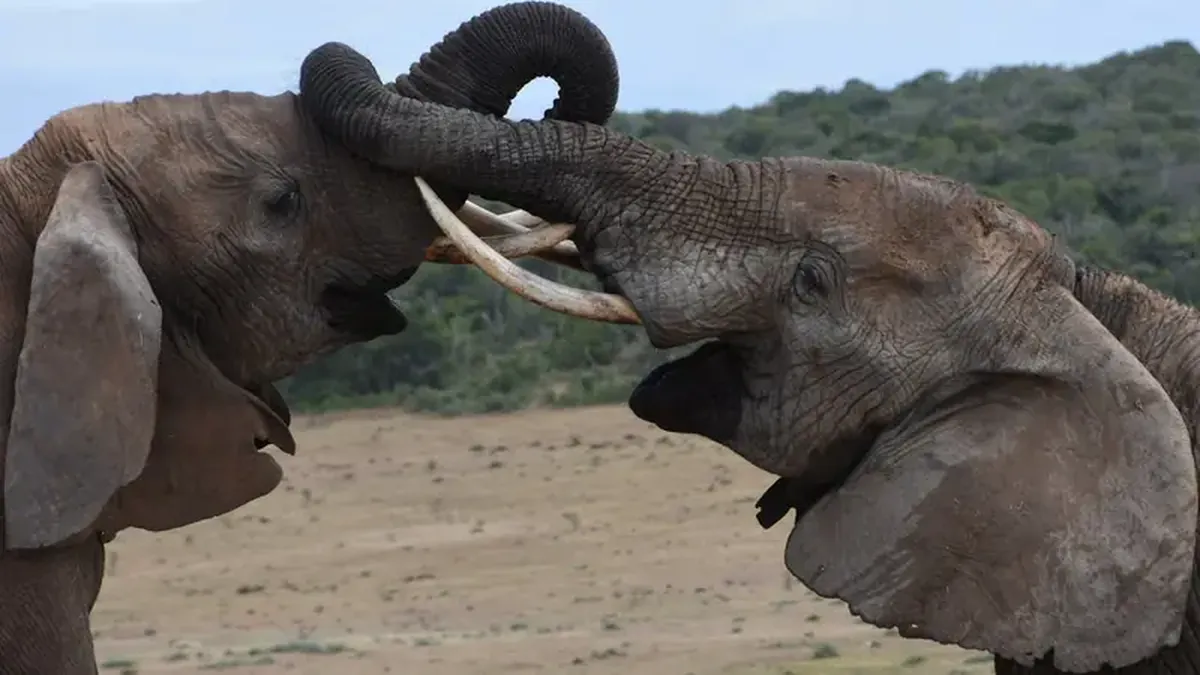
“These low-frequency sounds, known as infrasounds, can travel several kilometers, providing elephants with a ‘personal’ communication channel that plays a crucial role in their complex social lives. These frequencies are as low as the lowest notes on an organ,” the team’s report said.
What the Scientists Discovered
The researchers originally had no idea how elephants produced such low notes. To investigate, they removed the larynx from an elephant that had died of natural causes, brought it to a laboratory, and passed controlled airflow through it. By manipulating the vocal folds, the team recreated the low-frequency vibrations that match elephant infrasound. That shows that when elephants use low-frequency infrasound, they are vocalizing — their enormous larynx simply lets them reach pitches humans can’t produce or hear. As IFLScience reported, we can’t naturally make or hear those sounds.
The team ruled out an alternative theory that the sounds were produced like purring. Imagining elephants as giant, leathery cats is amusing, but the purring idea didn’t hold up. The finding expands our understanding of animal communication, though we still can’t hold a conversation with elephants. The researchers hope artificial intelligence could help decode elephant signals in the future. The study was published in the journal Science.
