
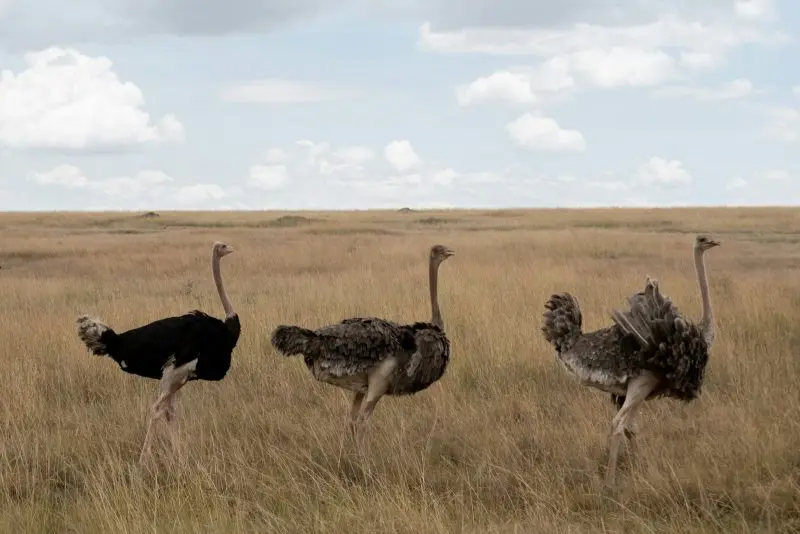
Less than one percent of all bird species—around 60 in total—are unable to fly. That’s surprising, since birds are so closely identified with flight. Ostriches, penguins, kiwis, and other species descended from ancestors that could fly but lost that ability as they adapted to life on land or in water. Why did they give up flying? Flying is a huge advantage for evading predators and traveling long distances to find food and better habitat. But it’s also expensive: birds use about 75 percent more energy in flight than similarly sized mammals. “If flight isn’t essential, birds can survive and reproduce more effectively by redirecting their energy resources elsewhere,” Natalie Wright, a researcher at Kenyon College in Ohio, told Live Science. Her team published a study on the topic in PNAS a few years ago. They found that island birds—those facing few or no predators and less competition for food and habitat—tend to lose the ability to fly. That shift triggers physical changes. Over time, birds’ flight muscles shrink. The sternum (breastbone) and its central ridge—the keel where the flight muscles attach—also shrink, Wright noted. Wing bones shorten and weaken, while legs adapted to life on the ground become longer and stronger.
How else do these evolutionary changes show up? Some birds trade flight for exceptional swimming. Penguins, for instance, keep their flight muscles and keel but repurpose them for swimming. “They use their wings to fly underwater,” said Peter Ryan, an honorary professor of ornithology at the University of Cape Town. In birds that haven’t flown for long periods, the stiff feathers needed for flight disappear, Ryan pointed out. In species like the kiwi, body feathers lose the tiny hooks that help maintain aerodynamic shape, giving them a fluffier look, he added. A study in Evolution this year found that flightless birds lose feather traits in the reverse order that those traits evolved. The authors say skeletal and feather changes happen together, because maintaining and growing bone takes much more energy than supporting feathers.
Flightless birds are rare today, but fossils show they were far more widespread and diverse thousands of years ago, says Tim Blackburn, a professor at University College London. The arrival of humans and introduced animals like rats and dogs wiped out many of those species. “Having lost the ability to fly, they didn’t have time to redevelop this useful trait,” Blackburn said. That led to the rapid extinction of iconic species such as the dodo in Mauritius and the moa in New Zealand. Blackburn says there could have been four times as many flightless bird species on Earth today if not for human-caused extinctions. “Many of these species thrived on islands without predators, but they disappeared after humans arrived,” said Ferran Sayol, a research fellow at the Center for Ecological Research and Forestry Applications in Barcelona, Spain.
