
 Gaby
Gaby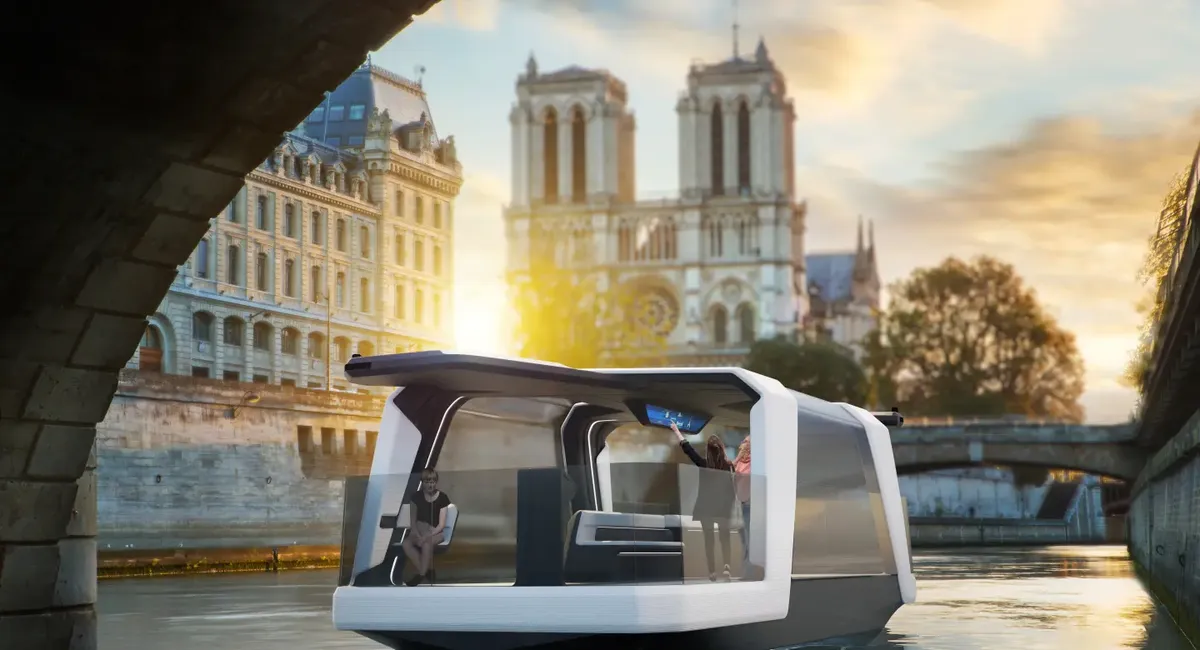
The idea came from an international consortium that includes Roboat, Holland Shipyards Group, and Sequana Développement. The initiative to 3D-print the ferry was launched by the French waterways authority, Voies Navigables de France.
The project won a national competition for autonomous passenger vessels. In a few months the ferry will be built, tested, and ready to sail the Seine, and it will be unveiled to the public closer to summer 2024. The presentation will happen at a key Olympic site near major sporting venues. The consortium says the ferry’s route will link the Olympic Village and the island of L’Île-Saint-Denis.
Measuring 9 by 3.9 meters, the structure could become the largest unmanned ferry ever 3D-printed, according to Designboom. The team working on it says the ferry will help athletes and visitors meet their mobility needs in a new, environmentally friendly way.
Developers say the unmanned ferry “has a brain.” Besides being fully electric, it can be charged wirelessly and can automatically depart and dock without help. The consortium is keeping the ferry’s proprietary technologies under wraps, saying only that they will use rapidly developing artificial-intelligence tools.
The first version of the vessel features a long bench down the center of the hull, leaving plenty of space for passengers traveling to nearby locations. The ferry’s maximum weight capacity has not yet been decided.
The ferry’s walls and parts of its ceiling are made of translucent glass, giving Olympic guests wide views of Paris. Looking at the hull, the structure narrows toward the bottom; engineers say they added trusses to improve stability and prevent capsizing.
Thick geometric bands of white and gray frame both the interior and exterior, giving the ferry a sleek look that’s visible from afar. LED lighting embedded in the floor, walls, and ceiling adds a romantic — Parisian — atmosphere.
