
 Gaby
GabyResearchers at Stanford University say a common food dye — not yet tested in humans — may eventually help detect injuries or tumors.
To reach this finding, scientists examined the brains and bodies of living animals and discovered that the food dye tartrazine can temporarily make skin, muscle, and connective tissue transparent.
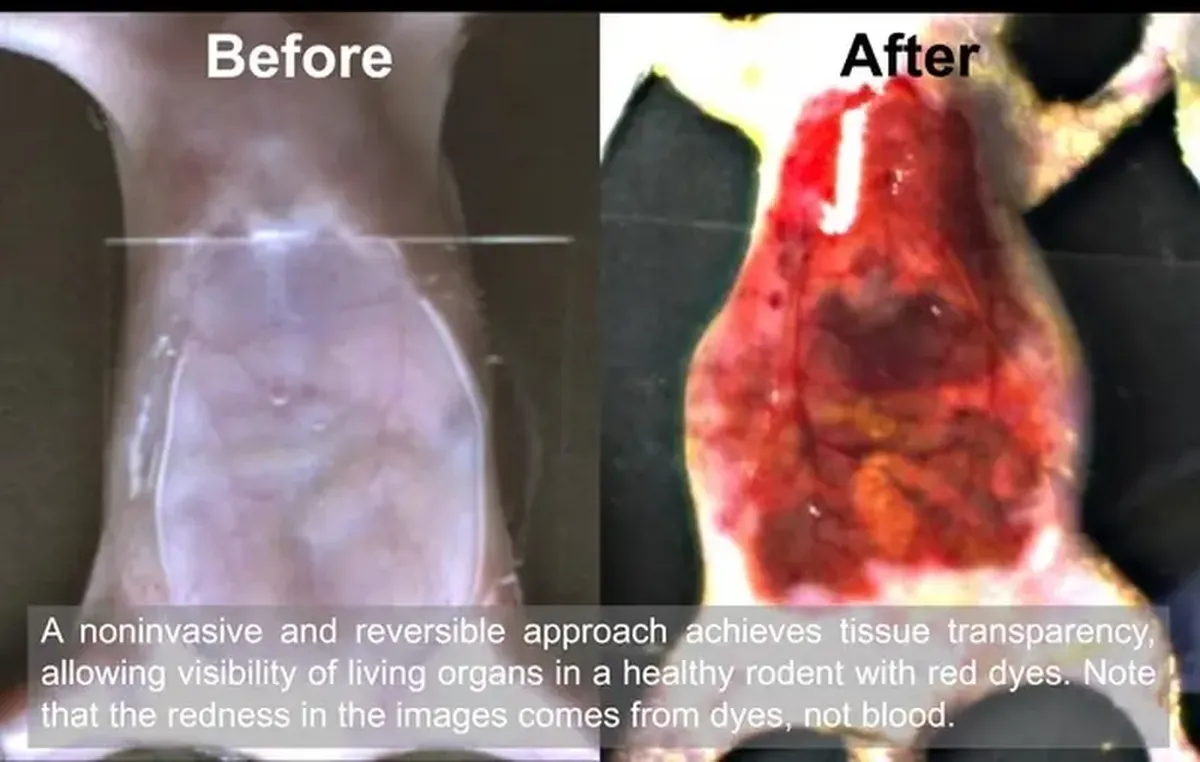
Applying the dye to a mouse’s abdomen made its liver, intestines, and bladder visible through the skin. Applying it to the rodent’s scalp let scientists see blood vessels in its brain, The Guardian reported.
Researchers say treated skin returned to its normal color as soon as the dye was washed off. They believe the technique could have several potential human applications, such as detecting injuries, locating veins for blood draws, monitoring digestive disorders, and identifying tumors.
“Instead of relying on invasive biopsies, doctors could diagnose deep tumors simply by examining tissue without the need for surgical intervention,” said Dr. Gohsong Gong, a senior researcher on the project. He said the method could also make blood draws less painful because phlebotomists would find it easier to locate veins beneath the skin.
What is the secret of the dye’s strange property?
The idea echoes H.G. Wells’ novel The Invisible Man (1897). In the story, a scientist discovers that invisibility depends on matching an object’s refractive index — its tendency to bend light — with the refractive index of the surrounding air.
When light enters biological tissue, most of it is scattered because structures inside, such as fat membranes and cell nuclei, have different refractive indices. When light passes from one refractive index to another, it bends, making the tissue opaque. The same effect makes a pencil look bent when you put it in a glass of water.
Dr. Zhihao Ou and his colleagues at Stanford found that, counterintuitively, certain dyes can allow light of specific wavelengths to pass through skin and other tissues. Dyes that are strongly absorbed by tissue change the refractive index of the tissue that absorbs them. That can help match the refractive indices of adjacent tissues and reduce scattering.
How did the experiments go?
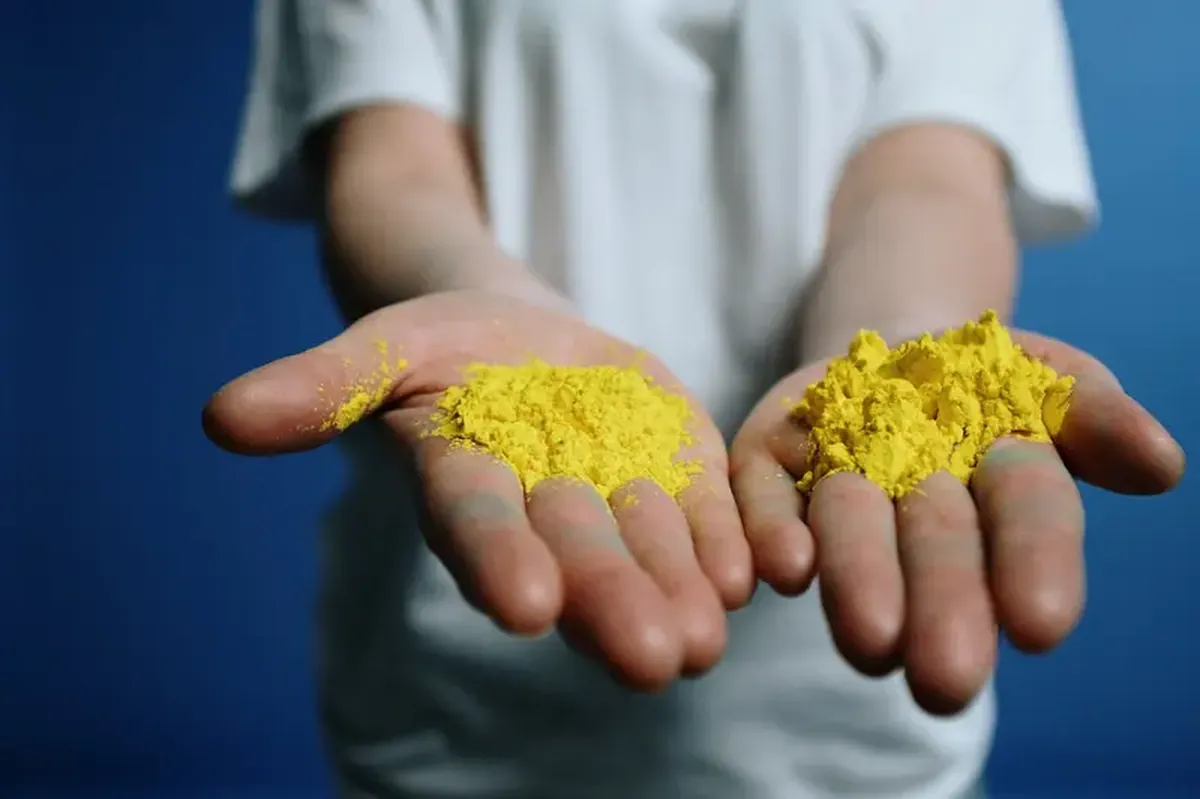
In a series of experiments, researchers showed that fresh chicken breast became transparent to red light within minutes of being immersed in a tartrazine solution. Tartrazine is a yellow food dye used in some chips, beverages, and other products. The dye reduced light scattering inside the tissue, letting light penetrate deeper.
The team then applied the yellow dye to the lower abdomen of a mouse, making the intestines and internal organs visible through the transparent skin. In a second experiment, they applied the dye to a shaved mouse head and used laser speckle contrast imaging to observe blood vessels in the rodent’s brain.
“The most surprising thing about this study is that we usually expect dye molecules to make things less transparent. For example, if you mix blue ink with water, the more ink you add, the less light can pass through the water. In our experiment, when we dissolve tartrazine in an opaque material (such as muscle or skin, which typically scatter light), the more tartrazine we add, the more transparent the material becomes — but only in the red part of the light spectrum. This contradicts what we usually expect from dyes,” said Dr. Gong.
After the dye is washed off, the skin returns to its natural color. Currently, the transparency is limited by how deeply the dye penetrates, but the researchers suggested that microneedle patches or injections could deliver the dye deeper into tissue.
The procedure has not yet been tested on humans. Before testing in people, researchers need to prove the dye is safe, especially if it will be injected under the skin.
In an accompanying article, Christopher Rowlands and John Goretsky of Imperial College London wrote that the technique would generate “extraordinarily wide interest,” because combined with modern imaging it could help detect tumors beneath tissue more easily. “H. G. Wells, who studied biology under Thomas Huxley as a student, would undoubtedly approve of this,” they wrote.
The results of the study were published in the journal Science.
