
 Gaby
GabyScientific achievements built the modern world, but what comes next as artificial intelligence grows more powerful? It’s impossible to make definitive claims, yet researchers see two likely trends.
Trends in the Further Development of Humanity
First, the world will become more crowded. The planet’s population is estimated to exceed 9 billion by 2050. To feed everyone, genetically modified crops, insect-based foods, and lab-grown meat will be necessary.
That’s why we should hope new technologies will let us feed a much larger share of the planet and provide sustainable energy. At the same time, we need to be cautious, because artificial intelligence can be difficult to control.
AI technologies will become more pervasive and intrusive in the future. Records of people’s movements, their health status, and financial transactions will be stored in the cloud and managed by multinational quasi-monopolies.
This data can be used for benevolent purposes, such as medical research or warnings about future health risks. But giving internet companies access to that information is already shifting the balance of power from governments to global conglomerates.
AI is encroaching on most professions
Machines will take over a large part of manufacturing and retail. They can complement, if not replace, many white-collar jobs in accounting, software development, medical diagnostics, and even surgery. By contrast, some skilled service jobs—plumbers, gardeners, and other roles that require nonstandard interactions with people—will be the hardest to automate.
As Sciencefocus reported, the digital revolution is already creating immense wealth for innovators and global companies. However, maintaining a healthy society will require redistributing that wealth.
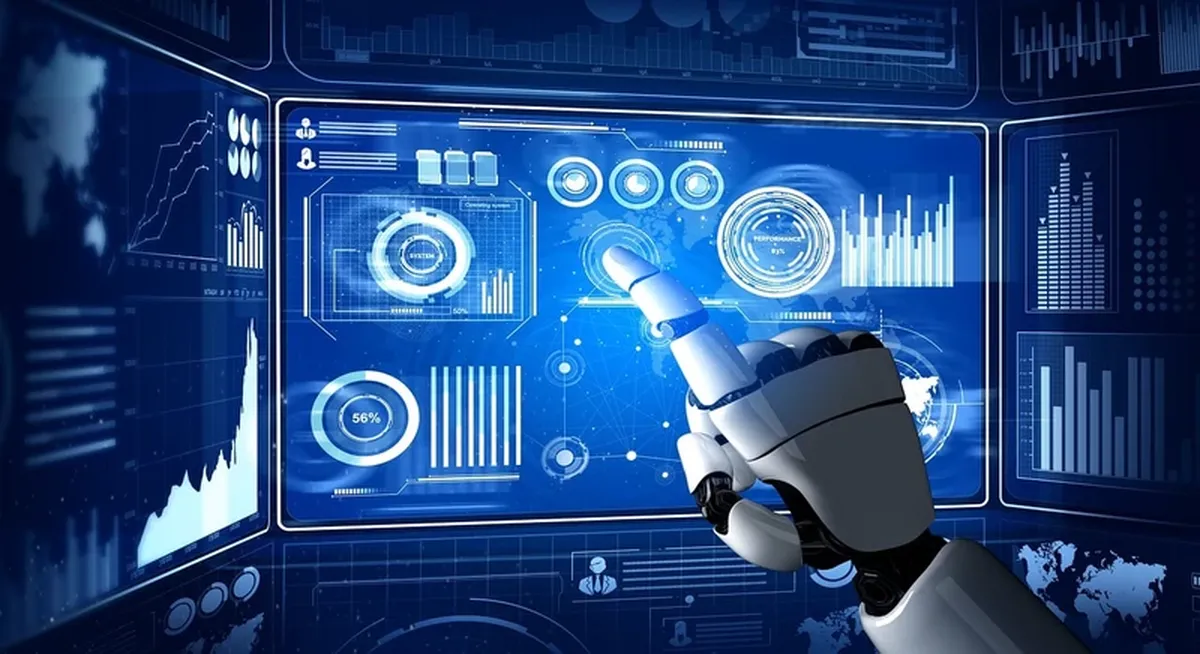
To create a humane society, governments need to significantly increase the number and status of caregivers for the elderly, the young, and the sick. There are currently too few caregivers. Their work is poorly paid, yet it often brings more satisfaction than jobs in call centers or at Amazon warehouses—roles that AI can increasingly perform.
AI won’t just replace people; it can also assist them. It already outperforms humans in data-rich, rapidly changing networks. That could enable a level of planned economic efficiency people once only dreamed of. AI can also accelerate scientific progress in areas such as protein folding and drug development.
AI beyond Earth will save humanity
Beyond Earth, AI’s potential becomes even more dramatic. With robots, humanity could establish interplanetary bases by 2100. But don’t expect mass emigration from Earth. It’s a dangerous delusion to think space will let us escape terrestrial problems—fighting climate change on Earth is small potatoes compared to terraforming Mars.
The first humans on Mars will be poorly adapted to its environment, yet they could kick off a post-human era. If AI robots lead instead of humans, they won’t need an atmosphere or even gravity. That means they could survive and operate in deep space in ways humans cannot.

Ultimately, machines could become as mentally different from humans as humans are from slime. Artificial intelligence might spawn a diaspora of increasingly complex minds spreading across the galaxy.
If we shift our focus from far-future science fiction to the near future, this century is special. For the first time in Earth’s 4.5-billion-year history, a single species holds the planet’s future in its hands. Human intelligence could set off billions of years of evolution after human life—possibly leading to outcomes even more astonishing than the evolution that produced us.
Conversely, people could trigger biological, ecological, or cyber disasters that wipe out that potential. To avoid that, scientists and the public need to think globally, act rationally, and plan for the long term—lean on science, but be guided by values that science alone cannot provide.
