
 Gaby
Gaby
This year’s unusually hot summer has made clear the costs of our dependence on fossil fuels. While Elon Musk dreams of colonizing Mars and some researchers look to the ocean as a refuge from global warming, others are exploring a different idea: cities built underground.
As extreme weather becomes more frequent, underground habitats—where temperatures stay far more stable—could be a real lifeline. History offers examples of people living belowground. But can that model help in the climate crisis?
Australia’s Underground City
Nearly 60% of the population in the Australian town of Coober Pedy — whose name comes from an Aboriginal phrase often translated as “white people in holes” — lives in underground homes. In this region of South Australia, summer temperatures can soar to +52°C, while winter temperatures drop to 2°C. However, in the underground town of Coober Pedy, the temperature remains a comfortable +23°C year-round.
Without this natural stone shelter, the city’s residents would likely struggle to survive the extreme heat, as air conditioning would be prohibitively expensive for most. On the surface, even birds perish during the summer heat, but the townspeople enjoy relatively luxurious underground living spaces.
All underground structures here are located at least 2.5 meters below the surface. This rule helps prevent collapses, which do occur from time to time. The local rock formations do not require complex tools for excavation, and the process of building underground homes is relatively quick.
The Lost City of Cappadocia
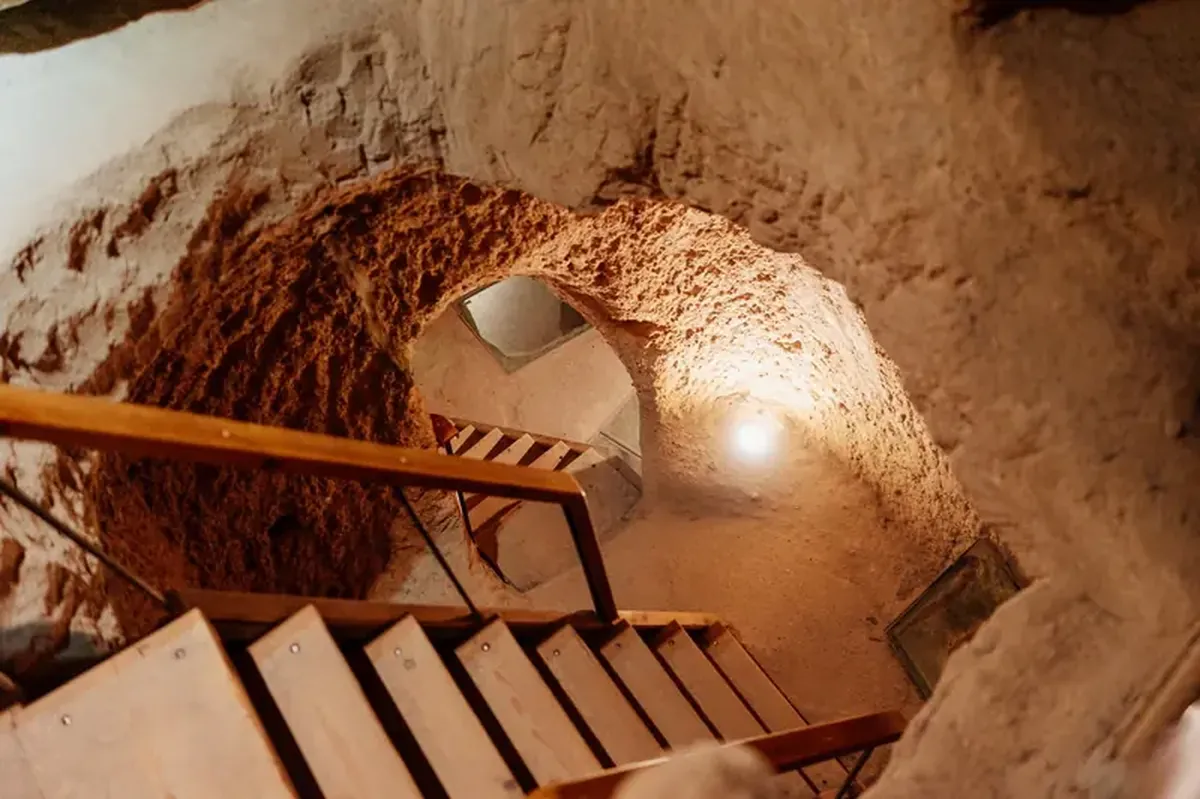
In 1963, extensive underground labyrinths of the previously lost city of Derinkuyu were accidentally discovered in Turkey’s Cappadocia region. This settlement was built as far back as 2000 B.C. and featured an 18-story network of underground tunnels stretching 76 meters. It housed 15,000 ventilation shafts and could accommodate 20,000 people.
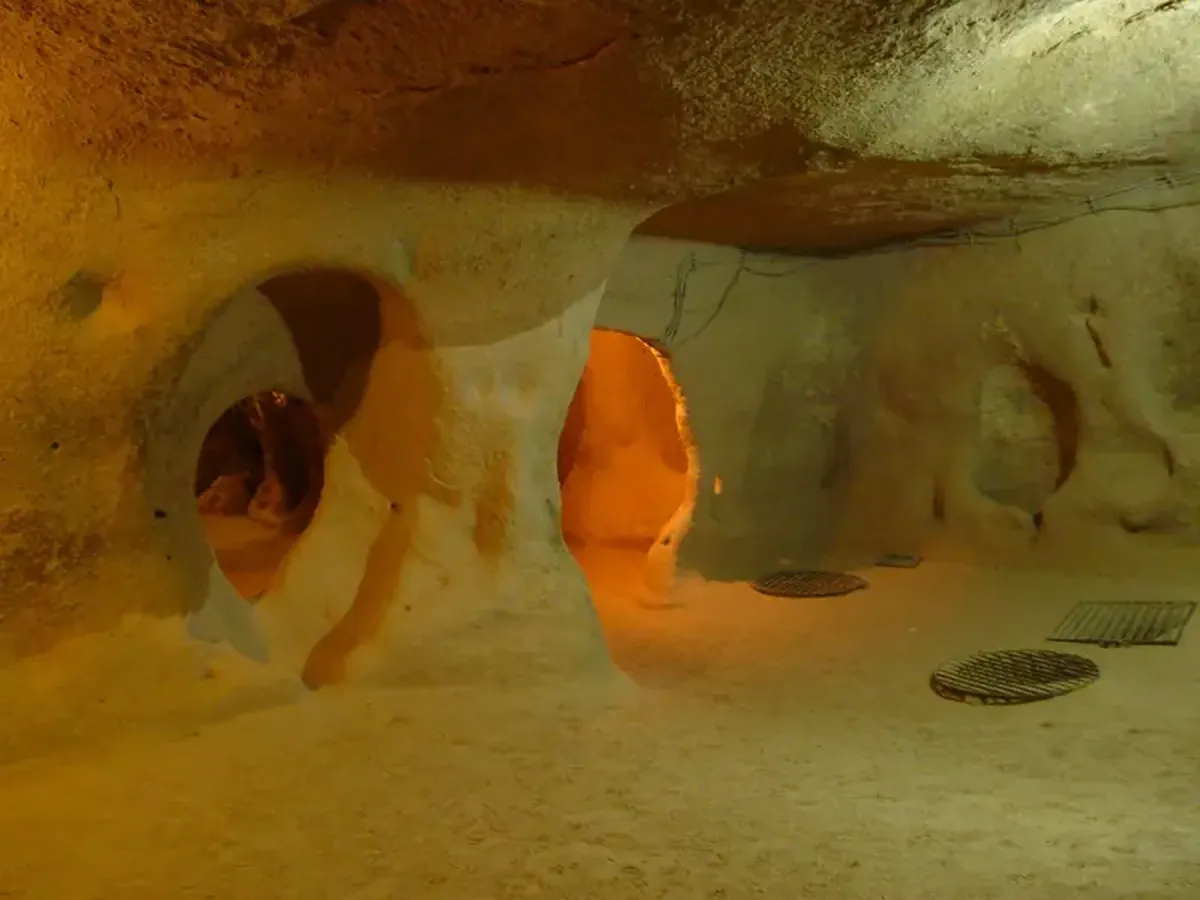 This underground city is believed to have served as a refuge during wars for millennia, only to be abandoned suddenly in the 1920s. While surface temperatures range from 0°C to +30°C, the temperature in these underground tunnels remains a constant +13°C.
Such conditions make this environment ideal for preserving fruits and vegetables. Today, some of the tunnels in Derinkuyu are used to store boxes of pears, lemons, apples, oranges, potatoes, and cabbage. The local rock is quite pliable, making it relatively easy to create tunnels here.
Drawbacks of an Underground Future
Living underground for a while may not seem catastrophic, but the idea of permanent subterranean life is daunting. The underground has long terrified people and been associated with the realm of the dead. Claustrophobia, fear of collapse, and the risk of suffocation from poor air are significant challenges.
Will Hunt, author of the book “Underground,” told ScienceAlert that humans aren’t physiologically built for extended underground living. Prolonged absence of natural light can lead to people sleeping for up to 30 hours at a time, and disruptions to their normal rhythms can result in various health issues.
Sudden flooding is another threat, and it’s only likely to get worse with climate change. A stark example of this is the frequent deaths of homeless individuals in the underground tunnels of Las Vegas, which can flood almost instantly during heavy rains, leaving no time for evacuation.
 Additionally, underground builds need costly materials that can withstand soil pressure, and extensive geological surveys are required before construction.
Surface temperature swings still affect underground spaces. For example, rising surface temperatures cause soil expansion that can damage underground structures.
An Example of a Successful Underground Project
Safety, natural lighting, good ventilation, and a sense of connection to the surface world are the key factors for successful human existence underground. In Montreal, these elements were successfully implemented in the creation of the RESO underground city, which spans 32 kilometers and helps people endure harsh winters.
Within its confines lies all the infrastructure necessary for comfortable living—from offices and hotels to schools and shops. So perhaps we should consider building not skyscrapers, but underground vaults for the future to escape the dangerous heat?
