
 Gaby
Gaby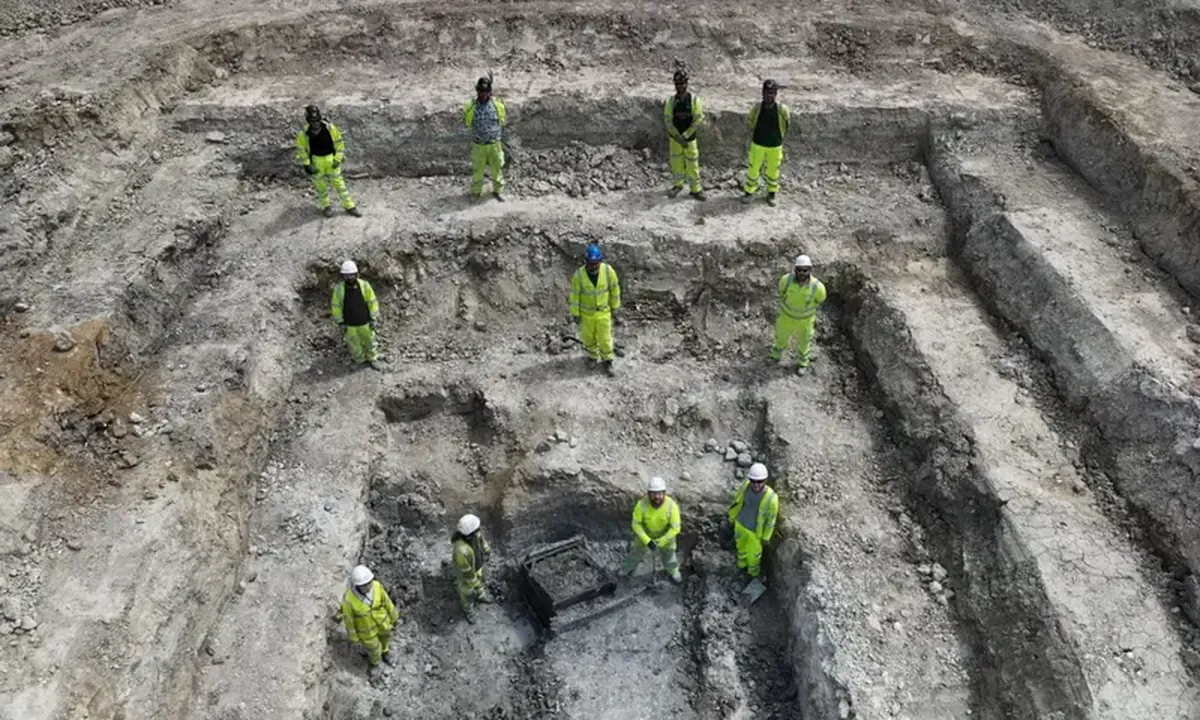
The remnants of Roman British wells (43–410 AD) were first uncovered by road workers preparing to rebuild a highway. They alerted experts at the Museum of London Archaeology (MOLA). A MOLA team then excavated the site and uncovered two intriguing structures. Inside the wells, archaeologists found fragments of stairs and timber from a carpentry workshop.

What Surprised the Researchers?
The MOLA team found that Roman builders in the 1st century AD ran into real problems while building these complex structures. Even the Romans — famed for their engineering and long-lasting buildings — got things wrong.
Evidence shows the first well collapsed before it was ever used. The second well had reinforced walls, but it wasn’t flawless either.
The digs were in an area occupied by an Iron Age settlement established around 350 BC. After the Romans conquered the territory in 43 AD, industrial activity picked up. Within a large enclosed site, archaeologists found evidence of carpentry and metalworking.
The new settlers and their crafts needed water, so they dug wells. The first well, about 8.5 meters deep, was built outside the enclosure. It was a square wooden well that collapsed before it could be used. Inside, wooden stairs survived.
Excavation leader Simon Marcus said that despite the considerable efforts of Roman engineers, not everything went to plan.

“We all do things that don’t quite go as planned, but this was a failure of Roman engineering on an industrial scale,” Marcus said. The second well, 6.4 meters deep, was lined with flat wooden planks meant to stop collapse. Builders placed stones at the bottom to filter water seeping through dense clay. Still, this well was abandoned too — likely another mistake. Inside, researchers found wood chips, scraps, and cut branches, suggesting carpenters used the well as a dumping ground, Arkeonews reported.
Experts are now studying the well’s contents, including decorative timber. Overall, the artifacts suggest the workshop was part of a wider trade network.
During the excavation, the team also uncovered an ancient Roman road that may have connected this area to important routes of the time.
