
 Carlos Solis
The world-famous fast food dish celebrated its 125th anniversary on July 27, and its name points to Germany’s second-largest city—yet it has no direct connection to Hamburg. Where was the hamburger invented, how old is this closed sandwich really, and can an American-patented invention be considered shared cultural heritage?
Official Recognition
Not every edible product gets a birthday, but the hamburger does: July 27, 1900. On that day, a New Haven, Connecticut, resident named Louis Lassen first sold a German-style beefsteak with sauce sandwiched between two round buns from his lunch wagon, Louis’ Lunch. That variation—hot meat on a bun with vegetables—became the innovation for which the Danish immigrant, who arrived in the United States in the 1880s, sought a patent. Still, the idea behind the sandwich is not unique and has long been considered “nobody’s property.”
In reality, this American culinary moment sits on a long history. While one early fast-food entrepreneur is often called the “father” of the hamburger, similar dishes existed well before the patent application. This combination of ingredients has as many regional and international variations as the hamburger has history—there are multiple origin stories. Ultimately, none of the claimants to the title of inventor holds exclusive rights to a culinary idea that evolved through complex development and spread, remaining widely accessible. Today, hamburgers are ubiquitous fast food and a standard item on restaurant menus worldwide.
Predecessor of the Patty
You can trace a predecessor to the hamburger back to the ancient Scythians: nomads likely ate beef pressed between two bread cakes as early as the 8th century BC. The Chinese also claim an early version of meat between two rice cakes. A recipe for fried “Hamburg sausage” appeared in Hannah Glasse’s cookbook in 1758, served on toasted bread. This sausage—known in Hamburg as Rundstück warm—was familiar to immigrants.
A famous legend describes a Hamburg merchant who, around 1800, noticed Tatar nomads storing meat under their saddles; the motion of travel pounded and tenderized the meat. The merchant supposedly suggested his cook pound the meat before cooking and serve it between slices of bread. “Hamburg meat” then appeared in Europe and made its way to the United States. The “Hamburg steak” served between bread slices was offered to passengers of the Hamburg America Line, which transported many early German immigrants to America. By 1834, a New York restaurant was already serving a “hamburger”—though it was a beefsteak, not yet a patty.

“Outstanding Favorite”
In 1884, the Boston Journal mentioned the “Hamburg steak.” The Chicago Daily Tribune wrote in July 1896 about the “sandwich mobile” and “an outstanding favorite for just five cents”—the “Hamburg sandwich,” prepared with minced meat on a gasoline stove “while you wait.” Sandwiches with “Hamburg steak” were advertised in the American press in the 1890s. The invention of the hamburger has been credited to Louis Lassen, Charlie Negrin, Oscar Weber Bilby, Fletcher Davis, Frank and Charles Menches, and even the Hamburg gastronomy figure Otto Kuase.
One thing seems certain: the first hamburger with the modern combination of ingredients—a round bun, a meat patty, tomato sauce, and lettuce—was sold in 1900 in New Haven by Louis Lassen, who added vegetables to his fast food. When the hamburger gained wider attention at the 1904 World’s Fair in St. Louis, the New York Tribune called it “an innovation from a fair food vendor.” Several experts argue, however, for anonymous authorship: the spread of the hamburger at the World’s Fair was driven by many small vendors, and the idea could easily have emerged simultaneously among different food sellers across the country.

The People’s Choice
In 1921, the hamburger entered a new chapter when Kansas chef Walter Anderson, with investor Billy Ingram, opened the world’s first hamburger restaurant. At White Castle, the hamburger became the focus of an American menu and a defining fast-food format. After an impressive debut in the early 20th century, the hamburger took another three decades to become America’s most popular fast food, convincing Americans to choose it over Italian cuisine, fried chicken, and other options. That shift was helped along by the rise of the automobile.
Mass car ownership in the U.S. led to roadside burger cafes that appealed to busy Americans on the go. One of those roadside cafes launched the story of a now‑famous restaurant chain in 1948. McDonald’s long-standing popularity reflects luck, entrepreneurship, and a savvy business strategy—and above all, new demands for organized, fast food. McDonald’s sells roughly 75 burgers every second and about 550 million Big Macs a year—more than any other single hamburger.

For Every Appetite and Wallet
Most American burgers are round, but some chains like Wendy’s serve square hamburgers. Many restaurants cook patties on a flat hot surface, while Burger King uses a gas flame grill. Uniformly thick patties are commonly delivered frozen by manufacturers. Only a few restaurants—such as Chef Bobby Flay’s Bobby’s Burger Palace—offer gourmet hamburgers made with premium meats, specialty cheeses, and unique toppings and sauces.
The largest hamburger on a restaurant menu costs nearly five hundred dollars ($499) and weighs over 84 kilograms (84.3 kg). That item is a permanent offering at Mallie’s Sports Grill & Bar in Southgate, Michigan, and takes about 12 hours to prepare. In 2012, the restaurant Serendipity made the Extravagant burger, priced at $295, which entered the Guinness Book of Records as the world’s most expensive hamburger at the time. Homemade hamburgers made from ground beef also differ in taste and quality from mass-produced products.

Global Spread
Hamburgers are not only an American picnic or backyard staple; they are grilled and served worldwide. Over 100 billion burgers are consumed each year globally—about 9 kilograms per person on average. In France, government data from 2012 showed 14 hamburgers consumed per person annually, ranking second in Europe (behind the British) and fourth in the world. A 2013 study found that 75% of traditional French restaurants offered at least one type of hamburger, and for a third of them the burger had become the top-selling dish, surpassing fish and ribs.
In Mexico, hamburgers are often served with fried ham and cheese on top of the patty; sometimes bacon is grilled alongside. Common toppings include chopped onions, lettuce, and jalapeños, with ketchup, mustard, and mayonnaise as condiments. In Japan, chains like MOS Burger, First Kitchen, and Freshness Burger offer local variations such as the rice burger, which uses a rice bun and sometimes seafood. In the USSR, as early as the 1930s—long before McDonald’s opened in 1990—hamburger production began after equipment and technology were acquired from American sources.

What’s the Difference Between a Hamburger and a Cheeseburger?
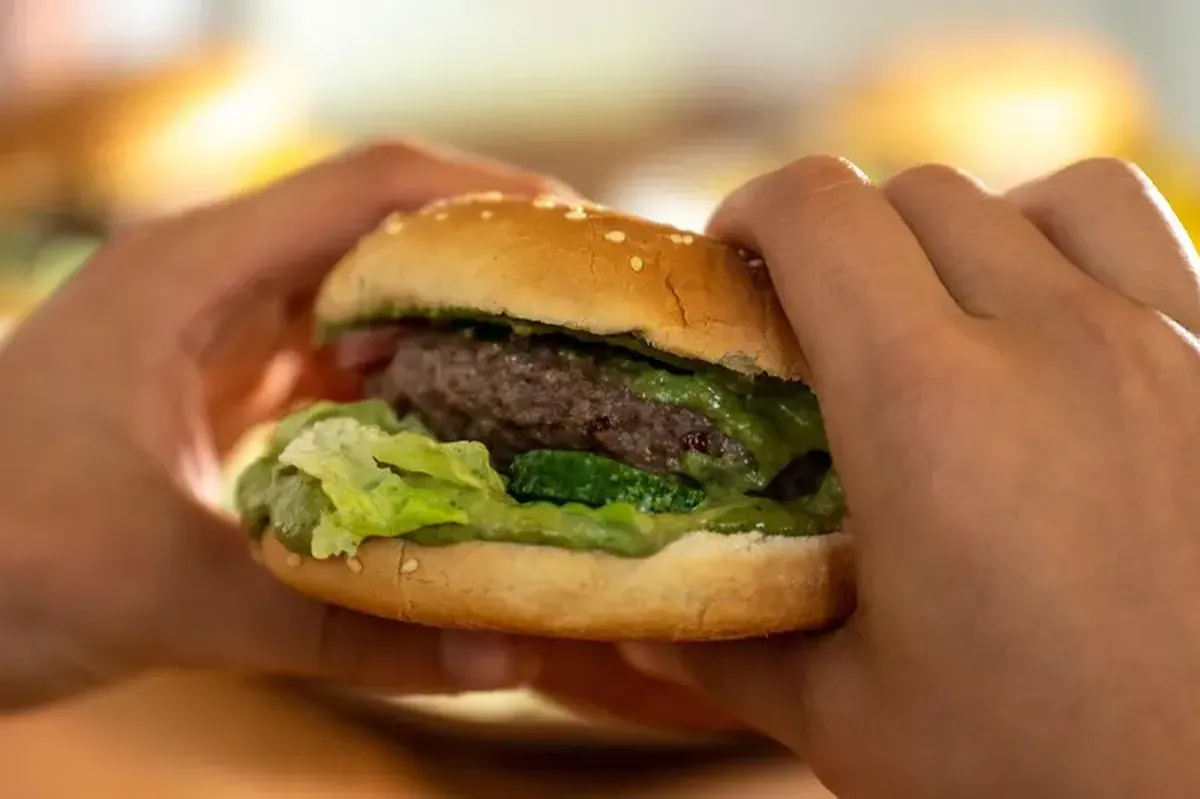
To avoid confusion, let’s clarify the terms hamburger, burger, and cheeseburger. A hamburger typically follows a specific recipe: a beef patty between the halves of a bun with lettuce, tomatoes, and sauce. “Burger” has a broader meaning and can include many fillings: chicken (chicken burger), fish (fish burger), or cheese (cheeseburger). A cheeseburger is a meat burger with cheese—usually cheddar—added.
A fish burger has a fish patty and may include ingredients like pâté or capers. A chicken burger uses a chicken patty or pieces of fried fillet in a crispy coating. A “Hawaiian” burger usually contains pineapple pieces and teriyaki sauce (a sweet-salty Japanese glaze). The “Caesar” burger is named for the Caesar-style dressing made from olive oil, egg yolks, Parmesan cheese, mustard, anchovies, and lemon juice. The “black” burger comes with a bun colored with activated charcoal or squid ink. There are also vegetarian burgers—made from beans, vegetables, mushrooms, or soy patties—that mimic the burger format without meat. While the hamburger is the classic, minimalist version, the burger is where chefs let their imaginations run wild. The burger remains the most popular fast food in the world.

Homemade Hamburger
Across culinary cultures, a hamburger means a closed sandwich made from minced meat, though the meat can vary. While the classic uses beef, a “Buffalo” burger uses buffalo meat. Other options include venison, bison, moose, lamb, kangaroo, turkey, chicken, salmon, shrimp, or even portobello mushrooms. In the U.K. the word “patty” is less common; “burger” often refers to the minced meat and products made from it. There is even a cake-burger—a dessert that imitates a hamburger’s look using chocolate sponge, fruit, marmalade, fondant, mousse, and creams.
Because there is no single method for preparing a burger, choose ingredients based on taste and preference. Round hamburger buns (often sesame-seeded and sold in packs) are needed. Make a homemade hamburger with freshly ground meat or with frozen patties. Frozen patties do not require baking: thaw them for six hours at +2 to +6°C, and before eating heat them for about two minutes in an 800-watt microwave.

Hamburger Recipe
When making hamburgers at home, remember that both ingredients and buns can vary. Buns come in different sizes (standard or mini), colors (light, dark, or black), and flour types (wheat, rye, or potato), with or without additions like sesame or grains.
Option 1
Place a thawed chicken patty on the bottom half of a bun, add cheese, lettuce, sliced pickles, and burger sauce, then top with the bun’s other half.
Option 2
According to the classic recipe, place a beef patty on the bottom half of a bun, add cheese, a lettuce leaf, pickles, and American sauce. Cover with the top half of the bun.
Serve the homemade hamburger hot. Classic French fries, country-style fried potatoes, grilled vegetables, or a fresh vegetable salad work well as side dishes.
Option 3
For those unafraid of culinary creativity, prepare a full-fledged hamburger at home.
Ingredients: burger buns – 10 pcs.; beef – 1 kg; beef fat – 150 g; sliced processed cheese – 20 pcs.; iceberg lettuce – half a head; tomatoes – 2 pcs.; pickles – 10 pcs.; red onions – 2 pcs.; ketchup – 2 tablespoons; mayonnaise – 2 tablespoons; mustard – 1 tablespoon; butter – 100 g; vegetable oil – 100 ml; black pepper – 1 teaspoon; salt – 1 teaspoon.
Finely chop the beef with the beef fat and pass it through a meat grinder. Season the minced meat with salt and pepper. Mix and form ten flat patties, then chill them in the refrigerator for half an hour.
Cut the buns in half and toast them in butter until golden brown.
Prepare the sauce by mixing the ketchup and mayonnaise with the mustard.
Remove the patties from the refrigerator and fry them for a few minutes on one side in a preheated pan with oil, pressing down with a spatula.
Flip the patties and place a slice of processed cheese on the cooked side. Cook the other side of the patty until done.
Assemble the hamburgers as follows: spread the bottom halves of the buns with the mayonnaise-mustard sauce, add thin rings of sliced onion, then sliced pickles, followed by the patty with cheese, a slice of tomato, and a lettuce leaf.
Spread ketchup on the top halves of the buns and cover the fillings with them.
After trying all three methods, you may find that taste can matter just as much as the time you save with fast food.
