
 Carlos Solis
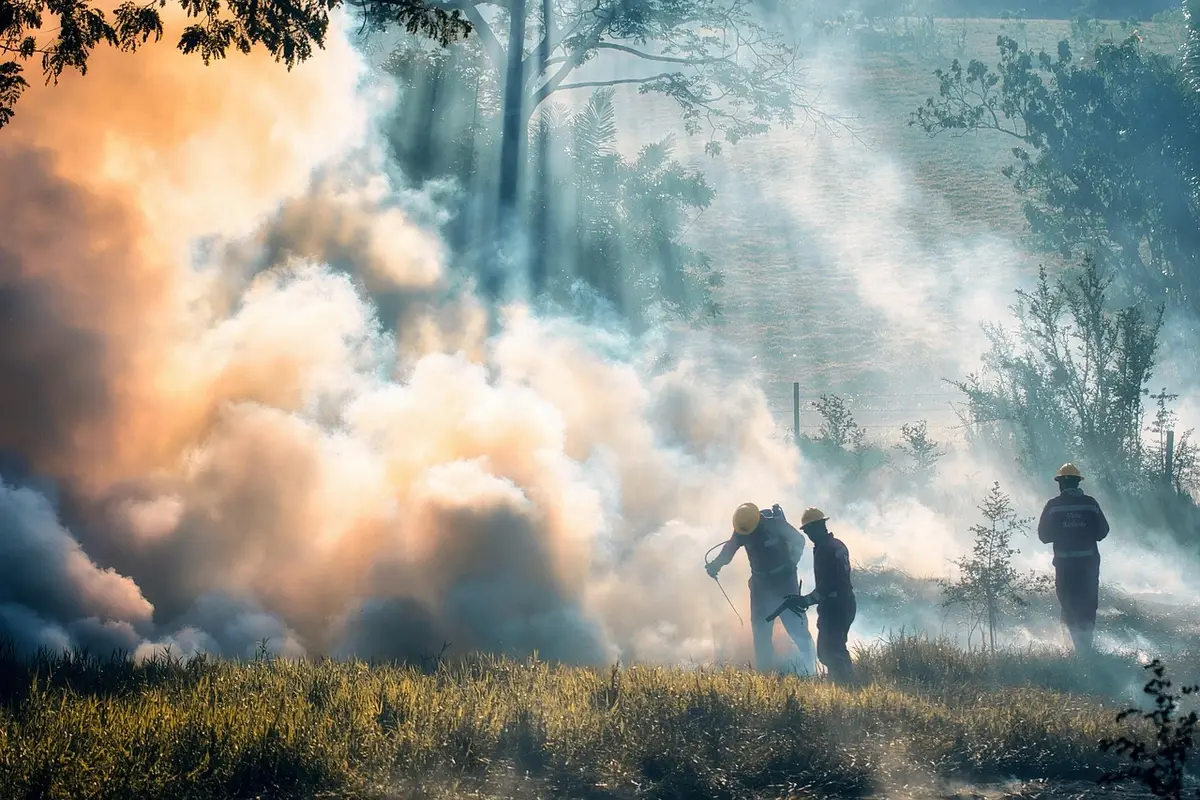 A new study from the Barcelona Institute for Global Health (ISGlobal) has revealed that the choking smoke from wildfires is far more dangerous than previously believed. They found that the number of deaths caused by short-term exposure to fine toxic particles, PM2.5, was underestimated by a staggering 93 percent.
The research team conducted their study against the backdrop of wildfires raging across southern Europe. They discovered that between 2004 and 2022, an average of 535 people died each year due to inhaling the smallest toxic particles, PM2.5, emitted during wildfires.
New data from EU wildfire services indicate that as of 2025, a record 895,000 hectares of forest have burned. This marks an unprecedented high compared with previous years. The fires released more than twice the average amount of PM2.5 into the atmosphere over the last two decades.
“It was previously thought that the toxicity of particles from wildfires and other sources was the same. However, our work has shown that the health impact of particles from wildfires is significantly stronger,” said Professor Catherine Tonne, an epidemiologist and co-author of the study.

What Are Scientists Warning About?
The ISGlobal team examined the short-term effects of smoke exposure, where the evidence is stronger. They combined daily mortality data from 32 European countries with estimates of PM2.5 pollution during the study period, as reported by The Guardian.
Using statistical models, the researchers found that for every extra microgram of PM2.5 per cubic meter of air, overall mortality increases by 0.7 percent. Mortality from respiratory diseases rises by 1 percent, and mortality from cardiovascular diseases rises by 0.9 percent.

“The results are concerning given that wildfires and other extreme events are increasing rapidly due to climate change,” noted Professor Antonio Gasparrini, an epidemiologist-ecologist from the London School of Hygiene and Tropical Medicine, who was not involved in the study.
Destructive fires, driven by unbearable heat, have claimed lives in southern Europe and the Balkans in recent weeks. But deaths caused by the toxins the fires release are likely to go unnoticed.
“Smoke also affects populations living far from the fires. It impacts many more people than the flames themselves,” said Professor Tonne.
Researchers say toxic substances from wildfires infiltrate the homes of over a billion people each year. Air purifiers offer limited protection, because indoor air pollution during these fires is three times higher than usual.
The risk of wildfires has increased as a result of global warming and the drying out of vegetation in certain regions. This year, the Iberian Peninsula has been particularly hard hit: Spain and Portugal account for a significant portion of the area burned in Europe.
Associate Professor Victor Resco de Dios, a forestry engineer at the University of Lleida in Spain, said that in the coming years and decades the fire belt will shift northward.
“What we are witnessing now will eventually reach Central and Northern Europe, where the wildfire problem is already intensifying,” he said.
And one more sobering statistic: a previous study found that 1.53 million deaths worldwide each year are linked to short-term and long-term exposure to air polluted by wildfire smoke.
Photo: pixabay.com
