
 Carlos Solis
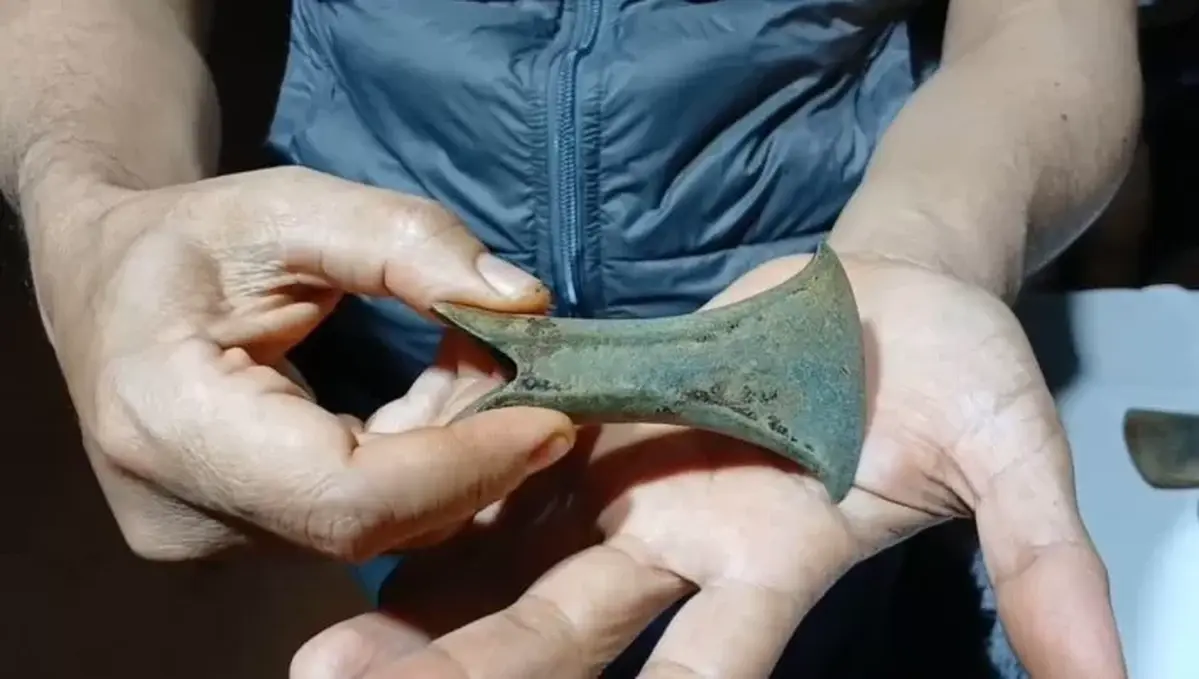 This rare discovery has astonished Indonesian archaeologists and historians alike. The unusual artifact sheds new light on the advanced metalworking techniques and social practices of ancient Borneo communities. After examining the tool, researchers proposed a plausible theory about the cosmic origins of the material used to craft the axe 3,000 years ago.
It had been kept in the collection of a local resident alongside others he discovered while panning for gold. Among these were ancient beads from the Dayak tribe and traditional stone axes. However, the conical axe immediately caught the attention of experts due to its unique shape, exquisite craftsmanship, and potential meteorite origins.
Young archaeologist Ida Bagus Putu Prajna Yoga was one of the first to study the find. “In all my years of studying the archaeology of Kalimantan (the Indonesian name for Borneo), I have never seen an axe of this shape,” she remarked.
What Did Scientists Discover?
Indigenous residents of Kalimantan told researchers that local legends link the appearance of such objects to lightning. Researchers think the axe was produced using advanced ancient metalworking techniques and was likely made from melted meteorite material, Arkeonews reported.
Researchers say the conical axe wasn’t meant for chopping, unlike typical stone axes. Its small size and artistic design suggest it may have served ritual functions or been a symbol of social status. Researchers say further verification of the axe’s material origins is needed.
Even at this early stage of research, the find shows ancient Borneo communities had moved beyond the Stone Age, using sophisticated metalworking skills for symbolic, social, and ceremonial purposes.
The study highlighted the importance of preserving local heritage, since still-isolated areas hold valuable information about Indonesia’s distant past. This conical Bronze Age axe is a striking example of the ingenuity, craftsmanship, and social complexity of ancient Borneo communities.
