
 Gaby
Gaby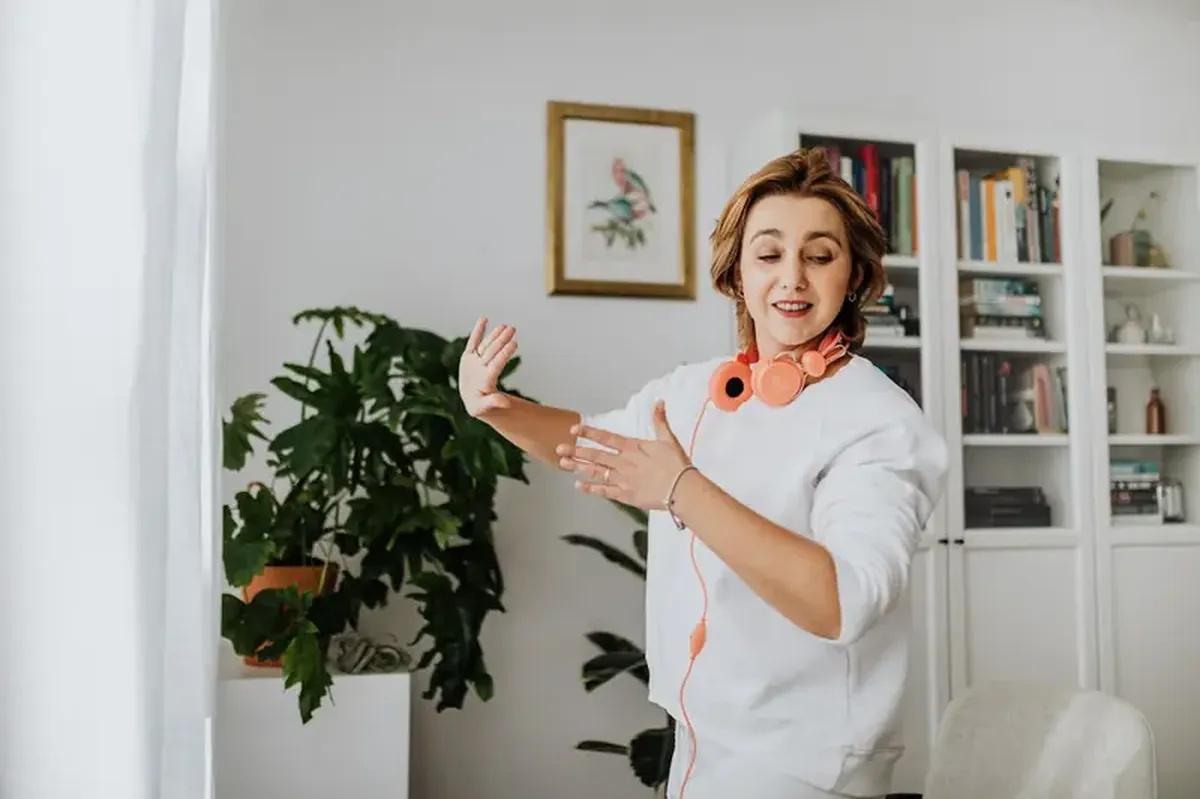
During the coronavirus pandemic, when people were confined to their homes, English singer Sophie Ellis-Bextor began streaming online “Kitchen Disco” dance parties. Not only did she lift the spirits of millions of fans, but she also sparked a fitness trend that can be just as effective as hitting the gym or going for a run.
Researchers at Northeastern University in Boston recently confirmed the benefits of home dancing. They found that a 20-minute Kitchen Disco session can deliver benefits comparable to the recommended daily physical activity guidelines.
Experts recommend at least 150 minutes of moderate to vigorous exercise each week.
Previous studies have shown that dancing improves heart health, balance, and flexibility while reducing the risk of early death. The new research showed that dancing at home—especially while doing household chores—has a positive effect similar to popular forms of exercise like jogging, swimming, or aerobics.

What Did the Researchers Discover?
The researchers wanted to figure out how much dancing counts as moderate physical activity.
They recruited 48 participants aged 18 to 83. Some had no prior dance experience, while others had up to 56 years of training.
Volunteers took part in five-minute freeform dance sets, both with music and without. During the dances, the team measured the participants’ oxygen consumption and heart rates to gauge exercise intensity.
The analysis showed all participants reached at least a moderate level of activity during every dance set. Dancing to music raised heart and breathing rates more often than dancing without music.
Speaking at the American Association for the Advancement of Science conference in Boston, Dr. Aston McCullough, the lead researcher, said, “The main idea was to understand whether the intensity people experience from freeform dancing is comparable to health-promoting physical activity. Ultimately, all participants were able to reach a health-beneficial level of activity without being instructed on how intensely to dance.”
Dr. McCullough noted volunteers reached that level even when dancing without music, and he said the key takeaway is that dancing is an accessible form of physical activity you can do at home.
He also emphasized that dancing is an aerobic workout comparable to weight training, including bodyweight exercises.
The results of the study were published in the journal PLOS ONE.
