
 Gaby
Gaby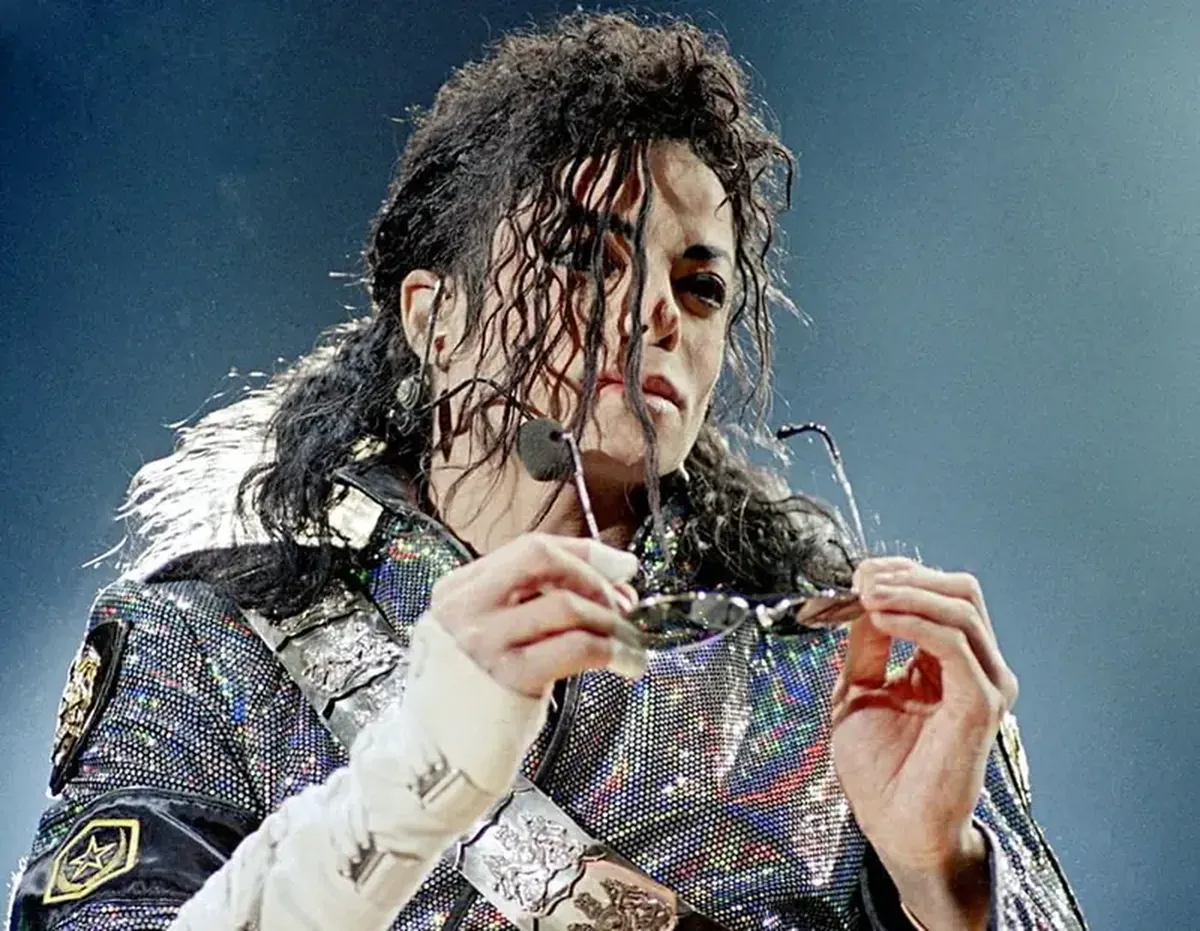
Michael Jackson’s short life was packed with myths, rumors, scandals, and neuroses—so much so that the subject came up even at his funeral. “There was nothing strange about him,” the pastor said during the farewell to the 50-year-old “King of Pop and Sensation.” “What was bizarre was what he had to face.”
Unmatched No. 1
Michael Jackson’s name appeared in the Guinness Book of World Records 25 times. That recognition reflects his sweeping influence on popular music, music videos, dance, and fashion. The legendary artist—who worked as a performer, producer, arranger, screenwriter, choreographer, entrepreneur, and philanthropist—won 15 Grammy Awards and sold more than a billion records. Jackson was inducted into the Rock and Roll Hall of Fame twice: once as a solo artist and once as a member of the family group the Jackson 5, organized by his father.
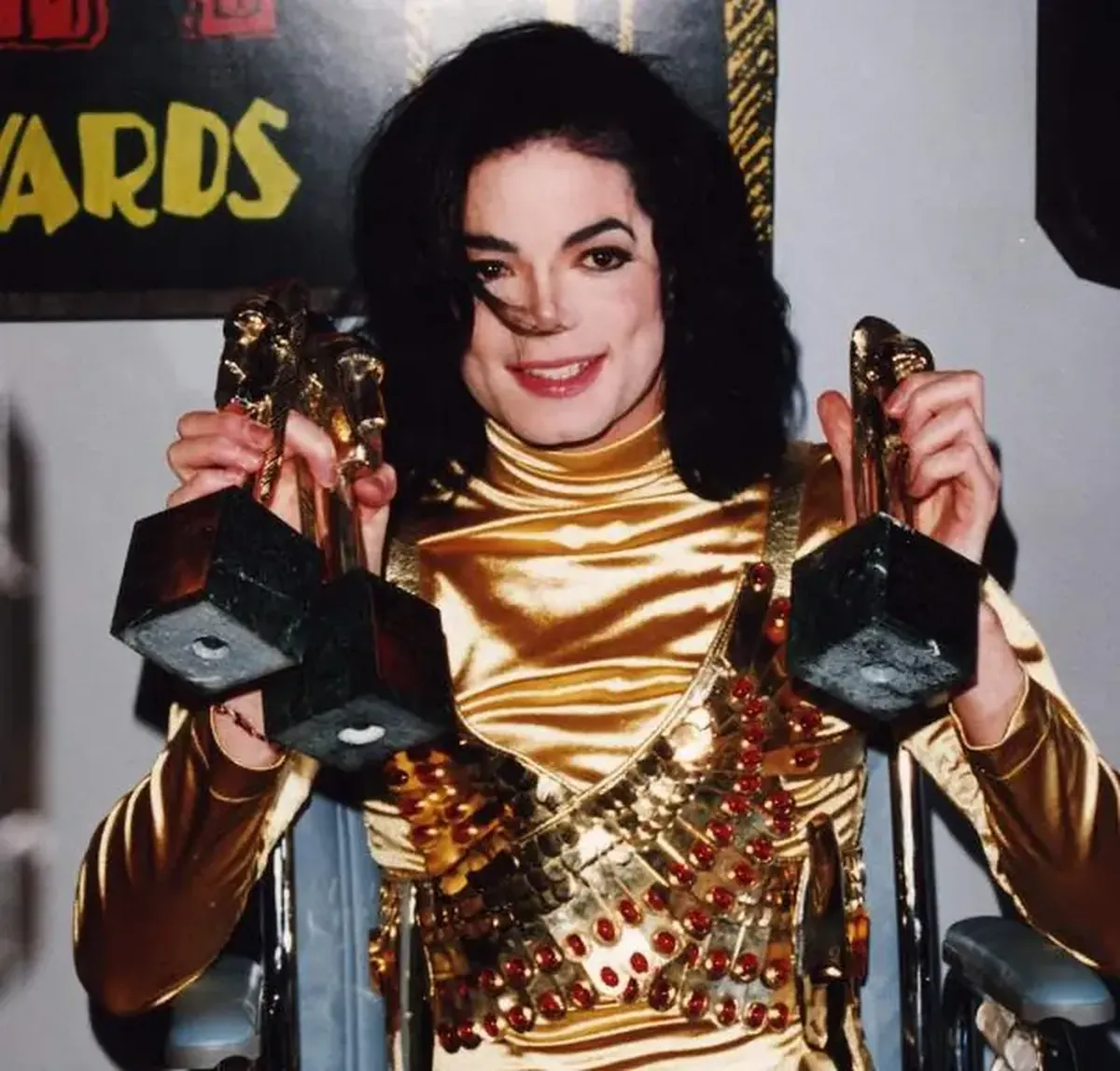
Childhood Trauma
Jackson began performing at age five with his four older brothers. In front of all America, the gifted child secured “adult” contracts for the extraordinary group. As the seventh of nine children (or, according to other sources, the eighth of ten), early work opened the door to fame—but Jackson later confessed what it had cost him. In 1993 the superstar from Indiana explained why he avoided contact with his father, the man who had pushed him onto the big stage. He said that relationship left deep psychological scars. Jackson recalled his father’s sadism through tears: rehearsals were brutal, and a belt was used at the slightest mistake. Everyone suffered, including older brother Marlon, whom their father would lift by the legs and hold upside down above the floor while whipping him.

The Jackson 5
Doubtful “Parenting”
Joseph Jackson died in 2018 without publicly acknowledging his methods. He defended his harsh approach as a way to achieve results, saying beatings instilled discipline. Still, his tyranny left a lasting mark on Michael. Fear brought bouts of vomiting and neurotic episodes, and Jackson was terrorized even while sleeping. Once he woke to horrifying screams and saw a shadow by his bed: it was his father, who had climbed in through the window to teach him to keep it locked at night. From that point on, Michael became dependent on sedatives—the fear of nighttime abduction made him anxious and unable to sleep without pills for the rest of his life.

Michael as a child
At the Dawn of Music Videos
The 1980s marked Jackson’s golden era. His 1982 album Thriller remains the best-selling album of all time. With director John Landis, Jackson created a 14-minute video that set new standards for the medium. That clip, along with other videos, helped break the color barrier on MTV: Jackson’s revolutionary hits were among the first videos put into regular rotation on the channel.
https://www.youtube.com/watch?v=sOnqjkJTMa https://www.youtube.com/watch?v=sOnqjkJTMa
“Moonwalk”
In 1983, during a performance of “Billie Jean,” Jackson stunned audiences with the first public demonstration of his signature move—the “moonwalk.” The film Moonwalker, released five years later, sold 800,000 copies and grossed $67 million at the box office. Jackson’s famous “anti-gravity lean” was a striking experiment in the video for “Smooth Criminal.” To achieve the effect he used patented stage footwear. U.S. patent No. 5,255,452 covered special shoes with grooves in the heels that could catch a peg extended from the stage, allowing a performer to lean forward to an impossible 45-degree angle without falling.
https://www.youtube.com/watch?v=KPkw5yV2mk https://www.youtube.com/watch?v=KPkw5yV2mk
Doing Good
In 1984 Jackson received an award from President Ronald Reagan for supporting programs to fight alcohol and drug addiction. He directed $5 million from the proceeds of a 55-concert U.S. and Canada tour to that cause. The following year, $61.8 million raised by the single “We Are the World,” co-written by Jackson and Lionel Richie, went to help people suffering from famine in Ethiopia.

Michael Jackson meeting Ronald Reagan and his wife Nancy at the White House, 1984
From Collaboration to Conflict
Jackson worked briefly with Freddie Mercury. According to Mercury’s colleagues, the two superstars respected one another and recorded a few tracks together, but busy schedules prevented further collaboration. Jackson also recorded a duet with Paul McCartney, and in 1984 “Say Say Say” topped the U.S. charts. A year later, tension arose after Jackson bought a large stake in ATV Music Publishing, which owned rights to much of The Beatles’ catalog—a stake McCartney had hoped to acquire himself.
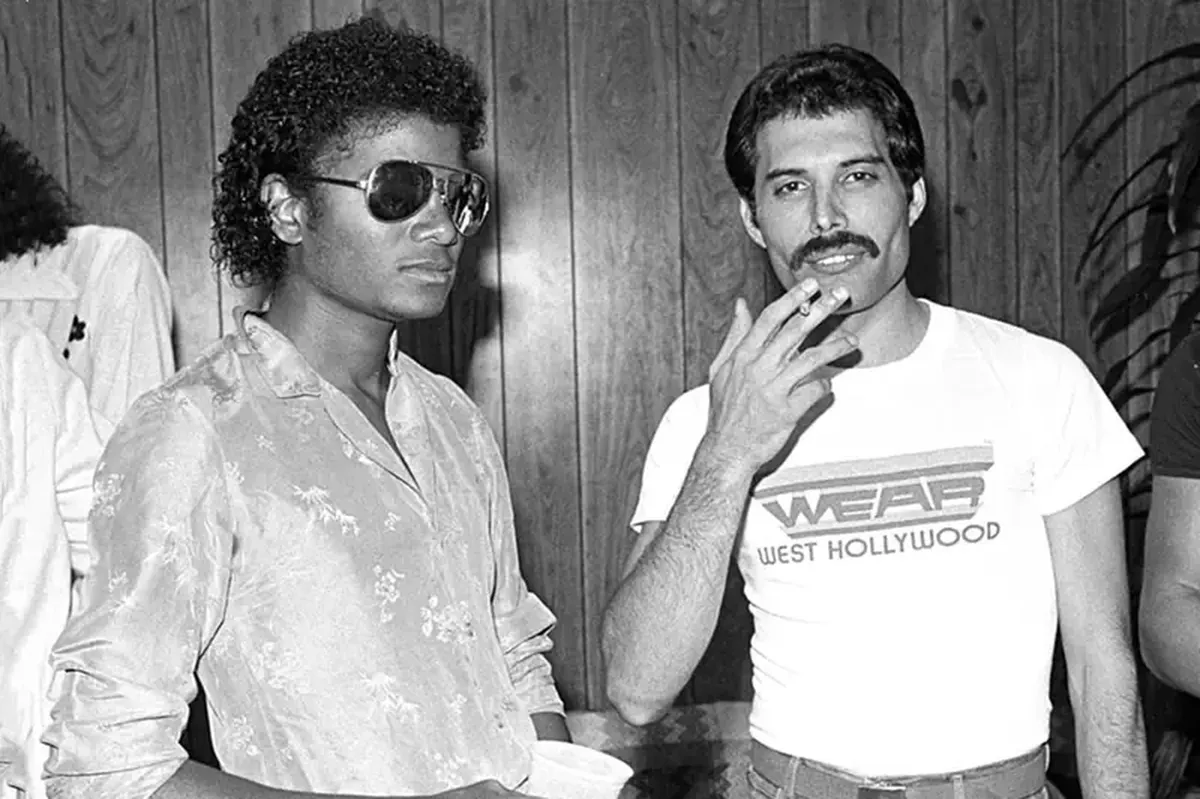
Michael Jackson and Freddie Mercury
Burns and Myths
On January 27, 1984, Jackson was filming a Pepsi commercial with his brothers when pyrotechnics ignited his hair. He initially remained on camera and suffered second- and third-degree burns to his scalp. In the hospital he visited a children’s burn unit, an experience that haunted him. Jackson could have taken a large personal settlement from Pepsi, but instead he helped open a children’s burn center with the company. During that period he also filmed a commercial inside an oxygen chamber for burn patients, lying inside the capsule with his eyes closed. That image spawned myths that he used the chamber to sleep; tabloids speculated it was to treat airway burns or to prolong his life. In reality, Jackson entered the medical device only for the shoot.
A New Face
The burns had other consequences. They led Jackson to plastic surgery to repair hair and damaged skin, and stress coincided with the progression of vitiligo—a pigmentation disorder he had inherited from his mother. The white patches required heavy makeup and made him avoid sunlight, which contributed to his habit of covering his face with masks. To even out his skin tone options included restoring pigmentation to damaged areas or depigmenting unaffected skin; Jackson chose depigmentation and also reshaped his nose and chin. He maintained he pursued these procedures out of medical necessity and denied any desire to become “white.” At the same time, Jackson changed his diet (becoming a vegetarian), lost a large amount of weight, and began using painkillers. Those external changes became fodder for ridicule and hostility in the press.
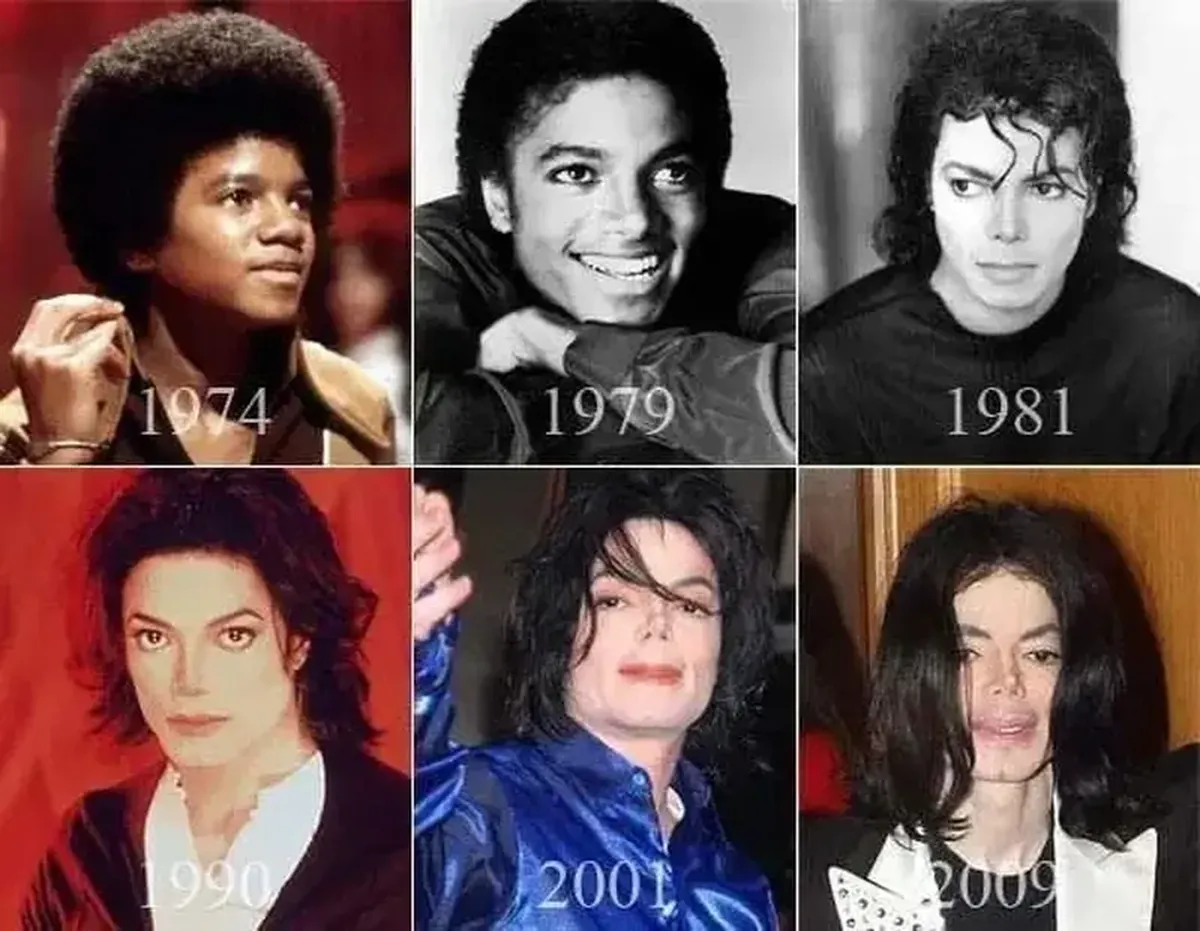
A Dream Behind the Fence
Overwhelmed by public attention, Jackson spent heavily to isolate himself. In 1987 he bought Neverland Ranch for $19.5 million, a sprawling estate where even family members needed permission to visit. His brothers required passes to enter, and his father was forbidden from coming onto the property; his mother, Katherine Jackson, was the only relative granted free access. The Peter Pan–style estate included an amusement park with exotic animals and a real train, which psychologists read as an attempt to compensate for a lost childhood. The house had a dance studio and a 50-seat movie theater; Jackson hosted big parties there, and in 1991 Elizabeth Taylor held her wedding at the ranch. Guests and staff had access to 22 buildings, a basketball court, tennis courts, and a lake with its own beach.

Michael Jackson’s Neverland Ranch
Was There a Boy?
At the secluded ranch, Jackson spent time with children the way he had as a child. That closeness later cost him. The most notorious scandals of his later life were accusations of child molestation. In 1993 the parents of 13-year-old Jordan Chandler accused Jackson of sexual advances toward their son. Jackson paid $22 million and the civil case was settled, but critics called it a payoff and a template for further extortion. Ten years later a new case involved a ranch guest, Gavin Arvizo. The legal fight cost Jackson millions; rather than settle again, he chose to fight the 2003 charges in court. In 2005 a jury acquitted him. After Jackson’s death, Jordan Chandler later said his parents had pressured him into making the accusations, and his father, Evan Chandler, later died.
Sisyphus’s Labor
Legal battles drained Jackson’s finances. He spent more than $100 million on lawyers. Although he had earned roughly $500 million over his career, by 2009 he had about the same amount in debt. His extravagant lifestyle consumed roughly $30 million a year. Purchases included a Bentley, a pet chimpanzee, expensive art, antiques, and diamond-studded gloves.
To support that lifestyle Jackson took a $380 million loan against his music catalog and had exhausted those funds by the end of his life. Lacking financial acumen, he overestimated his earning power and struggled to rebuild his career; many lenders and insurers failed to help. The planned comeback tour added pressure and strain to an already difficult situation.
None of this helped Jackson’s health: he became so dependent on painkillers that medication became part of his daily life. After the trials he retreated to Bahrain to prepare a charity single in memory of Hurricane Katrina victims. Despite some invited collaborators backing out, the song “I Have This Dream” was recorded, but for unknown reasons it was never released.
Unexpected Support
Lisa Marie Presley supported Jackson during one of the toughest stretches of his life. The daughter of Elvis married Jackson in 1994; they divorced in 1996, but she continued to support him. Friends had first introduced them in 1975 and they reconnected in 1993. During the Chandler scandal, Jackson needed emotional support and Presley provided it. He proposed a few months later, reportedly over the phone, and they married in the Dominican Republic in May 1994. The newlyweds kept the event secret for two months. U.S. officials later questioned the marriage’s legality, noting Dominican law required a divorced woman to wait three months to remarry and Presley had only recently finalized a divorce.

Lisa Marie Presley and Michael Jackson
Second Attempt
In November 1996 Jackson married former nurse Debbie Rowe. During that marriage two children were born: a son in February 1997 and a daughter in April 1998. Jackson’s third child, a younger son, was born in February 2002 to a surrogate; by then Jackson had divorced Rowe in 1999. Jackson generally avoided showing his children in public and often covered their faces with masks, but observers noticed their lighter skin tone, which fueled speculation about paternity. Actor Mark Lester first mentioned the theory, and it was later repeated by Jackson’s bodyguard and dermatologist Arnold Klein.

Michael Jackson with his children
Something Went Wrong
In March 2009 Jackson announced a return to the stage. The This Is It Tour was scheduled to run from July 13, 2009, to March 6, 2010. Initially booked for ten concerts at a 20,000-seat arena in London, overwhelming ticket demand expanded the run to include dozens more shows.
Jackson never lived to see the comeback. On June 25, 2009, he died suddenly of cardiac arrest. Returning to his Los Angeles home after rehearsal at about 1 a.m., he asked his personal doctor for “milk” to help him sleep. Dr. Conrad Murray said he injected Jackson with a small dose of medication and left the room while Jackson fell asleep; Murray later claimed Jackson woke and injected himself with a large dose of propofol from his own supply. The rapid overdose overwhelmed his heart. During the ensuing court case, experts testified about Jackson’s extreme sleep deprivation. Sleep specialist Charles Czeisler of Harvard Medical School testified that Jackson had little chance of survival and that prolonged insomnia can be life-threatening, with or without medication.
https://www.youtube.com/watch?v=2DjSEDvWQP https://www.youtube.com/watch?v=2DjSEDvWQP
Who is to Blame?
The televised, multi-stage funeral was watched by an estimated billion viewers; organizers never revealed the coffin’s location during the memorial. Only near the end of the extended ceremony did it become public that Jackson was laid to rest at Forest Lawn Cemetery in the Los Angeles suburbs. Dr. Conrad Murray was convicted of involuntary manslaughter, sentenced to four years in prison, and stripped of his medical license. He served about half his term and was released in 2013, later saying he never wished harm on someone he considered nearly like a brother. Murray recalled that at the end of Jackson’s life the singer weighed less than 132 pounds at a height of 5’11”. “In trying to save Michael, who was drowning, I sank to the bottom with him,” Murray said, a statement that helped earn him the nickname “Doctor Death” among some fans.
Settling Debts
Ironically, Jackson’s death proved beneficial to his finances. In the years after his passing, he consistently ranked as the highest-earning deceased celebrity. The revenue from his life and work now flows to heirs, brand partners, and rights holders: companies such as Sony, Pepsi, and Cirque du Soleil. After his death, Jackson has earned more than he did in life; in financial terms, the King of Pop continues to reign.
