
 Carlos Solis
How do they use their tentacles? Are all of them involved in daily activities? And how do these cephalopods distribute tasks among their limbs?
Researchers at the Marine Biological Laboratory in Woods Hole, Massachusetts, set out to answer those questions about octopus motor skills. They found that octopuses don’t have a single dominant limb like humans do, but their limbs do divide up certain functions.
The team meticulously analyzed a series of short videos filmed in the Atlantic Ocean and the Caribbean Sea. The cameras captured wild octopuses crawling, swimming, and exploring their environment.
They paid close attention to what each of the eight limbs was doing. All eight were active, and each limb could perform roughly a dozen different movements.
Roger Hanlon, a marine biologist and co-author of the study, said, “All the limbs can do everything — and that’s truly impressive.”
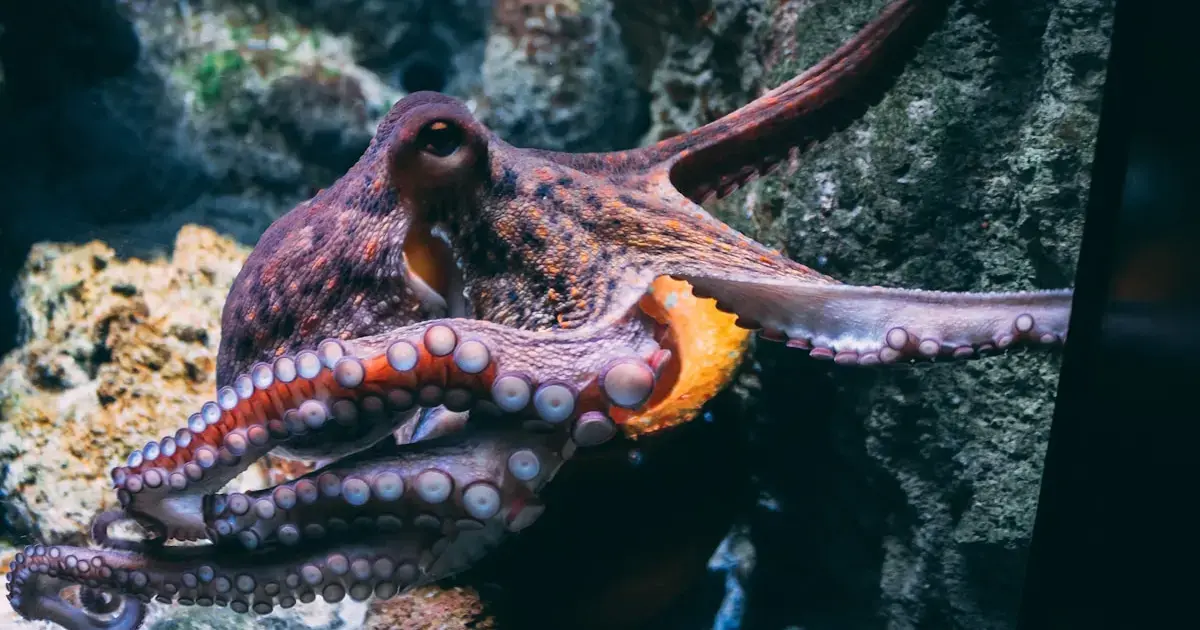
Octopus tentacles aren’t as specialized as the limbs of many mammals, the Independent reported. Still, in the three species the researchers studied, octopuses used their four front limbs as hands about 60 percent of the time, while the rear limbs were used more often for walking-like movements that pushed the animal forward.
Mike Vecchione, a zoologist at the Smithsonian National Museum of Natural History who did not participate in the study, summed up the difference: “The front limbs do most of the exploratory work, while the rear ones are primarily for walking.”
Why It Matters
This is the first large-scale study to track precise limb movements in wild marine animals. Unlike previous lab experiments, this work showed that in their natural environment octopuses use all their tentacles in daily activities.
Because octopuses are shy and spend much of their time hiding in burrows, filming required considerable patience from the researchers.
Octopus limbs are complex. They serve both for locomotion and for sensing the environment. Each tentacle contains between 100 and 200 suckers — intricate sensory organs that are “analogous to human noses, lips, and tongues,” Hanlon said.
If a predator bites off an octopus’s tentacle — which happens in the wild — the octopus has several backup options.
The results of the study were published in the journal Scientific Reports.
Photo: Unsplash
