
 Gaby
Gaby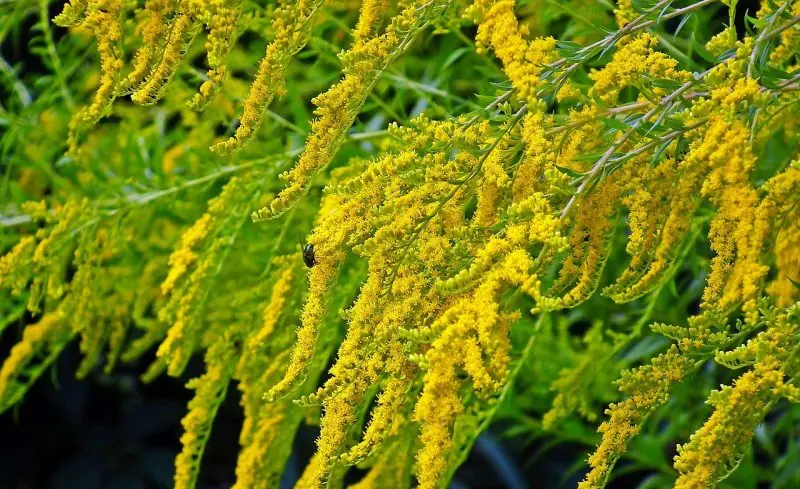
A new discovery is reigniting the debate over whether plants can be intelligent. Many scientists have long been skeptical about calling plants “intelligent.” But a team at Cornell University says tall goldenrod (Solidago altissima) shows signs of a kind of intelligence. The species grows in North America, Europe, and Asia, according to the Daily Mail.
Professor Andre Kessler, the study’s lead author, and graduate student Michael Müller examined goldenrod. They concluded that the plant can solve problems. For example, when insects feed on goldenrod, the plant releases volatile organic compounds (VOCs) that warn neighboring plants.
Traditionally, intelligence is tied to a central nervous system, where electrical signals transmit messages between nerves to process information. Plants, by contrast, have a vascular system — a network of cells that transports water, minerals, and nutrients to support growth. The study’s authors argue that intelligence should be broadened to include problem-solving.
Kessler noted, “There are over 70 published definitions of intelligence, and there is no consensus on what it actually is.” In the study, researchers detected VOCs in neighboring goldenrods; those plants then activated the same defenses to avoid being eaten. “This fits our understanding of intelligence,” Kessler said. “Depending on the information a plant receives from its environment, it alters its normal behavior.”
In 2021, the team ran experiments showing goldenrods respond to increases in far-red light — light reflected from the leaves of nearby plants. Far-red light influences plant growth. When goldenrods detect that a neighbor has been eaten, they grow faster and produce more protective chemicals. Researchers also found that plants can “smell” the chemical signals that indicate a pest.
“They can use environmental signals to anticipate future situations and then act accordingly,” Kessler said. He said applying the concept of intelligence to plants could inspire new hypotheses about plant chemical communication and change how people think about intelligence.
Previous studies show plants emit high-frequency distress signals when they experience environmental stress, such as when their leaves and stems are damaged.
