
 Gaby
GabyTwo independent research teams have discovered that the reddish coat of our feline companions is likely the result of a missing segment of DNA in a non-coding part of the cat genome. “This is a true genetic mystery, a puzzle,” said Greg Barsh, a geneticist at Stanford University and the lead author of the study. Barsh and his colleagues found that skin cells from reddish cats express 13 times more RNA from the Arhgap36 gene than skin cells from non-reddish cats. Expecting a mutation in the gene’s protein-coding region, the researchers were surprised to find a deletion in a non-coding sequence that likely alters how the gene is regulated. The researchers examined a database of 188 cats — 145 reddish, 6 calico/tortoiseshell, and 37 non-reddish animals — and discovered that every reddish cat had a 5-kilobase deletion.

As expected, the mutation is on the cat’s X chromosome. That explains why orange appears differently in males and females. Most red cats are male, while cats with patches of reddish fur are usually calico females. “Together, these observations provide compelling genetic and genomic evidence that the 5-kilobase deletion causes the sex-linked orange coloration,” the Barsh team wrote in their report. Since cats began living alongside humans about 10,000 years ago, people have wondered why black and red parents can produce kittens with different colors. Male kittens from such a pairing are usually either red or black, as you’d expect. Female kittens, however, can show a mix of black, red, and white spots or inherit marbled orange patches scattered on black fur. Both research teams confirmed that the mutation responsible for the orange color is on the X chromosome, which accounts for the differences in coloration between the sexes. Unlike males, who have only one X chromosome, females inherit two X chromosomes — one from each parent.
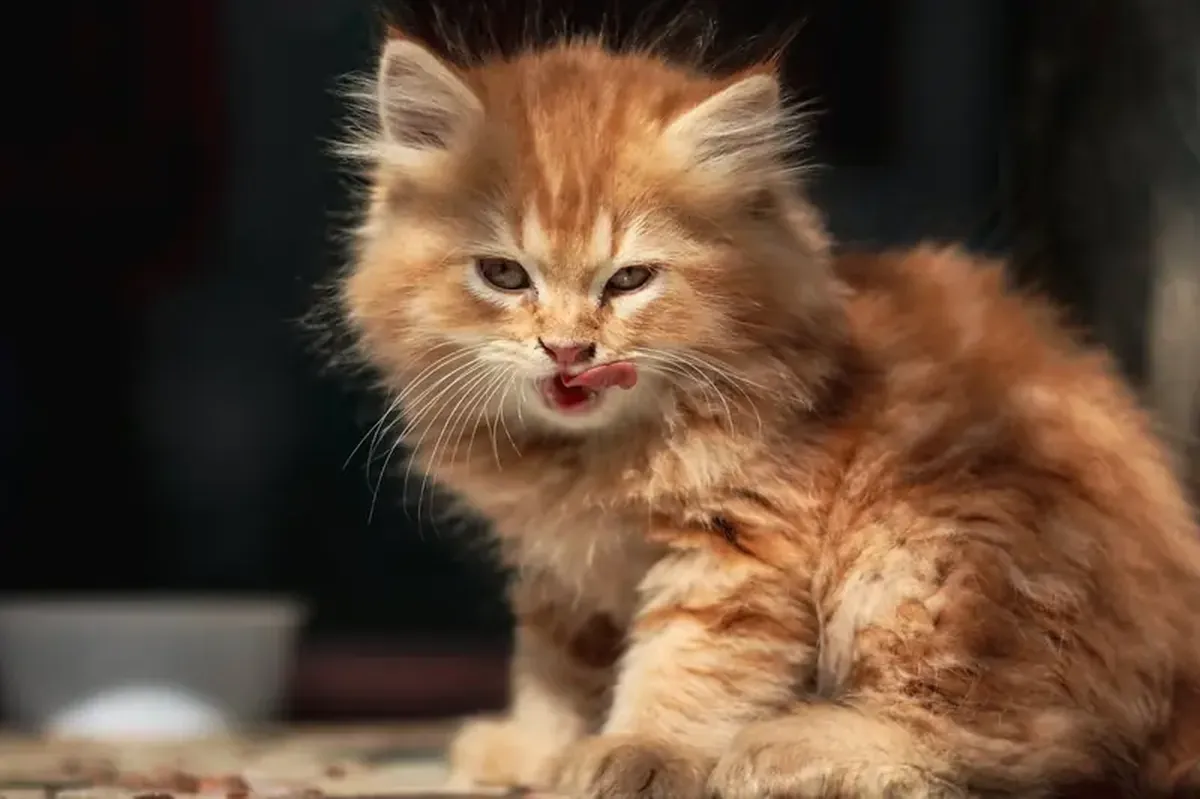
Mammals randomly deactivate one of their two X chromosomes in each cell to avoid overexpressing products from the X chromosome. That process leaves female orange kittens with an active orange mutation in some developing skin cells, right next to neighboring cells where the X chromosome carrying the mutation is switched off. In rare cases, when both X chromosomes carry the mutation, the female grows into a fluffy, fiery cat — just as red as a male.

Red cats have a reputation for being less intelligent, but studies haven’t found evidence linking coat color to cognitive ability. There also appear to be no physical or mental-health downsides linked to this mutation. The study’s findings were published in the journal Science.
