
 Gaby
Gaby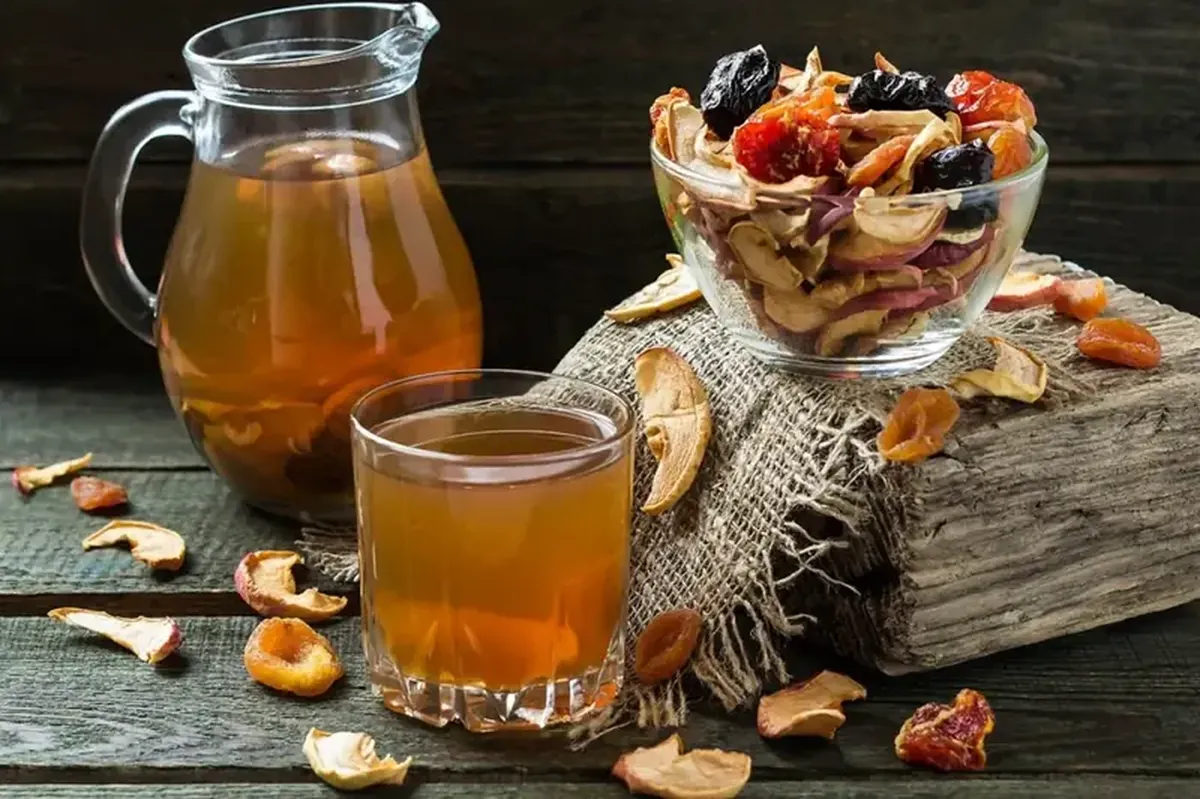
Along with fresh or frozen berries and fruits, dried fruits are permitted during a fasting diet. Dried apricots, prunes, raisins, figs, dates, dried apples, pears, bananas, cranberries, or cherries can be enjoyed as sweet treats or used to prepare vitamin-rich drinks. Dried fruits shouldn’t be sweetened with sugar (a little honey is OK), and uzvar shouldn’t be consumed on raw-food days when cooked food is prohibited.
Ingredients: water – 5 liters; dried apples – 100 g; dried pears – 100 g; prunes – 100 g; raisins – 50 g; honey – 3/4 cup.
Sort through the dried fruits, rinse them, and place them in a pot with the water.
Cover the pot and simmer for at least 50 minutes over moderate heat.
After you turn off the heat, let the compote cool slightly before adding the honey. Boiling water damages honey—high temperatures destroy some of its beneficial compounds and reduce its health effects.
Let the prepared uzvar cool completely before serving. Allow the drink to steep for 3–4 hours.
This vitamin drink serves as a springtime preventive against vitamin deficiency and helps strengthen an immune system weakened by winter. During fasting, staying hydrated matters more because a higher intake of fiber-rich foods absorbs liquid and increases thirst.
Life Hack
Raw-food fasting is a strict form of fasting that allows only uncooked plant-based foods: raw or fermented vegetables and fruits, dried fruits, honey (in limited amounts), nuts, bread, salt, and water. But the fast can be relaxed for military personnel, people who are ill, children, the elderly, pregnant or nursing women, and travelers. If you fall into any of these groups, don’t risk your health by refusing your usual diet.
