Gaby
Gaby
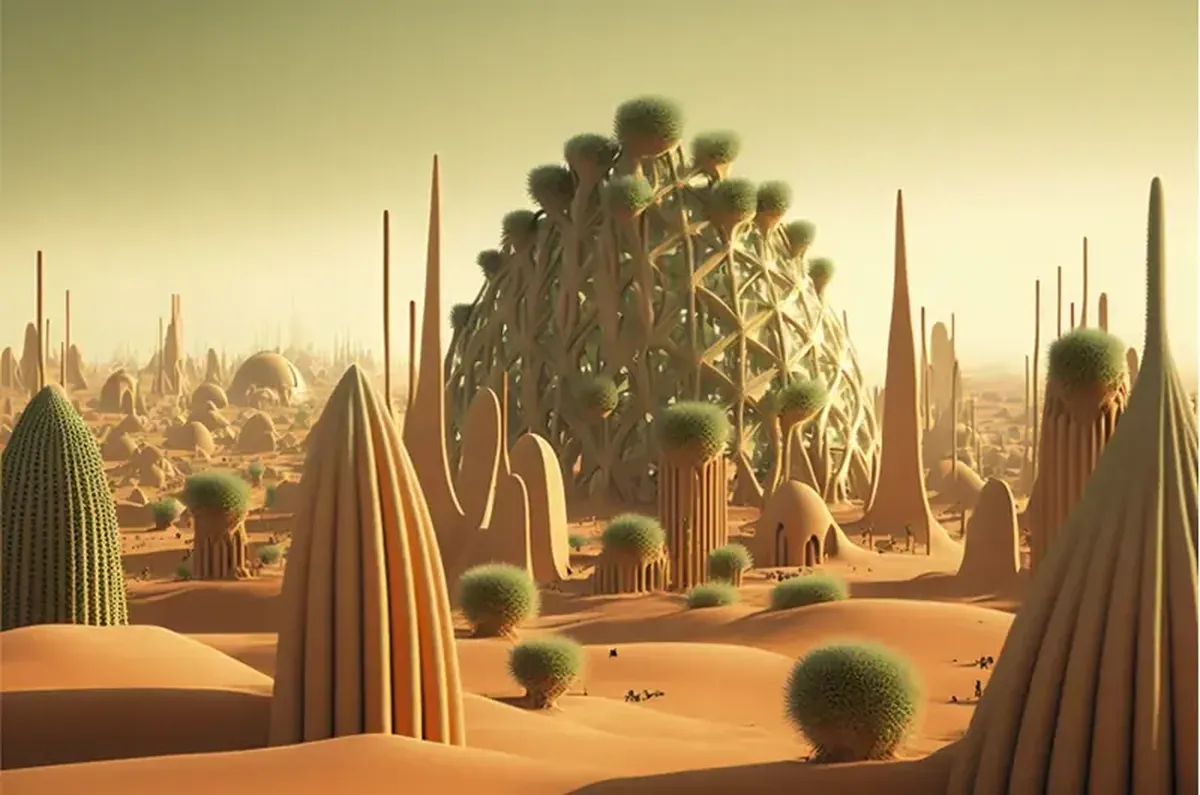
The visual fantasies of Manas Bhatia, an architecture designer from New Delhi, transport us to a city of the future. The settlement looks far more advanced than any modern human city—as if it slipped out of a wild dream.
To create images of a futuristic Martian city, Bhatia used artificial intelligence tools — Midjourney and ChatGPT.
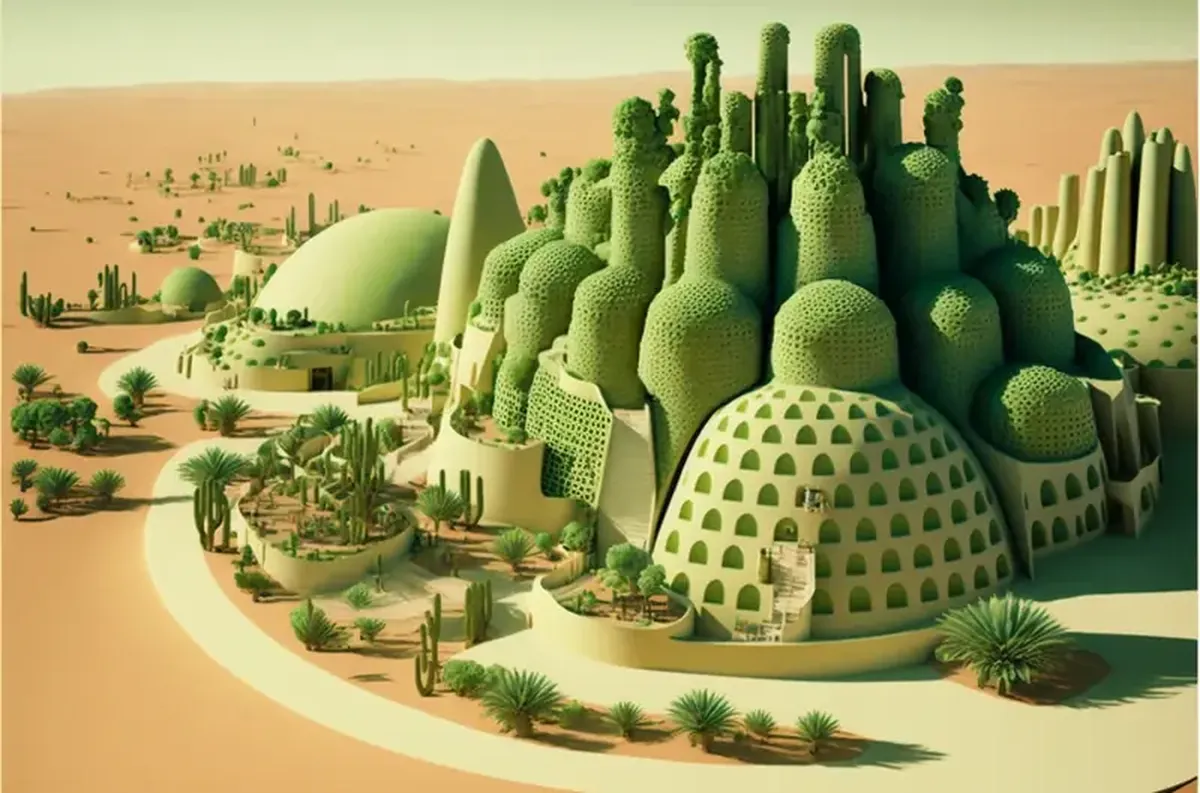
The result is a series of architectural variations titled “Life on the Red Planet.” In it, Bhatia pushes his imagination further, incorporating cacti into Mars’s desert landscapes as human habitats. In the author’s vision, these biologically clean, energy-efficient structures are adapted to the planet’s harsh conditions, as reported by Designboom.
A City Thriving on Harsh Mars
In addition to his usual assistant—the neural network Midjourney, which generates images from text prompts—Bhatia also used the ChatGPT chatbot to produce written text.
Ultimately, ChatGPT crafted an original story about giant cacti that colonized Mars, which Midjourney then visualized.

Here’s a brief excerpt from the description of the new project, set on Mars in the not-so-distant future: “Imagine it’s the year 2187… Humans have been living on the Red Planet for over a century, and what was once a barren landscape is now dotted with cities and towns.”
Behind all these whimsical green towers and surreal forms is the idea of a city that has learned to thrive in the Red Planet’s challenging conditions. It uses solar energy and water recycling, among other innovations.
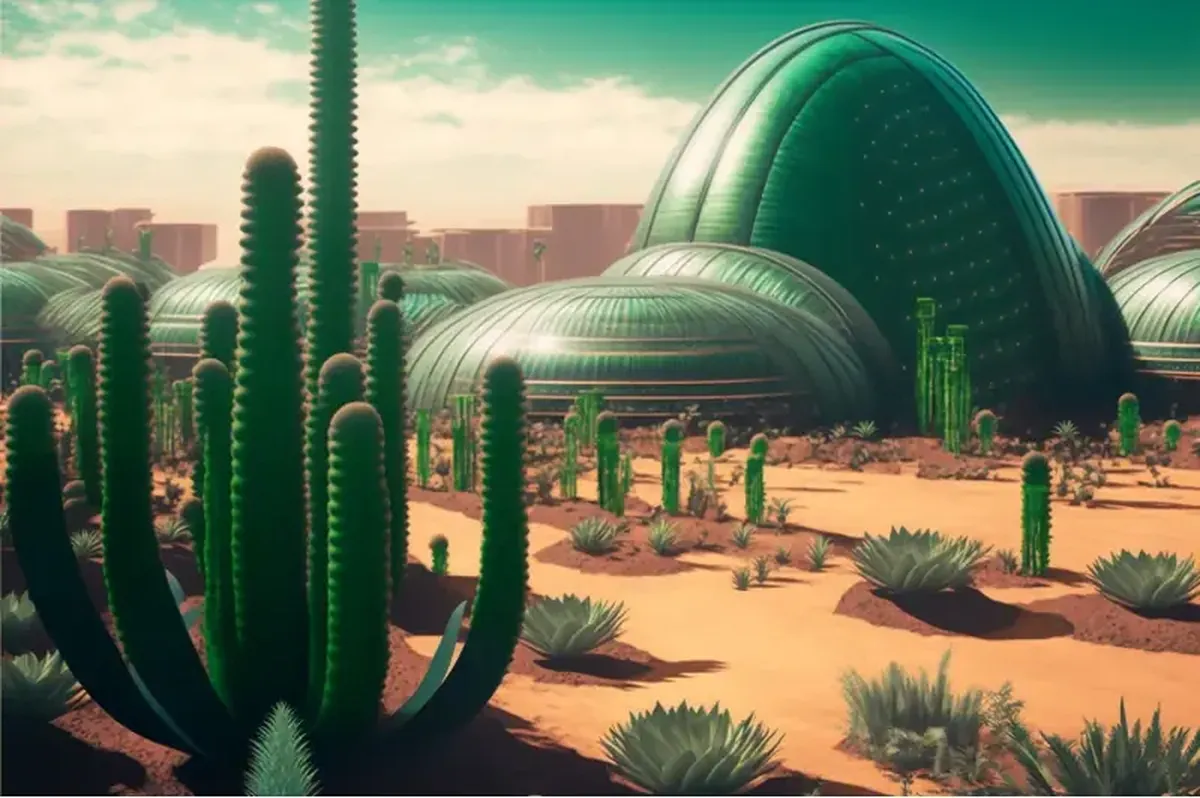
This sci-fi settlement on Mars, inspired by cacti, relies on hydroponics—growing plants without soil, using nutrient solutions.
This is not Bhatia’s first series of visualizations, both fantastical and realistic, in which he sets ambitious goals for his structures. For example, they are designed to be built using limited materials and energy sources. The planning and architecture of the Martian city also include shading and cooling systems to protect residents from high temperatures and radiation.
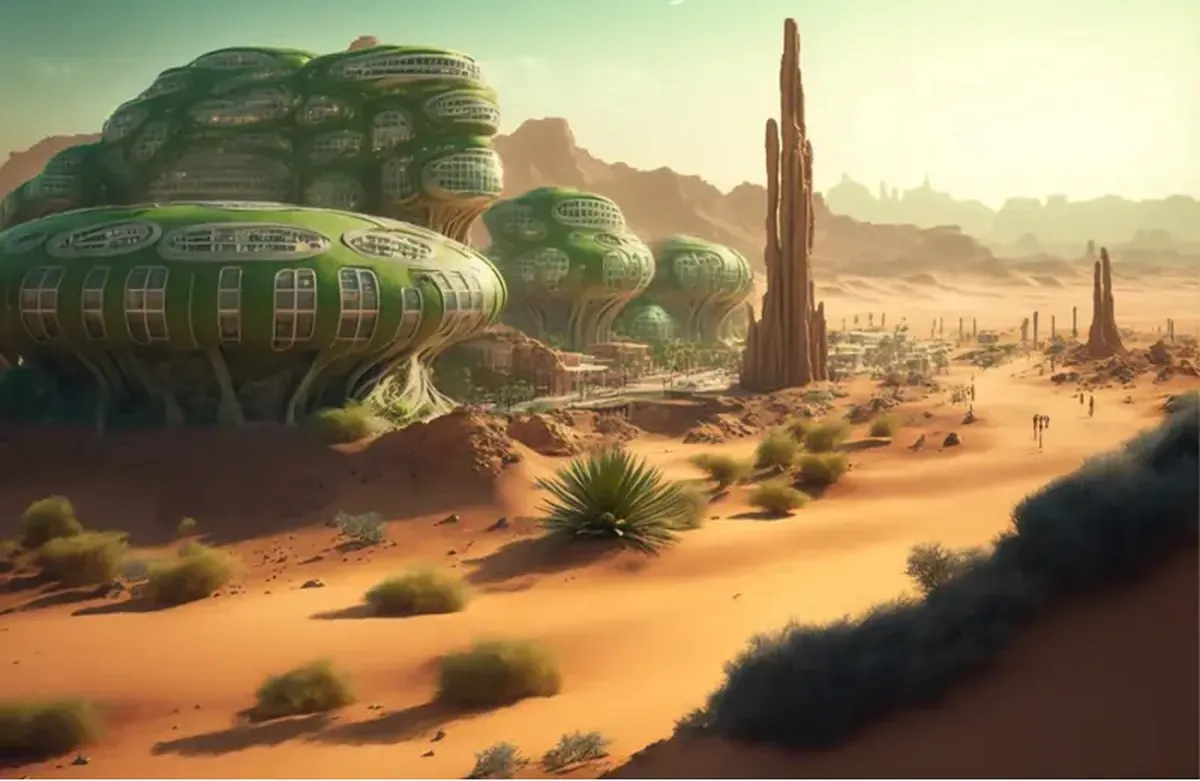
One key idea behind this surreal scenario is the cactus’s ability to store water in its stems, which would make structures self-sufficient.