
 Gaby
Gaby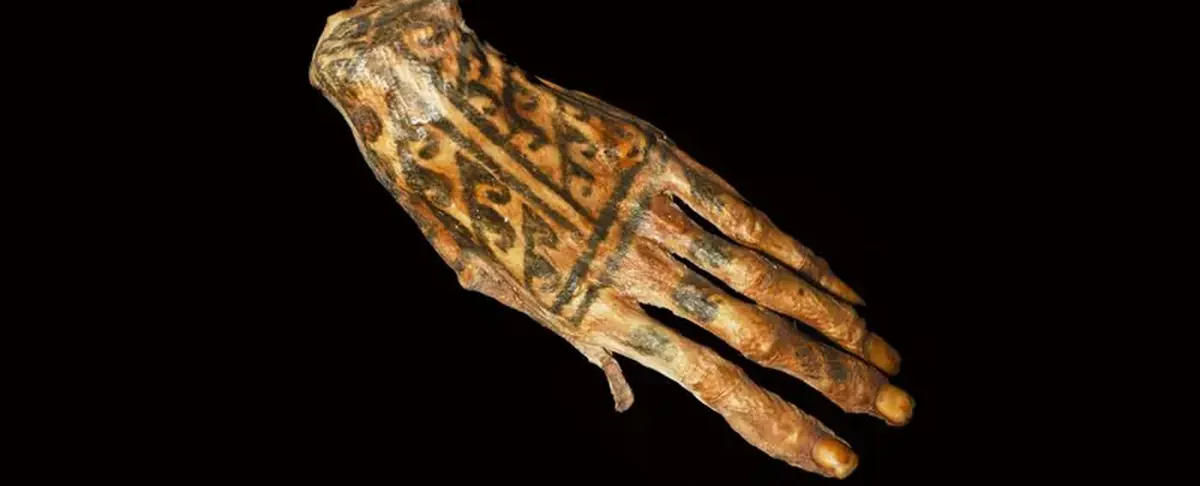
The oldest known tattoos were discovered on the remains of a person who lived in the Italian Alps around 3000 B.C. Recently, a multidisciplinary team uncovered intricate tattoos on the mummified remains of individuals from the Chancay culture, who lived in coastal Peru about 1,200 years ago. Revealed with cutting-edge imaging, the tattoos closely resemble modern tattoo styles.
It’s still unclear how artisans created these complex images on human skin. But the skill behind them rivals high-end electric tattoos seen today.
https://www.youtube.com/watch?v=tvQpSe7xsQk
What Did the Researchers Discover?
Using techniques typically employed for analyzing dinosaur fossils, the team examined the intricate tattooing methods found on the Peruvian mummies.
“Laser-stimulated fluorescence (LSF) lets us see the tattoos as they were, erasing centuries of degradation,” said paleontologist Thomas Kay of the U.S. Science Advancement Fund.
“The Chancay, known for mass textile production, also devoted effort to body art,” he added. “Tattoos may have been a second major artistic outlet with deep cultural or spiritual meaning.”
When skin is preserved through mummification, tattoos can be hard to make out. The skin darkens and thickens, while the ink fades and seeps into surrounding tissue.

This is where Thomas Kay and paleobiologist Michael Pittman of the Chinese University of Hong Kong come in. Over the past decade they have used LSF to uncover hidden details in dinosaur soft tissues.
“Two years ago, Judith Bok from the Archaeology Institute at Jagiellonian University in Krakow, Poland, asked whether our technology could study tattoos on mummified human remains,” Pittman told Science Alert.
She was referring specifically to the tattoos found on the Peruvian mummies. A few months later, Kay and Pittman were on a plane to South America, eager to learn more about Chancay culture.
The researchers examined over 100 mummies. Not all of them had tattoos, but in those where designs were preserved, the skin fluoresced brightly under laser stimulation. That effect was absent in the tattooed areas.

The team produced high-contrast images that eliminated visible ink bleeding and highlighted the artistry of the designs. Lines measuring 0.1 to 0.2 millimeters in width indicate that ancient artisans applied tattoos with a single needle, rather than by cutting and rubbing in dye as previously thought.
“We still don’t know exactly how the tattoos were made, but it involved a tip thinner than a modern tattoo needle,” Pittman said. He suggested the Chancay most likely used a cactus spine or a sharpened animal bone.
The team observed variation in the complexity and quality of the tattoos. Some designs were applied by novices, while more intricate images were created by seasoned masters.
Now the researchers plan to expand their study to ancient tattoos worldwide to shed light on tattooing technologies and why people adorned their bodies.
“Tattoos can contain a wealth of information, including insights into culture and what mattered to the person with the tattoo,” Pittman said.
The findings were published in the Proceedings of the National Academy of Sciences.
