
 Gaby
Gaby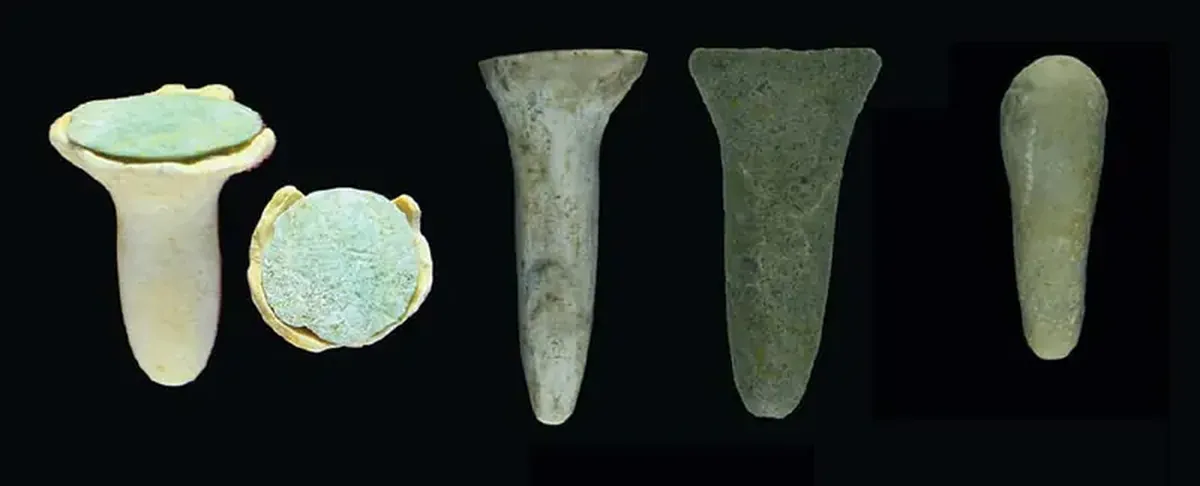
A team of Turkish archaeologists led by Dr. Ergül Kodaş of Mardin Artuklu University has uncovered an extraordinary find. At the burial site of the Neolithic settlement Boncuklu Tarla, they unearthed a group of peculiar stud-shaped objects. The team says these are some of the earliest forms of piercing jewelry — especially similar to labrets, rods with fixed ends and decorative tips.
What the Researchers Revealed
Boncuklu Tarla is known for its rich collection of ornaments. Since excavations began in 2012, archaeologists have recovered more than 100,000 decorative artifacts. Now the team has found early evidence of body piercing, as reported by Science Alert.
These items were located in the graves of seven adult men and nine adult women. The studs were found in skull areas corresponding to the ears and lips, or very close to those locations. The ancient labrets had a diameter of at least 7 millimeters, which indicates the jewelry required substantial—and likely irreversible—skin perforations.
Researchers also found wear on the front part of the jaw in some of the buried individuals. This type of wear typically happens when a piercing stud is placed beneath the lower lip.

Not a Child’s Fancy, but a Symbol of Adulthood
Dr. Kodaş and his colleagues have so far cataloged 85 pieces of piercing jewelry. These objects were made from limestone, flint, copper, and volcanic glass (obsidian). Based on the sediment layer they were found in and preliminary radiocarbon dating of those deposits, five of the 85 objects date to between 10,000 and 8,000 B.C.
The team observed that none of the buried children had such ornaments. By contrast, children in other ancient cultures are often buried with pendants and necklaces. Co-researcher Emma Baysal of Ankara University says piercing at Boncuklu Tarla likely marked the transition to adulthood. She suggests piercing may have signaled a social status tied to maturity or a particular role within the community.
In a report in the journal Antiquity, the team wrote, “These artifacts provide a unique window into the use of perforated ornaments by the inhabitants of early settled communities.”
Previously, the oldest clear evidence of piercing came from Southwest Asia around 6000 B.C. Some earlier studies suggested piercings originated around 6400 B.C. in what is now Iran and then spread through Mesopotamia. Later, the practice appeared in ancient communities in Africa, Central America, and South America.
