
 Carlos Solis
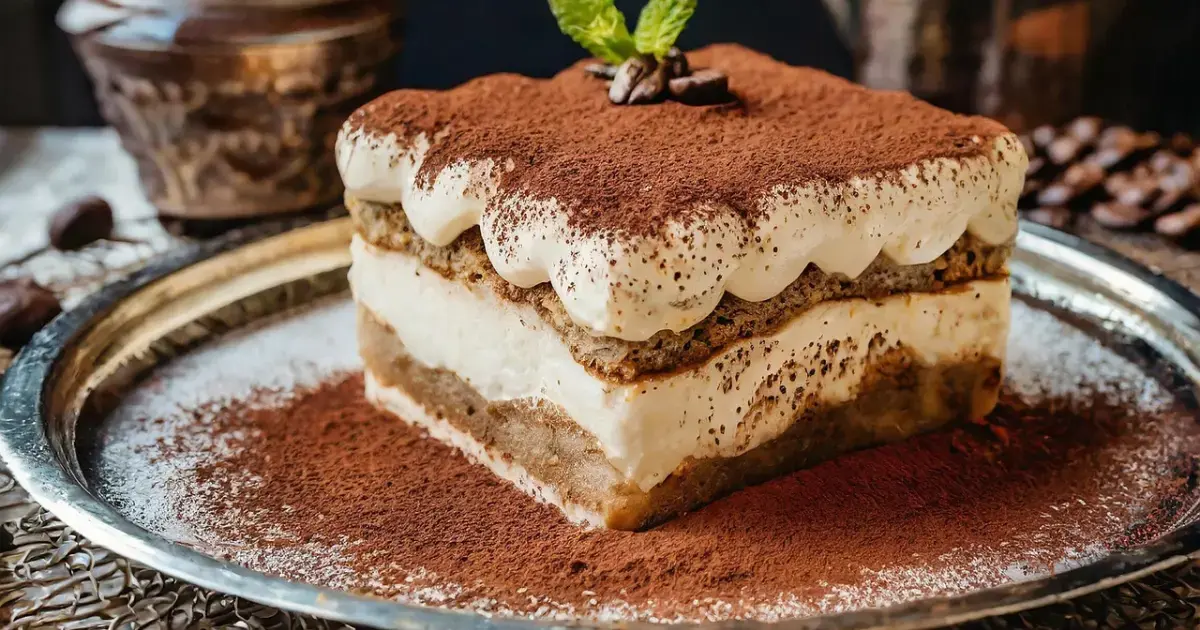 If tiramisu were a person, it would have fake passports, multiple versions of its biography, and an army of witnesses who can’t agree on where they first met it. The story of tiramisu reads more like a spy thriller than a culinary chronicle. There’s no definitive inventor of this divine dessert, nor a specific year of its birth—only legends, conjectures, and forged “cover documents.” A mystery wrapped in cocoa.
Version #1: “Duke’s Soup” or how tiramisu began its career in the 17th century
The earliest trace takes us to the 17th century and Cosimo III de’ Medici, the Duke of Tuscany—a notorious sweet tooth who might have run his own culinary blog with sections like “Top 5 Desserts for a Broken Heart.”
Cosimo couldn’t boast a happy family life—his marriage was more political arrangement than romantic fairy tale. During a kind of mini-ducal depression, he found solace in his most reliable friend: sweets. The duke indulged in desserts with such enthusiasm and generosity that he earned a chapter of his own in the history of gastronomy. His figure, already monumental, was often compared to baroque architecture—with voluptuous forms and rounded lines.
However, he couldn’t completely dissolve into the world of pastries because he followed church fasts strictly. It’s said that even with a full stomach, he dutifully stood through processions—“with God in his heart and cream liqueur in his belly.”

Duke of Tuscany Cosimo III de’ Medici
When Cosimo visited Siena, local pastry chefs decided it was time to act. They created a dessert worthy of a duke’s appetite called “zuppa del duca,” or “duke’s soup.”
Today that sounds as odd as calling something a “liquid salad.” But back then, the Italian zuppa meant any dish where baked goods were soaked in something liquid—wine, syrup, or coffee. So technically, it made perfect sense.
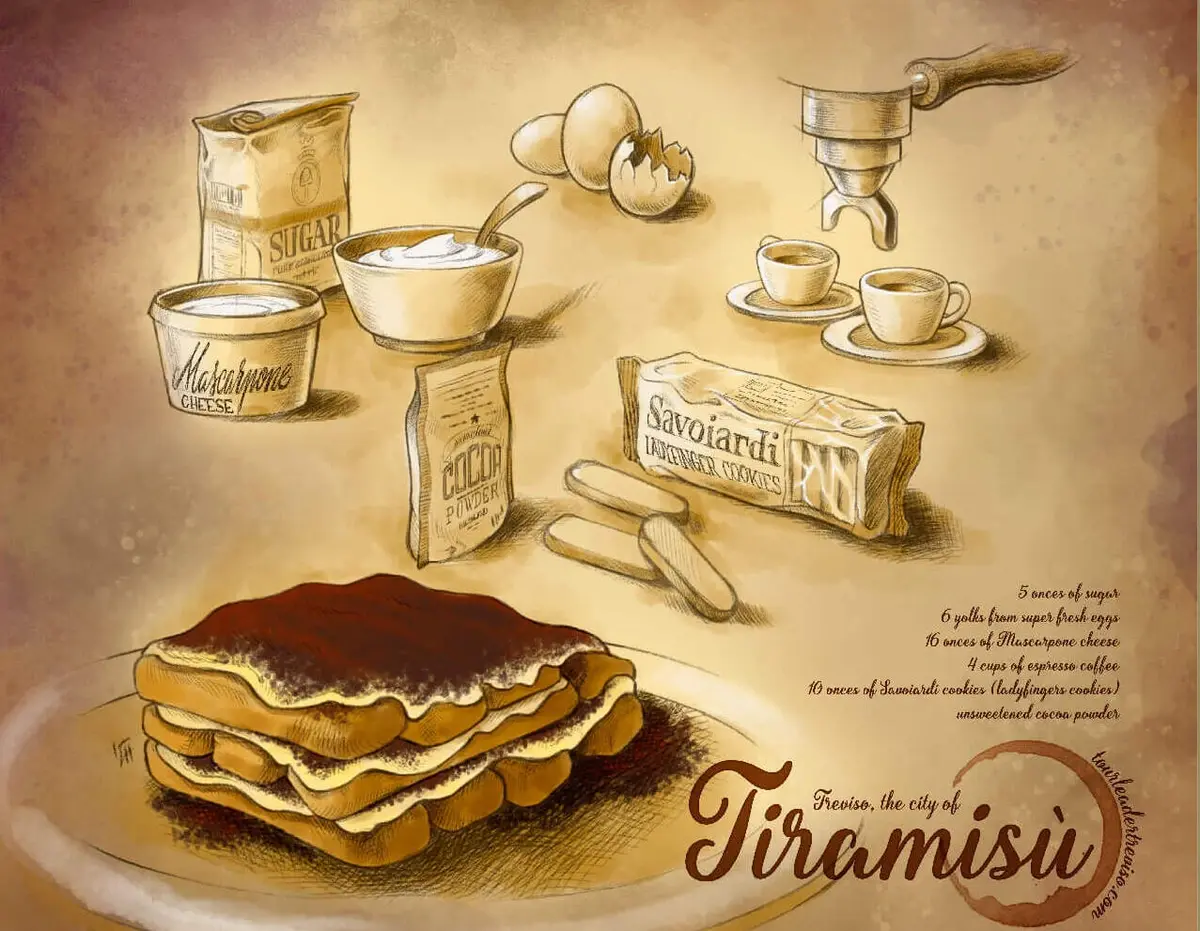
The traditional ingredients that evolved into tiramisu were simple yet brilliant: delicate mascarpone, ladyfinger cookies (known as “savoiardi”), coffee, liqueur, sugar, and cocoa on top. The duke enjoyed it so much that he took the recipe back to Florence, where the dessert quickly became a hit among artists, socialites, and courtesans.
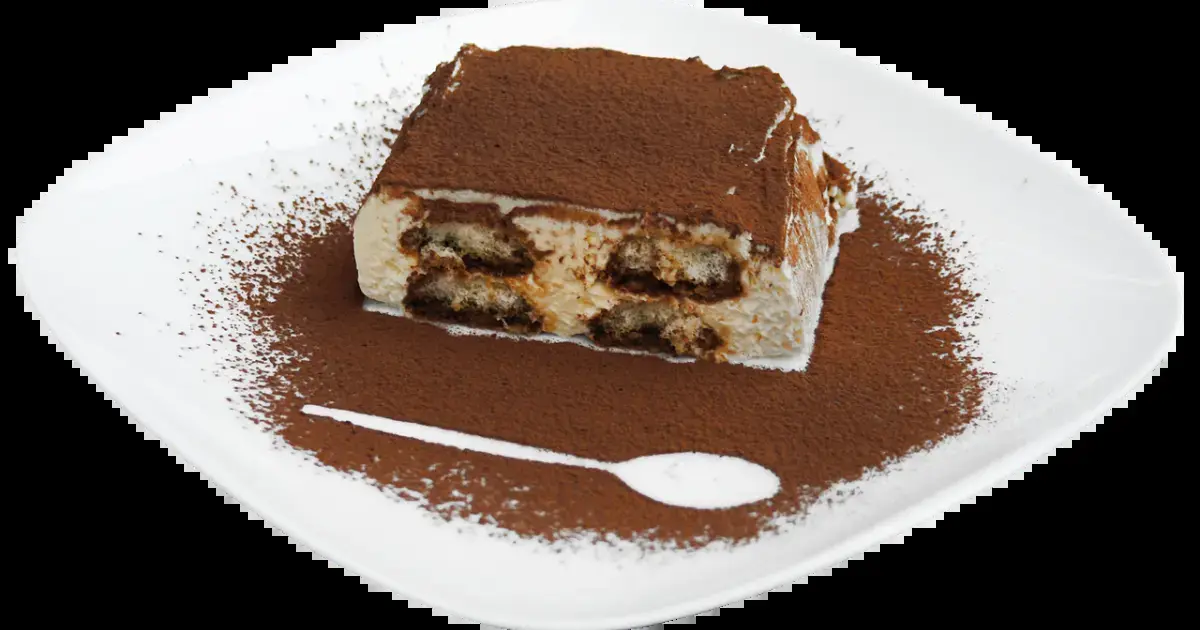
An unexpected twist: how tiramisu became an “aphrodisiac” and got its name
Here’s where the spicier part of the tiramisu story begins. Courtesans in Treviso and Venice became so enamored with this dessert that they gave it a new name—”tira mi su,” which literally means “pick me up.” It wasn’t just a sweet-sounding name—it played on two ideas: heavenly pleasure from the taste and the real caffeine boost it provided.
According to legend, this calorie-rich and incredibly delicious dessert was served to clients before romantic dates. It was believed to have properties akin to an aphrodisiac—only tastier and without wings on the packaging.

Version #2: Tiramisu is younger than your parents
Now, pay attention—here’s a completely different version. Some experts say that nothing resembling tiramisu appears in records before the 20th century. That means the origins might not be as ancient as the legends suggest.
One theory credits chef Mario Cosolo with inventing the dessert in Friuli-Venezia Giulia in honor of King Vittorio Emanuele in 1938.
Another version points to the 1950s and 1960s in the Veneto region, where the dessert gradually took shape from local culinary traditions.
And in 2006, Italian chef Carmine Antonio Giannacone, who lived in Baltimore, claimed in a local newspaper that he invented it. He provided no evidence.
Version #3: Tiramisu is simply an evolution of habits
The most mundane-sounding theory may be the most plausible: tiramisu is the natural evolution of local recipes and the common Italian habit of dipping cookies in coffee with liqueur. One of its predecessors is a dessert called “porcupine,” studded with pine nuts that mimicked an animal’s quills.
Another tale tells of a young restaurant owner who needed to regain her strength after childbirth. Her mother-in-law prepared a rich egg cocktail for her, and when the young mother returned to work she and experienced pastry chefs refined the recipe by adding coffee, mascarpone, cocoa, and cookies. Thus the modern version was born—easy to replicate at home.
The battle for authorship: Italian culinary wars
The most popular modern claim points to Roberto Linguanotto from Treviso, who created a straightforward dessert in the 1960s at the restaurant “Le Beccherie” (sometimes listed as “Alle Beccherie”). He let the flavors speak for themselves: egg yolks, sugar, mascarpone, cocoa, coffee, ladyfinger cookies, and coffee liqueur. That combination is almost the classic tiramisu we know today.

Roberto Linguanotto
In the 1960s and 70s, a gastronomic magazine in Treviso published an article endorsing this version. The piece also debunked the rumors about aphrodisiac powers, saying all the energy actually came from the coffee and cocoa.
But chefs from various regions of Italy soon began to claim authorship. A culinary battle ensued—each region pulled tiramisu toward itself, and every contender waved its own piece of evidence.
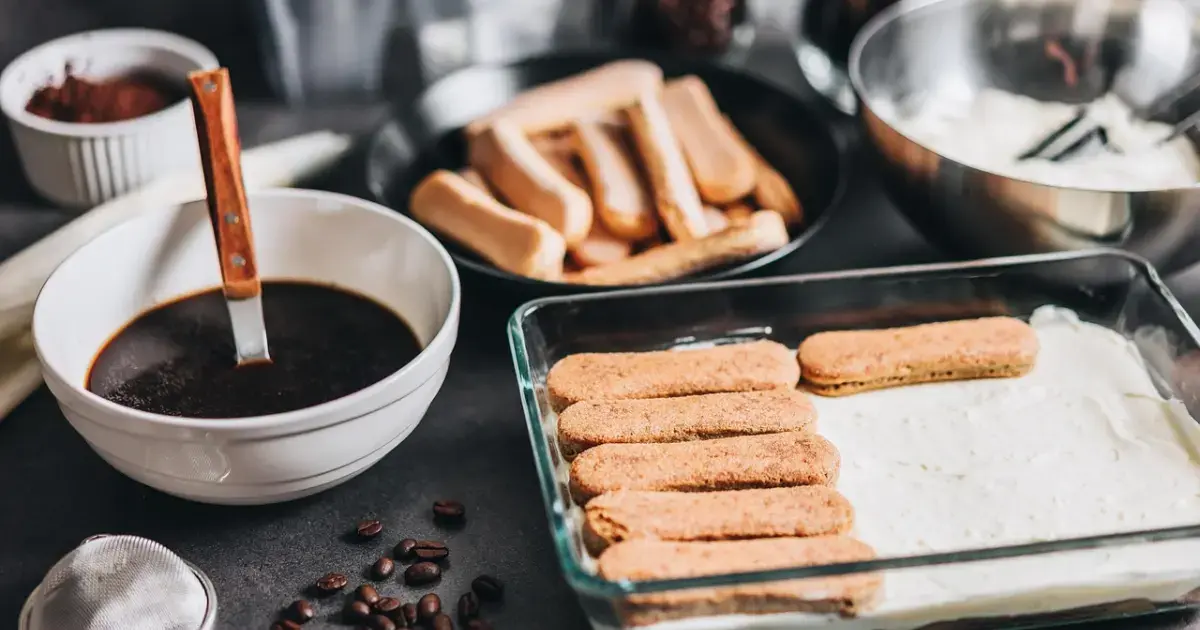
From anonymity to global fame
Strangely, tiramisu only became widely popular among Europeans and Americans in the 1980s. In just a few decades it spread across the globe, transforming from a regional dish into a symbol of Italy. Today it’s a superstar in the dessert world.
In Italy there’s even a Tiramisu Day: residents of Treviso celebrate it on October 3rd (they’re convinced the dessert is theirs), while much of the rest of the country marks it on March 21st. Both days feature competitions, demonstrations, tastings, and plenty of joy.
What is tiramisu today? It’s not the invention of a single genius but a collective effort—an evolution of ideas and flavors. It’s a dessert-spy that has changed names, traveled from ducal palaces to brothels, from Tuscany to Veneto, and then conquered the world.
Although the true story remains unknown—and that only adds to its charm—one thing is clear: it’s a dish that awakens the senses, delights the heart, lifts the spirits, and makes the stomach ask for seconds.
And so, despite all the legends about its aphrodisiac qualities, the real magic lies in caffeine, sugar, and delicate mascarpone. But does that make the dessert any less enchanting? Tira mi su—”pick me up.” Mission accomplished.
Photo: pixabay.com
