
 Gaby
Gaby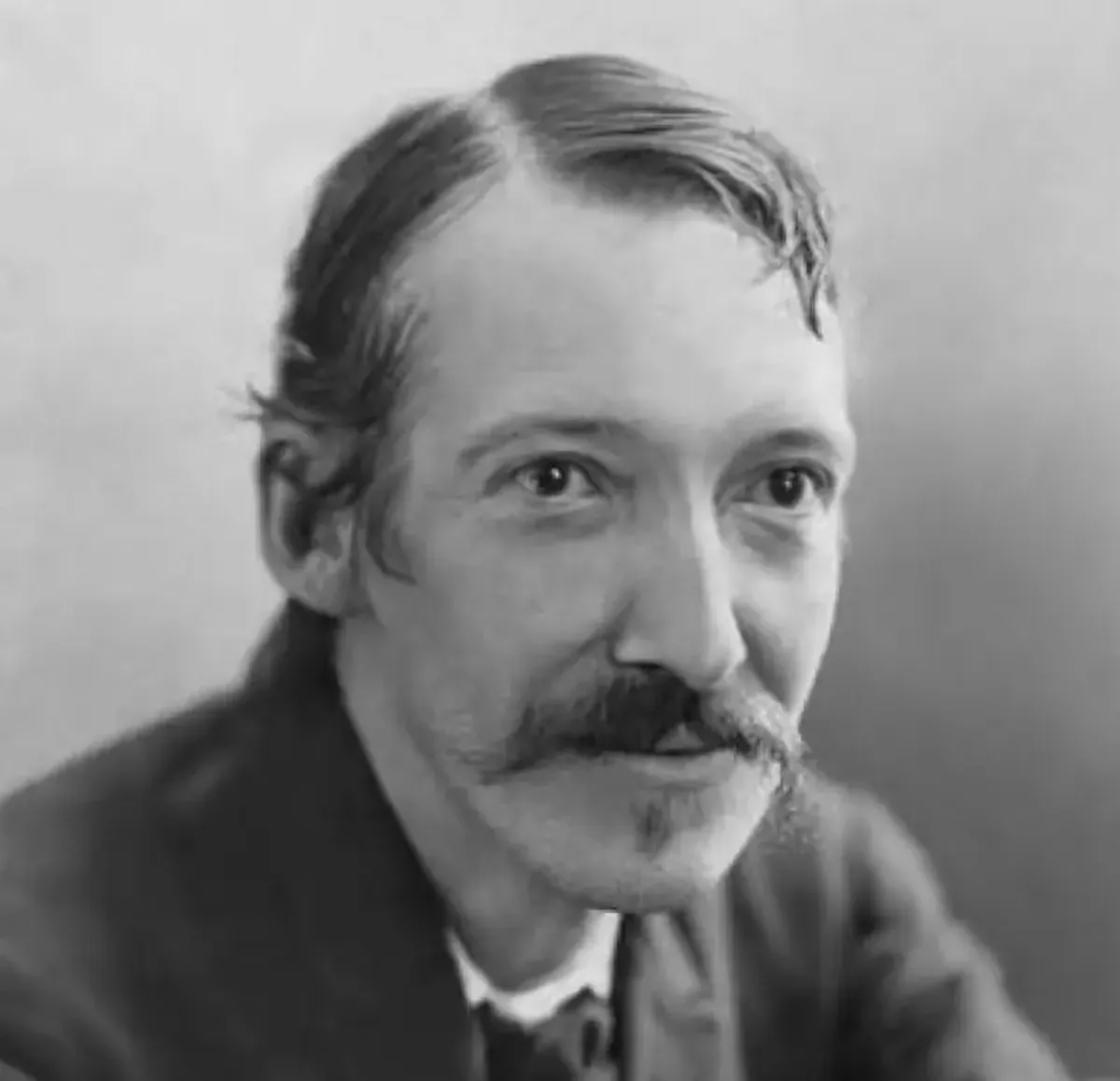
Imaginations from the Land of Blankets
Robert Louis Stevenson was born in Edinburgh, the capital of Scotland, on November 13, 1850. In his memoirs he said he spent his childhood in what he called the “land of blankets.” From a young age he suffered from severe bronchial and lung illnesses (doctors diagnosed him with croup at three and tuberculosis at twelve), which kept him indoors and confined him to bed, so he read instead of playing with other children. He turned those dreams and fantasies into writing as a teenager. At just 15, he wrote his first book, “The Pentland Rising,” which he published at his parents’ expense in a limited run of 100 copies as gifts for friends.
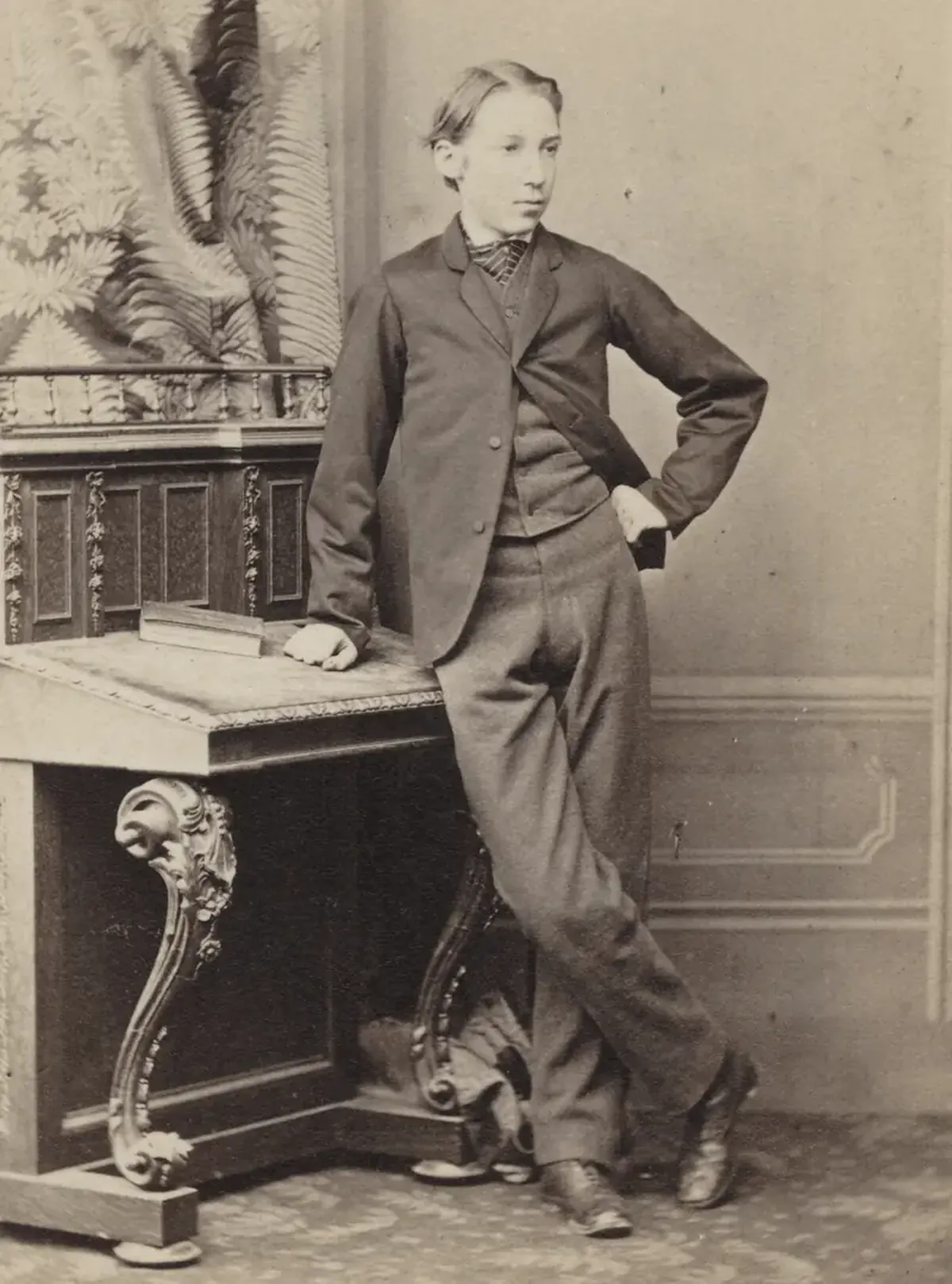
Robert Stevenson at 14 years old
The Guiding Beacon
Robert’s father, Thomas Stevenson, was an engineer who specialized in lighthouse design, and Robert initially intended to follow in his father’s footsteps. After graduating from Edinburgh Academy, the young Stevenson enrolled in the engineering department at the University of Scotland, where he earned a silver medal for developing a new type of flashing light for lighthouses. However, he found his calling in law and graduated from the faculty of law in 1875. His legal training and sharp mind gave him the means to explore life “in depth,” while his travels broadened his knowledge “in breadth.” Ultimately, his pen produced captivating story collections such as “The Suicide Club,” “The Diamond of the Rajah,” and “New Arabian Nights,” while his numerous journeys inspired essay collections like “The Roads” and “Travels with a Donkey.”

The multi-volume works of Stevenson, 1909
The Nature of Details
The British writer’s observations gave him material for detailed descriptions of objects and phenomena—and even for playful essays like “The Philosophy of Umbrellas.” In that essay he argued that an umbrella, meant to guard against rain, also reveals its owner’s social status and character: a silk umbrella, he wrote, suggests a hypocrite, while a checkered one is chosen by respectable people.

Treasure Island map from the frontispiece of the 1883 edition
When he filled the pirate’s chest in “Treasure Island,” Stevenson followed his father’s suggestion and used the inventory unchanged. He enriched the work with details that have since become synonymous with the adventure genre: the raucous pirate song, the ominous black spot, the blood-stained treasure on a remote island, and the mysterious map that shows the way. The map actually inspired the novel. He drew it with his stepson.
Love at First Sight
In 1876, while canoeing through Belgium and France with a friend, Stevenson had a fateful encounter with Fanny Osbourne, an American woman ten years his senior who was married and traveling with two children. They met in the French village of Barbizon, where Mrs. Van de Grift Osbourne, an art enthusiast, had come to Europe with her 16-year-old daughter Isabella and 9-year-old son Lloyd (the daughter would later transcribe her stepfather’s works, while the son would co-author some of his adventure plots).

Fanny Osbourne
Their love story proves that romance isn’t just a novelist’s invention. In real life, the leading figure of neoromanticism Robert Stevenson was a devoted romantic who was willing to sacrifice everything for the woman he loved.

Robert Stevenson’s family in 1893: wife Fanny, Stevenson, his stepdaughter Isabel, and mother Margaret Balfour
The Energy of Feelings
When Stevenson, weakened by chronic illness, received a letter saying his beloved was gravely ill, he boarded a steamboat and sailed to America. The journey was long and arduous, but when he arrived he discovered that Fanny had moved to another city. Out of money and exhausted, he desperately tried to find her. He rode on horseback, fell, and spent two days in the woods with no hope of rescue. In the end, Stevenson survived, and Fanny recovered and nursed him back to health. After separating from her abusive husband, Fanny married Stevenson in 1880, and her children found a loving mentor in their stepfather. The family returned to Britain, where Fanny helped Robert reconcile with relatives who had previously disapproved of their union. They eventually found a kind of paradise on Pacific islands, where the ailing writer relocated for his health.
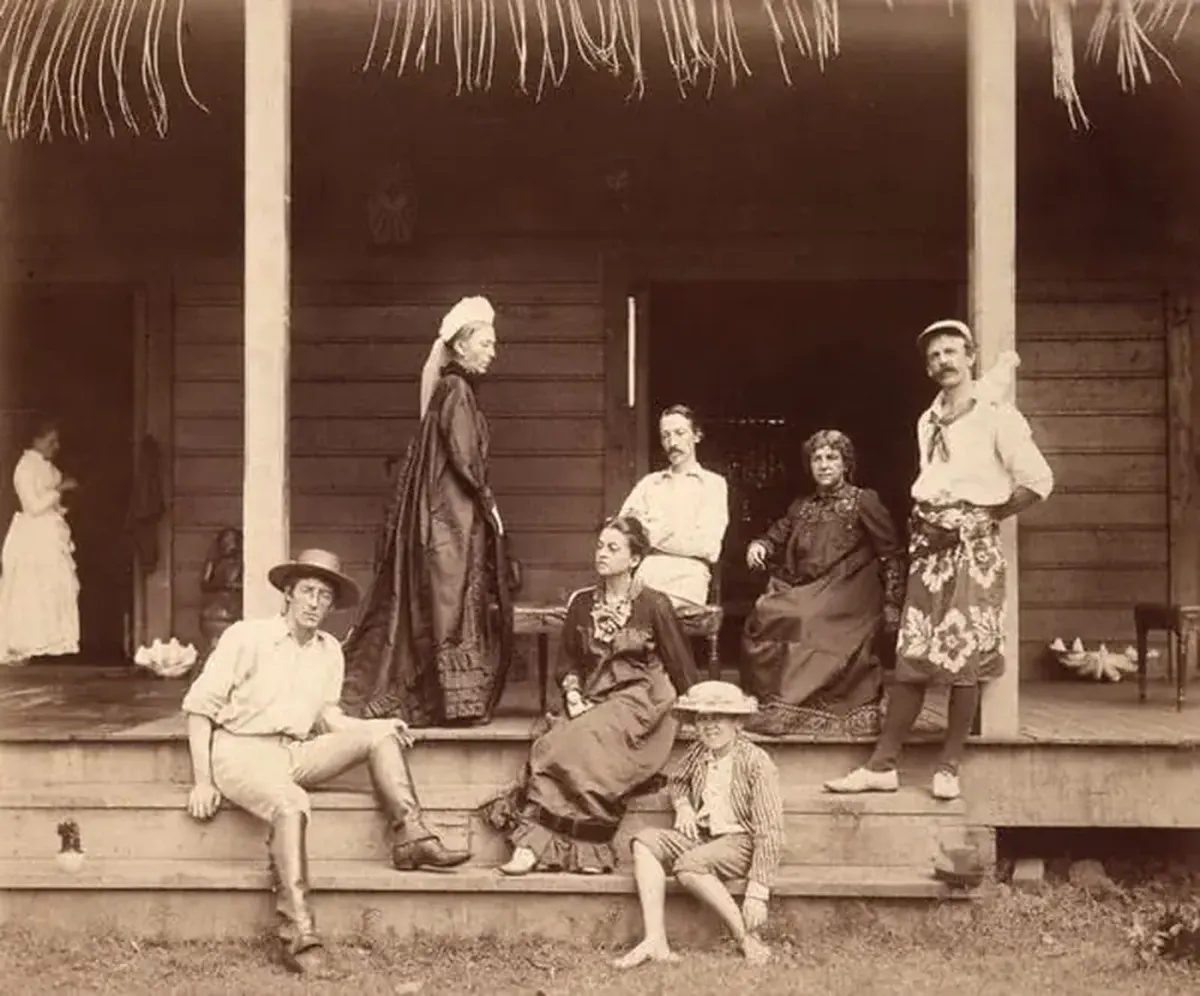
Stevenson with family in Vailima, Samoa, 1892
The Final Resting Place
Samoa became Robert Louis Stevenson’s final resting place. On December 3, 1894, he spent the day working on an unfinished piece. In the evening he put down his pen and started down the stairs from the second floor to the living room. A bottle of French wine he’d brought for dinner remained unopened. Suddenly he turned pale and died of a stroke.
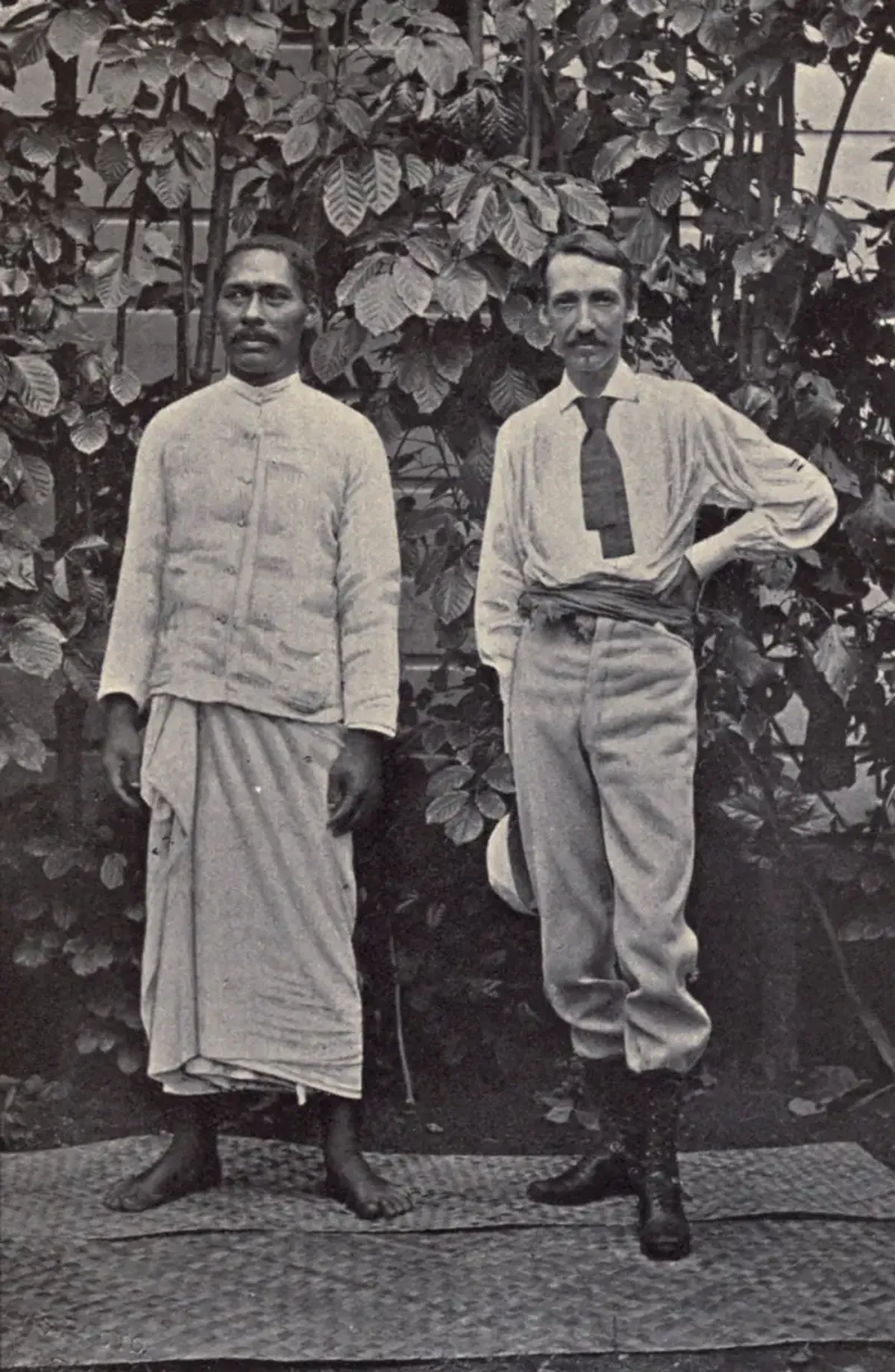
Stevenson with chief Tui Ma Le Al Fano
The locals mourned the death of their “white chief-narrator” alongside his family. They trusted the words of their Tuisitala, who had exposed and condemned the plundering practices of European colonizers. The islanders buried him atop Mount Vaea, where his grave has been preserved under a concrete tombstone for nearly 130 years.
